Page loaded successfully. Showing biography for Albert Birkle.
Albert Birkle BIOGRAPHY
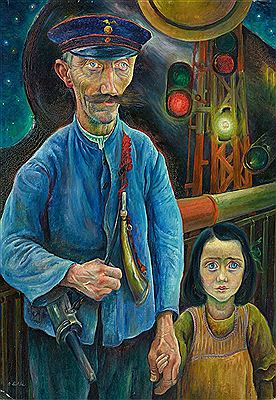
1900 Berlin, Germany - 1986 Salzburg, Austria. Known for: Genre, figure, streetscene, religion and atmospheric landscape painting.
Albert Birkle (1900, Berlin - 1986, Salzburg). After completing his apprenticeship as a decorative painter at his father's business in 1918, Albert Birkle studied at the Berlin Academy of Arts from... Read full biography
Albert Birkle (1900, Berlin - 1986, Salzburg). After completing his apprenticeship as a decorative painter at his father's business in 1918, Albert Birkle studied at the Berlin Academy of Arts from 1919 to 1926 under Arthur Kampf and Ferdinand Spiegel. He joined the Berliner Sezession (Berlin... Read full biography
Albert Birkle (1900, Berlin - 1986, Salzburg). After completing his apprenticeship as a decorative painter at his father's business in 1918, Albert Birkle studied at the Berlin Academy of Arts from 1919 to 1926 under Arthur Kampf and Ferdinand Spiegel. He joined the Berliner Sezession (Berlin Secession) and the Association of Berlin Artists in 1921, studying under Max Liebermann. Both organizations provided Birkle plenty of opportunities to exhibit his works. Additionally, he took part in... Read full biography
Albert Birkle (1900, Berlin - 1986, Salzburg). After completing his apprenticeship as a decorative painter at his father's business in 1918, Albert Birkle studied at the Berlin Academy of Arts from 1919 to 1926 under Arthur Kampf and Ferdinand Spiegel. He joined the Berliner Sezession (Berlin Secession) and the Association of Berlin Artists in 1921, studying under Max Liebermann. Both organizations provided Birkle plenty of opportunities to exhibit his works. Additionally, he took part in numerous collective exhibitions in Germany and abroad. During this time his preferred motif was the metropolis, with its hectic lifestyle and hurried, forlorn people. He traveled extensively all over Europe: to Italy, France, Denmark, Norway, Switzerland,... Read full biography
Albert Birkle (1900, Berlin - 1986, Salzburg). After completing his apprenticeship as a decorative painter at his father's business in 1918, Albert Birkle studied at the Berlin Academy of Arts from 1919 to 1926 under Arthur Kampf and Ferdinand Spiegel. He joined the Berliner Sezession (Berlin Secession) and the Association of Berlin Artists in 1921, studying under Max Liebermann. Both organizations provided Birkle plenty of opportunities to exhibit his works. Additionally, he took part in numerous collective exhibitions in Germany and abroad. During this time his preferred motif was the metropolis, with its hectic lifestyle and hurried, forlorn people. He traveled extensively all over Europe: to Italy, France, Denmark, Norway, Switzerland, Austria and eastern Europe, where he painted animated scenes of street life and factories as well as calm, atmospheric landscapes.... Read full biography
Artist Biography
Biography page for Albert Birkle ((1900 - 1986)), known for Genre, figure, streetscene, religion and atmospheric landscape painting. Showing 2 biographical entries and 0 sample artworks.
Albert Birkle - Artist Info
About Albert Birkle
Biography from Richard Rhoda Fine Art
Albert Birkle (1900, Berlin - 1986, Salzburg)
After completing his apprenticeship as a decorative painter at his father's business in 1918, Albert Birkle studied at the Berlin Academy of Arts from 1919 to 1926 under Arthur Kampf and Ferdinand Spiegel. He joined the Berliner Sezession (Berlin Secession) and the Association of Berlin Artists in 1921, studying under Max Liebermann. Both organizations provided Birkle plenty of opportunities to exhibit his works.
Additionally, he took part in numerous collective exhibitions in Germany and abroad. During this time his preferred motif was the metropolis, with its hectic lifestyle and hurried, forlorn people. He traveled extensively all over Europe: to Italy, France, Denmark, Norway, Switzerland, Austria and eastern Europe, where he painted animated scenes of street life and factories as well as calm, atmospheric landscapes.
In 1927 Birkle turned down an offer of becoming a professor at the academy in Königsberg in order to be able to accept orders for mural paintings in churches, such as the ones in Gaislingen and Kattowitz. In 1933 Birkle moved to Salzburg and from the middle of the 1930s, religious glass painting became his most important means of expression. He was commissioned to create numerous designs for glass windows in churches across Germany, Austria, Switzerland and the U.S.
In 1936 Birkle represented Germany at the Venice Biennale, but his works were removed before the opening of the exhibition. Other pieces of his work on view were also declared "degenerate" by the Nazi regime and removed from public exhibit and confiscated.
When World War II broke out, Albert Birkle volunteered for the Reich Labor Service to avoid direct military service. As a confirmed pacifist, he was sent to France as war correspondent. After the war his oil paintings began to depict a surreal and magical expressionist world that often had melancholic undertones and at times seemed removed from reality. In them he looked back to 1920s and 1940s motifs with their socio-critical tendencies and he saw himself as a chronicler of his times.
Museums:
The Neue Galerie, New York City
Musée du Louvre, Paris Paintings and drawings 1921-1933,
The Salzburger Museum, Austria
Sources:
Wikipedia Germany
Kunsthandel Giese und Schweiger, Vienna
www.albert-birkle.com
http://ketterkunst.comBiography from Karl & Faber Kunstauktionen
Albert Birkle was born in Berlin, Germany in 1900. Birkle was an important figure in Berlin in the 1920's after the First World War. Birkle showed great diversity in his oeuvre. From city scenes and landscapes to religious representations and portraits, he later devoted himself to wall and church paintings and his second passion, church windows. The portraits in particular are outstanding testimonies to his work. Among those portrayed are simple citizens with fur hats or top hats, as well as painters. He painted his own wife Elsa Starosta, and famous people such as the architect Otto Prossinger and the actor Erwin Faber. In his portraits, Birkle reveals his skill, which is evident in the detailed and fine execution of the 1920's and 30's. In doing so, he not only records the physiognomy of the individual, but also exaggerates the individual characteristic features of his counterpart. With a sober look, he presents the people who are mostly portrayed in everyday situations. Artist Albert Birkle passed away in 1986 in Salzburg, Austria.