Page loaded successfully. Showing biography for Albrecht Adam.
Albrecht Adam BIOGRAPHY
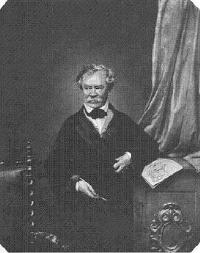
1786 Nordlingen, Germany - 1862 Munich, Germany. Known for: Battle scenes and horses painting.
Albrecht Adam (16 April 1786 - 28 August 1862) was a German painter of battles and horses. Born in Nördlingen, he began an apprenticeship as a confectioner and went in 1803 to Nuremberg to begin his... Read full biography
Albrecht Adam (16 April 1786 - 28 August 1862) was a German painter of battles and horses. Born in Nördlingen, he began an apprenticeship as a confectioner and went in 1803 to Nuremberg to begin his training. However, influenced by the director of the Academy of Fine Arts of Nuremberg and later by... Read full biography
Albrecht Adam (16 April 1786 - 28 August 1862) was a German painter of battles and horses. Born in Nördlingen, he began an apprenticeship as a confectioner and went in 1803 to Nuremberg to begin his training. However, influenced by the director of the Academy of Fine Arts of Nuremberg and later by Johann Rugendas, he turned towards painting - mainly battlefields and horses. After participating in the Austrian campaign of 1809, he stayed for a time in Vienna, where he drew the attention of... Read full biography
Albrecht Adam (16 April 1786 - 28 August 1862) was a German painter of battles and horses. Born in Nördlingen, he began an apprenticeship as a confectioner and went in 1803 to Nuremberg to begin his training. However, influenced by the director of the Academy of Fine Arts of Nuremberg and later by Johann Rugendas, he turned towards painting - mainly battlefields and horses. After participating in the Austrian campaign of 1809, he stayed for a time in Vienna, where he drew the attention of Napoleon's stepson Eugène de Beauharnais and was appointed his court painter. Most of Adam's subsequent works deal with Napoleon's Russian campaign, in which he participated under de Beauharnais. Among other works, he painted a diary of the campaign in 83... Read full biography
Albrecht Adam (16 April 1786 - 28 August 1862) was a German painter of battles and horses. Born in Nördlingen, he began an apprenticeship as a confectioner and went in 1803 to Nuremberg to begin his training. However, influenced by the director of the Academy of Fine Arts of Nuremberg and later by Johann Rugendas, he turned towards painting - mainly battlefields and horses. After participating in the Austrian campaign of 1809, he stayed for a time in Vienna, where he drew the attention of Napoleon's stepson Eugène de Beauharnais and was appointed his court painter. Most of Adam's subsequent works deal with Napoleon's Russian campaign, in which he participated under de Beauharnais. Among other works, he painted a diary of the campaign in 83 scenes. In 1815, Adam moved to Munich, where he was occupied by the emperors and kings of Bavaria and Austria. His studi... Read full biography
Artist Biography
Biography page for Albrecht Adam ((1786 - 1862)), known for Battle scenes and horses painting. Showing 2 biographical entries and 0 sample artworks.
Albrecht Adam - Artist Info
About Albrecht Adam
Biography from the Archives of askART
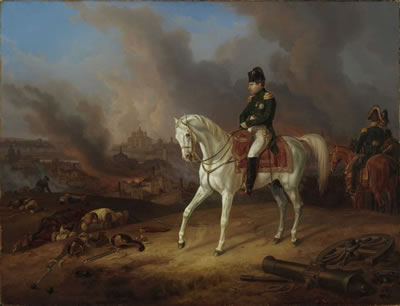 Albrecht Adam (16 April 1786 - 28 August 1862) was a German painter of battles and horses. Born in Nördlingen, he began an apprenticeship as a confectioner and went in 1803 to Nuremberg to begin his training. However, influenced by the director of the Academy of Fine Arts of Nuremberg and later by Johann Rugendas, he turned towards painting - mainly battlefields and horses.
After participating in the Austrian campaign of 1809, he stayed for a time in Vienna, where he drew the attention of Napoleon's stepson Eugène de Beauharnais and was appointed his court painter.
Most of Adam's subsequent works deal with Napoleon's Russian campaign, in which he participated under de Beauharnais. Among other works, he painted a diary of the campaign in 83 scenes.
In 1815, Adam moved to Munich, where he was occupied by the emperors and kings of Bavaria and Austria. His studio in Munich was frequently visited by Theodor Horschelt, who later became well known for his paintings of the Russian Caucasian War.
He worked until a great age, recording battles and portraying horses, even though in his late works he was supported by the help of his sons, Benno, Eugen and Franz.
Adam died in Munich in 1862.
Source:
Sphinx Fine Art
http://www.sphinxfineart.com/Adam-Albrecht-DesktopDefault.aspx?tabid=45&tabindex=44&artistid=50747Biography from Karl & Faber Kunstauktionen
Albrecht Adam was not only an exhaustive depictor of the Napoleonic wars, but also a gifted painter of stately horses. Since Adam had created a series of portraits of his noble Arabian horses for the King of Württemberg in 1819, the depiction of horses was part of his regular repertoire. Himself an enthusiastic rider and owner of horses - such as the Arabian grey "Rhezia" - Adam repeatedly found opportunities to study a wide variety of horses in the Adamei located near the Theresienwiese.
There are portraits of high-ranking personalities on horseback, but also of members of his own family; the so-called horse stable pictures, in which grooms look after the horses, form a group of their own. In addition, there are individual paintings that refer to the southern oriental origin of the noble Arabs: In our painting, an oriental-looking horseman and a man with a warming cloak face each other on a hill, in which one may probably recognize a kind of horse herder who was responsible for the care and training of the horses.
Their meeting stands in the tradition of the encounter pictures of Wilhelm von Kobell, in which different estates meet - here the obviously superior rider, opposite him the shepherd looking up to him. What their conversation is about, however, is not apparent - is the rider coming to inspect or should it be about a trade with the gray horse and its Arabian foal standing near the shepherd? The rider wears a folk costume that identifies him as a member of a southern equestrian tribe, probably in Hungary, where horse breeding had a great tradition in the 19th century, especially in the lowlands of the Puszta. Such a plain, where more horses graze, spreads below the hill to a final mountain range.
All this is told by Albrecht Adam in rich colors, with great attention to detail, enriched with anecdotal motifs such as the wagon or the ducks and chickens in the foreground. The painting is an excellent example of Adam's high painting culture; Ulrike von Hase-Schmundt, the best connoisseur of Adam's painterly work, assumes that it is, as with many other paintings by Adam, a joint work with his son Eugen, which is, however, identified by the signature as the work of the father. Adam had already executed a thematically similar painting in 1830, when he spent seven weeks in Donaueschingen with the Princes of Fürstenberg and, in addition to numerous portraits of horses, created a painting in which an Arabian horse shows off an Arabian mare with her foal (Donaueschingen, Fürstenberg Princes).
A painting created in 1844 is said to show the great Siglavi, that Arabian stallion who founded one of the Lipizzaner stallion lines, and the Forresto gray of the imperial stables in Vienna (Nuremberg, Germanisches Nationalmuseum, inv. no. Gm 1652). With such paintings, Adam attempted to detach the horse portrait from its traditional representational context by referring to the exotic origins of the animals through the staffage and landscape. Peter Prange