Page loaded successfully. Showing biography for Alejandro Colunga.
Alejandro Colunga BIOGRAPHY

Born 1948 Guadalajara, Jalisco. Known for: Surreal and fantasy painting and sculpture.
A self-taught artist, Alejandro Colunga creates images that bring to mind popular art traditions in Mexico. The imagery in La Muerte del Payaso IV (The Death of the Clown IV) is drawn from his... Read full biography
A self-taught artist, Alejandro Colunga creates images that bring to mind popular art traditions in Mexico. The imagery in La Muerte del Payaso IV (The Death of the Clown IV) is drawn from his personal experiences working for a circus and his staunch Catholic upbringing. (La muerte del payaso iv,... Read full biography
A self-taught artist, Alejandro Colunga creates images that bring to mind popular art traditions in Mexico. The imagery in La Muerte del Payaso IV (The Death of the Clown IV) is drawn from his personal experiences working for a circus and his staunch Catholic upbringing. (La muerte del payaso iv, 1993). Alejandro Colunga is a visual artist working in the Latin American tradition of surrealism and fantasy. He is part of the movement referred to as Nueva Mexicanidad. As a young man, he studied... Read full biography
A self-taught artist, Alejandro Colunga creates images that bring to mind popular art traditions in Mexico. The imagery in La Muerte del Payaso IV (The Death of the Clown IV) is drawn from his personal experiences working for a circus and his staunch Catholic upbringing. (La muerte del payaso iv, 1993). Alejandro Colunga is a visual artist working in the Latin American tradition of surrealism and fantasy. He is part of the movement referred to as Nueva Mexicanidad. As a young man, he studied architecture and later joined a circus before devoting himself to painting. Colunga cites Rufino Tamayo as one of the artists who have influenced him. An admiration for Mexican folk art is evident in his work, as is a familiarity with the art of India... Read full biography
A self-taught artist, Alejandro Colunga creates images that bring to mind popular art traditions in Mexico. The imagery in La Muerte del Payaso IV (The Death of the Clown IV) is drawn from his personal experiences working for a circus and his staunch Catholic upbringing. (La muerte del payaso iv, 1993). Alejandro Colunga is a visual artist working in the Latin American tradition of surrealism and fantasy. He is part of the movement referred to as Nueva Mexicanidad. As a young man, he studied architecture and later joined a circus before devoting himself to painting. Colunga cites Rufino Tamayo as one of the artists who have influenced him. An admiration for Mexican folk art is evident in his work, as is a familiarity with the art of India and other cultures. Colunga has studied in the workshops of master artisans in Mexico an... Read full biography
Artist Biography
Biography page for Alejandro Colunga ((Born 1948)), known for Surreal and fantasy painting and sculpture. Showing 1 biographical entries and 0 sample artworks.
Alejandro Colunga - Artist Info
About Alejandro Colunga
Biography from RoGallery
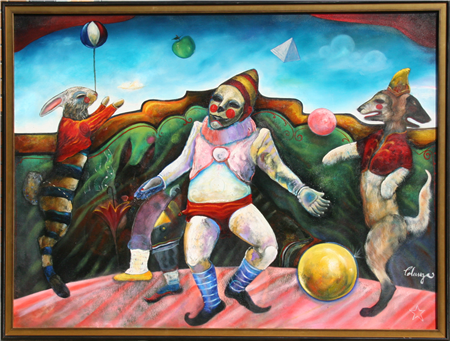 A self-taught artist, Alejandro Colunga creates images that bring to mind popular art traditions in Mexico. The imagery in La Muerte del Payaso IV (The Death of the Clown IV) is drawn from his personal experiences working for a circus and his staunch Catholic upbringing. (La muerte del payaso iv, 1993).
Alejandro Colunga is a visual artist working in the Latin American tradition of surrealism and fantasy. He is part of the movement referred to as Nueva Mexicanidad. As a young man, he studied architecture and later joined a circus before devoting himself to painting.
Colunga cites Rufino Tamayo as one of the artists who have influenced him. An admiration for Mexican folk art is evident in his work, as is a familiarity with the art of India and other cultures. Colunga has studied in the workshops of master artisans in Mexico and often uses traditional techniques in ceramics and wood sculpture.
Much of Colunga's imagery is based on folk stories he heard as a child. Characters like La Llorona (The Weeping Woman) and Chamuco (The Devil) appear in his work. He uses the device of exaggerating human anatomy (such as filling the canvas with a single figure whose head is tiny) along with exuberant color to create a sense of "bewitchment."