Page loaded successfully. Showing biography for Alexander Kircher.
Alexander Kircher BIOGRAPHY
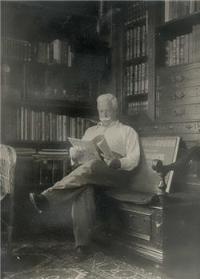
1867 Trieste, Austro-Hungarian Empire - 1939 Berlin, Germany. Known for: Marine, ship painting.
Alexander Kircher was an Austrian-German marine and landscape painter, and an illustrator. Many of his paintings are exhibited in museums in Germany, Austria, Croatia, and Slovenia or are privately... Read full biography
Alexander Kircher was an Austrian-German marine and landscape painter, and an illustrator. Many of his paintings are exhibited in museums in Germany, Austria, Croatia, and Slovenia or are privately owned in those countries. But there are also some of his paintings in the United States of America,... Read full biography
Alexander Kircher was an Austrian-German marine and landscape painter, and an illustrator. Many of his paintings are exhibited in museums in Germany, Austria, Croatia, and Slovenia or are privately owned in those countries. But there are also some of his paintings in the United States of America, Great Britain, Scandinavia and Greece. Kircher was born in Trieste, which belonged at that time to the Austro-Hungarian Empire (Habsburg Monarchy). As a young man he intended to choose the profession... Read full biography
Alexander Kircher was an Austrian-German marine and landscape painter, and an illustrator. Many of his paintings are exhibited in museums in Germany, Austria, Croatia, and Slovenia or are privately owned in those countries. But there are also some of his paintings in the United States of America, Great Britain, Scandinavia and Greece. Kircher was born in Trieste, which belonged at that time to the Austro-Hungarian Empire (Habsburg Monarchy). As a young man he intended to choose the profession of a naval officer in the Austro-Hungarian Navy. Because of a foot injury his application was rejected. In 1888 he opted for studying painting at the Berlin Academy, where he concentrated mainly on marine painting from the start. His teachers were... Read full biography
Alexander Kircher was an Austrian-German marine and landscape painter, and an illustrator. Many of his paintings are exhibited in museums in Germany, Austria, Croatia, and Slovenia or are privately owned in those countries. But there are also some of his paintings in the United States of America, Great Britain, Scandinavia and Greece. Kircher was born in Trieste, which belonged at that time to the Austro-Hungarian Empire (Habsburg Monarchy). As a young man he intended to choose the profession of a naval officer in the Austro-Hungarian Navy. Because of a foot injury his application was rejected. In 1888 he opted for studying painting at the Berlin Academy, where he concentrated mainly on marine painting from the start. His teachers were Hans Gude and Hermann Eschke. Kircher made numerous study trips throughout Europa, Asia, North America and Egypt. During these travels, he... Read full biography
Artist Biography
Biography page for Alexander Kircher ((1867 - 1939)), known for Marine, ship painting. Showing 2 biographical entries and 0 sample artworks.
Alexander Kircher - Artist Info
About Alexander Kircher
Name variants
Alexander Kirchner
Biography from the Archives of askART
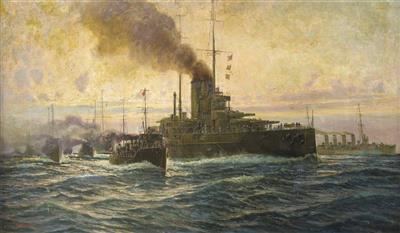 Alexander Kircher was an Austrian-German marine and landscape painter, and an illustrator. Many of his paintings are exhibited in museums in Germany, Austria, Croatia, and Slovenia or are privately owned in those countries. But there are also some of his paintings in the United States of America, Great Britain, Scandinavia and Greece.
Kircher was born in Trieste, which belonged at that time to the Austro-Hungarian Empire (Habsburg Monarchy). As a young man he intended to choose the profession of a naval officer in the Austro-Hungarian Navy. Because of a foot injury his application was rejected. In 1888 he opted for studying painting at the Berlin Academy, where he concentrated mainly on marine painting from the start. His teachers were Hans Gude and Hermann Eschke.
Kircher made numerous study trips throughout Europa, Asia, North America and Egypt. During these travels, he made several important paintings, drawings and illustrations. - 1893 he worked on the picturesque decoration of buildings at the World Exhibition in Chicago as well as panoramas and dioramas of the marine painter Hans von Petersen.
In addition, Alexander Kircher worked as an illustrator for popular German and foreign magazines and publishers of which only a few can be mentioned: The Leipziger Illustrierte Zeitung or the modern illustrated weekly Reclams universe (Leipzig), the writings of the Austrian (Vienna) and the German fleet association (Berlin) and the Viennese publisher Philipp & Kramer, for which he designed the postcard series "Dalmatia and Istria". These include Feldpost, postcards, which Kircher created for the Austrian Red Cross, the War Welfare Office or the War Aid Office, and also for the London Postcard Publisher Raphael Tuck & Sons, etc. - The majority of his paintings the artist signed with: Alex Kircher.
For some time Kircher owned a steam yacht, which he named Romana - this was his wife's name. With this ship he could with better motives collect and draw maritime objects from the area, which he did for example in fleet parades.
Between 1895 and 1900 he was a professor at the Art Academy in Trieste and married Romana Salmassi in the Chiesa di Sant'Antonio Taumaturgo on October 15, 1898. From this connection, three sons and three daughters were born. - In 1904, after a short stay in Vienna, Kircher moved from Trieste to Dresden. Later the family moved to Moritzburg. From 1922 Kircher lived in Niederlößnitz at Villa Jagdweg 6 and from 1933 to about 1935 in Kötzschenbroda-Niederlößnitz. In June 1935, the wife of Alexander Kircher died. Then the painter moved to Klotzsche in a residential building, which belonged to the former Air War School Klotzsche.
Influential members of the nobility and some industrialists - especially from the circles of Maritime Navigation - promoted the artist. First of them was Emperor Franz Joseph I and Emperor Wilhelm II. On behalf of these two monarchs, Kircher painted numerous images of the imperial and German Navy. His paintings were also found on the large passenger ships of the time, as well as in the offices of well known shipping companies and shipyards and of course also in private ownership.
During World War II, several images got lost or disappeared. An example of the many lost images is the large oil painting of the steamship Columbus ("The Columbus in the Kaiser lock"). This painting was given by the North German Lloyd as a gift to the city of Bremerhaven on the occasion of its 100th anniversary in 1927. The painting has disappeared at the end of World War II (1945). -
Kircher concluded his life's work with a series of one-hundred paintings, which documented the development of German shipping over a millennium and which hung in the Institute and Museum of Oceanography MFM of the University of Berlin. The current location of the works is unknown; reproductions have since appeared as an image panel work (1934) and in book form (1939) and recently only in parts on CD-ROM (2010). - Meanwhile, twenty-two images, of which the majority is from the collection of MfM, were rediscovered in the archives of Wehrgeschichtliches Training Centre of the Naval Academy in Flensburg-Mürwik.
Alexander Kircher died on September 16, 1939 in Berlin, the last place where he had worked.
Awards and decorations
Spanish Order of Isabella the Catholic in February 1909 in the Spanish Embassy in Berlin. [This award was given for services to art and science.
Collection of paintings (excerpt)
The Battle of Lissa. Oil on canvas, 1918 318 x 705 cm. Museum of Military History, Vienna.
SMS Erzherzog Karl. Oil on canvas, 50 x 75 cm. Archduke Franz Ferdinand Museum, Artstetten, Lower Austria.
Ships of Tegetthoff Class, in the foreground "SMS Viribus Unitis". Oil on canvas, 96 x 150 cm. Austrian Marine Association, Vienna.
Cruiser frigates Stosch, Gneisenau and Stein. Oil on canvas, 1938. Naval Academy, Flensburg-Mürwik.
SMS Emden in battle. Oil on canvas, 1910, 101 x 150 cm. City Museum Warleberger-Hof, Kiel.
Steamer Delos Deutsche, Levante line. Gouache, 79 x 65 cm. German Shipping Museum, Bremerhaven.
Port of Hamburg with the mail steamer Cap Arcona. Oil on canvas, 1932 98 x 148 cm. Museum of Communication, former Federal Postal Museum, Frankfurt am Main.
Cable steamer Stephan before Yap (Caroline). Oil on canvas, 1905 99 x 148 cm. Museum of Communication, former Federal Postal Museum, Frankfurt am Main.
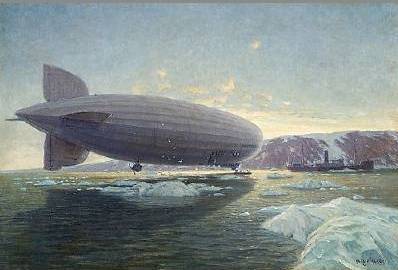
LZ 127 Graf Zeppelin with a Russian icebreaker "Malygin". Oil on canvas, 1931 81 x 121.8 cm. Zeppelin Museum Friedrichshafen.
SMS Kaiser Karl VI. Oil on canvas, 1895, 88 x 150 cm. Museum of the city of Rovinj, Rovinj (Croatia).
Steam yacht Sazume (Japanese the sparrow in English). Oil on canvas, 47 x 66 cm. Museum of the city of Rovinj, (Croatia).
Battleship USS Kentucky. Oil on cardboard, 1898, 32 x 47.5 cm. Maritime Museum, Split (Croatia), Split
SMS Fasan. Oil on canvas, 1897, 70 x 165 cm. Historical Museum of Istria, Pula (Croatia).
SMS Budapest off the port of Fiume. Graphics, 1905, 35 × 57 cm. Maritime and History Museum of Littoral Croatia, Rijeka (Croatia).
Brigantine at Sea. Oil on canvas, 1892, 75 x 150 cm. Sergej Mašera-Maritime Museum,Piran (Slovenia).
In addition to the selection of the above pictures large stocks of Kircher paintings exist in the Military History Museum (HGM) in Vienna and the Archduke Franz Ferdinand Museum in Artstetten in Lower Austria. Moreover, in Germany in the Naval Academy, Flensburg-Mürwik. - In Croatia in the museum of the city of Rovinj and Split in the Maritime Museum.
Submitted by Peter Telchmann
Source:
"Alexander Kircher," Wikipedia, http://en.wikipedia.org/wiki/Alexander_Kircher (Accessed 2/2015)Biography from the Archives of askART
 Alexander Kirchner (1867-1939)
He was a world traveler and the official painter of the Royal Austrian Navy (K.u. K. Marine) as well as a well-known panorama painter.
The Rovinj (Croatia) town museum has 12 representative canvases which once were part of industrialist Georg von Hutterott's collection on the nearby Red Island.
Kircher died 1939 in Berlin and was buried in the family plot in Moritzburg, near Dresden.