Page loaded successfully. Showing biography for Alexander Stirling Calder.
Alexander Stirling Calder BIOGRAPHY
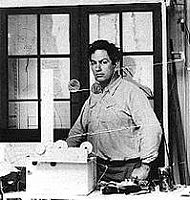
1870 Philadelphia, Pennsylvania - 1945 New York City. Known for: Monumental sculpture.
Alexander Stirling Calder was a sculptor working in the Beaux-Arts* style. The son of Alexander Milne Calder, and the father of Alexander (Sandy) Calder, he was born in Philadelphia. At the age of... Read full biography
Alexander Stirling Calder was a sculptor working in the Beaux-Arts* style. The son of Alexander Milne Calder, and the father of Alexander (Sandy) Calder, he was born in Philadelphia. At the age of sixteen, he enrolled at the Pennsylvania Academy of the Fine Arts*, where he studied drawing with... Read full biography
Alexander Stirling Calder was a sculptor working in the Beaux-Arts* style. The son of Alexander Milne Calder, and the father of Alexander (Sandy) Calder, he was born in Philadelphia. At the age of sixteen, he enrolled at the Pennsylvania Academy of the Fine Arts*, where he studied drawing with Thomas Eakins. In 1890 he left to study at the Academie Julian* in Paris under Henri Chapu and with Alexandre Falguiere at Ecole des Beaux-Arts*, Paris, France. Calder returned to Philadelphia after two... Read full biography
Alexander Stirling Calder was a sculptor working in the Beaux-Arts* style. The son of Alexander Milne Calder, and the father of Alexander (Sandy) Calder, he was born in Philadelphia. At the age of sixteen, he enrolled at the Pennsylvania Academy of the Fine Arts*, where he studied drawing with Thomas Eakins. In 1890 he left to study at the Academie Julian* in Paris under Henri Chapu and with Alexandre Falguiere at Ecole des Beaux-Arts*, Paris, France. Calder returned to Philadelphia after two years in Paris and began to produce figurative work and portraits. In 1903, he became an instructor at the Philadelphia Museum School of Industrial Art. After moving to New York City in 1910, he taught at National Academy of Design*, and later at the... Read full biography
Alexander Stirling Calder was a sculptor working in the Beaux-Arts* style. The son of Alexander Milne Calder, and the father of Alexander (Sandy) Calder, he was born in Philadelphia. At the age of sixteen, he enrolled at the Pennsylvania Academy of the Fine Arts*, where he studied drawing with Thomas Eakins. In 1890 he left to study at the Academie Julian* in Paris under Henri Chapu and with Alexandre Falguiere at Ecole des Beaux-Arts*, Paris, France. Calder returned to Philadelphia after two years in Paris and began to produce figurative work and portraits. In 1903, he became an instructor at the Philadelphia Museum School of Industrial Art. After moving to New York City in 1910, he taught at National Academy of Design*, and later at the Art Student's League*. Calder received national recognition, and by 1915, was directing th... Read full biography
Artist Biography
Biography page for Alexander Stirling Calder ((1870 - 1945)), known for Monumental sculpture. Showing 2 biographical entries and 0 sample artworks.
Alexander Stirling Calder - Artist Info
About Alexander Stirling Calder
Biography from the Archives of askART
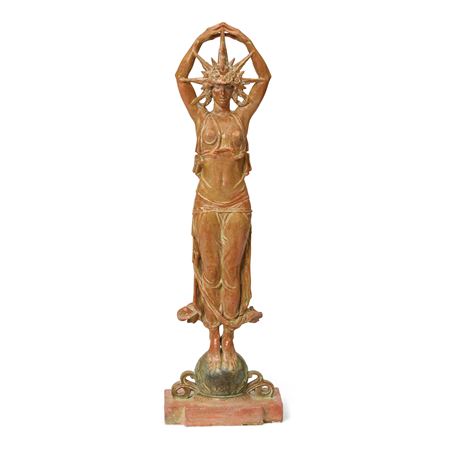 Alexander Stirling Calder was a sculptor working in the Beaux-Arts* style. The son of Alexander Milne Calder, and the father of Alexander (Sandy) Calder, he was born in Philadelphia. At the age of sixteen, he enrolled at the Pennsylvania Academy of the Fine Arts*, where he studied drawing with Thomas Eakins. In 1890 he left to study at the Academie Julian* in Paris under Henri Chapu and with Alexandre Falguiere at Ecole des Beaux-Arts*, Paris, France.
Calder returned to Philadelphia after two years in Paris and began to produce figurative work and portraits. In 1903, he became an instructor at the Philadelphia Museum School of Industrial Art.
After moving to New York City in 1910, he taught at National Academy of Design*, and later at the Art Student's League*. Calder received national recognition, and by 1915, was directing the entire sculptural program for the Panama-Pacific Exposition* in San Francisco. His finest sculptural contribution to that exposition was the Fountain of Energy.
Calder received commissions for the Depew Fountain in Indianapolis (1915), a statue of George Washington for one pier of the Washington Square Arch in New York City (1918), the Swann Memorial Fountain in Philadelphia (1924), and the Leif Ericsson Memorial in Reykjavik, Iceland (1932). During the final decade of Calder's artistic career, he was overshadowed by his son.
Source:
Matthew Baigell, Dictionary of American Art
* For more in-depth information about these terms and others, see AskART.com Glossary http://www.askart.com/AskART/lists/Art_Definition.aspxBiography from the Archives of askART
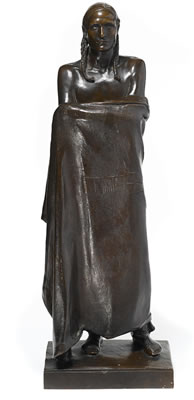 Born in Philadelphia, PA on Jan. 11, 1870, Alexander Stirling Calder was the son of sculptor Alexander Milne Calder (1846-1923). The younger Calder first studied under his father, followed by work at the Pennsylvania Academy of the Fine Arts under Thomas Eakins and Thomas Anshutz, and in Paris at Ecole des Beaux Arts.
For health reasons, he first came west in 1905, and in 1906 moved to Pasadena, living initially on Euclid Avenue and later in a converted barn above the Arroyo Seco. During his four years there, he sculpted the panels on the portico of the Throop Polytechnic Institute.
He lived in northern California during 1912-15 when he maintained studios in San Francisco and Berkeley. During this period he served as acting chief of sculpture and member of the jury of awards for the Panama Pacific International Exposition as well as exhibiting two large sculpture groups and a Fountain of Energy.
The remainder of his career was spent in New York City where he died on Jan. 7, 1945. He was the father of sculptor Alexander Calder (1898-1976) who created mobiles.
Member: National Academy, 1913
Exhibition: Alaska-Yukon-Pacific Expo (Seattle), 1909 (grand prize).
Collection:
Throop Institute (Pasadena); Metropolitan Museum; Smithsonian Institution