Page loaded successfully. Showing biography for Alexandre Perrier.
Alexandre Perrier BIOGRAPHY
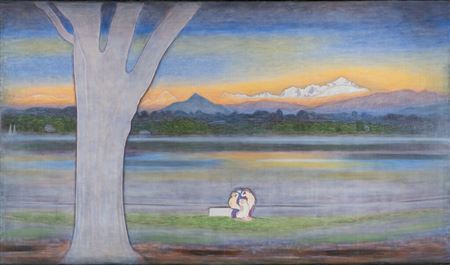
1862 - 1936. Known for: Mountains, figures in landscape, water scene painting.
After completing the college in his hometown, Alexandre Perrier began an apprenticeship in banking, which he broke off in 1881 in favor of an apprenticeship as a textile printer in Mulhouse. From... Read full biography
After completing the college in his hometown, Alexandre Perrier began an apprenticeship in banking, which he broke off in 1881 in favor of an apprenticeship as a textile printer in Mulhouse. From 1891 he worked as a fashion illustrator in Paris, where he frequented Swiss artists and writers such as... Read full biography
After completing the college in his hometown, Alexandre Perrier began an apprenticeship in banking, which he broke off in 1881 in favor of an apprenticeship as a textile printer in Mulhouse. From 1891 he worked as a fashion illustrator in Paris, where he frequented Swiss artists and writers such as Albert Trachsel, Auguste de Niederhäusern and Eugène Grasset, and came into contact with the various art movements of the time. He exhibited his works for the first time in the Salon des... Read full biography
After completing the college in his hometown, Alexandre Perrier began an apprenticeship in banking, which he broke off in 1881 in favor of an apprenticeship as a textile printer in Mulhouse. From 1891 he worked as a fashion illustrator in Paris, where he frequented Swiss artists and writers such as Albert Trachsel, Auguste de Niederhäusern and Eugène Grasset, and came into contact with the various art movements of the time. He exhibited his works for the first time in the Salon des Indépendants. Perrier returned to Geneva around 1900, received a federal grant and finally settled down as a painter. From then on, his friends also included Cuno Amiet and Ferdiand Hodler, next to whom he took part in the Paris World Exhibition in 1900 and in... Read full biography
After completing the college in his hometown, Alexandre Perrier began an apprenticeship in banking, which he broke off in 1881 in favor of an apprenticeship as a textile printer in Mulhouse. From 1891 he worked as a fashion illustrator in Paris, where he frequented Swiss artists and writers such as Albert Trachsel, Auguste de Niederhäusern and Eugène Grasset, and came into contact with the various art movements of the time. He exhibited his works for the first time in the Salon des Indépendants. Perrier returned to Geneva around 1900, received a federal grant and finally settled down as a painter. From then on, his friends also included Cuno Amiet and Ferdiand Hodler, next to whom he took part in the Paris World Exhibition in 1900 and in the Vienna Secession the following year. On the recommendation of the Geneva painter Alexandre Cingria, he received his first solo exhib... Read full biography
Artist Biography
Biography page for Alexandre Perrier ((1862 - 1936)), known for Mountains, figures in landscape, water scene painting. Showing 1 biographical entries and 0 sample artworks.
Alexandre Perrier - Artist Info
About Alexandre Perrier
Biography from Dobiaschofsky Auktionen
After completing the college in his hometown, Alexandre Perrier began an apprenticeship in banking, which he broke off in 1881 in favor of an apprenticeship as a textile printer in Mulhouse. From 1891 he worked as a fashion illustrator in Paris, where he frequented Swiss artists and writers such as Albert Trachsel, Auguste de Niederhäusern and Eugène Grasset, and came into contact with the various art movements of the time.
He exhibited his works for the first time in the Salon des Indépendants. Perrier returned to Geneva around 1900, received a federal grant and finally settled down as a painter. From then on, his friends also included Cuno Amiet and Ferdiand Hodler, next to whom he took part in the Paris World Exhibition in 1900 and in the Vienna Secession the following year.
On the recommendation of the Geneva painter Alexandre Cingria, he received his first solo exhibition in 1903, which resulted in favorable reviews, including from Charles Ferdinand Ramuz. Until his accidental death in 1936, Perrier's artistic work revolved around the same motifs: the landscapes around Lake Geneva, the Salève near Geneva and the Valais Alps.
While his early work, created in Paris, was still committed to French pointillism, his later works are largely detached from naturalistic motifs and determined by a radiant color palette. With his mature artistic output, Perrier achieved an independent and idiosyncratic position within Swiss symbolism and Art Nouveau.
The strikingly small number of recurring landscape motifs painted at all times of the day and year shows how much the artist was concerned with an almost scientific research into the different effects of color and light. He did not work in nature, but created his pictures on the basis of abstract color studies, sketches and notes in the studio.
This distancing from the nature motif gives his paintings, despite their sensual splendor and uncommon differentiation, a condensed simplicity and calm that is characteristic of his work. He is thus closer to the phenomenological interest of Georges Seurat's pointillism than to the Divisionist work of Giovanni Segantini, with whom Perrier has often been compared not only because of his technique, but also because of their common preference for alpine motifs.