Page loaded successfully. Showing biography for Alfred Boucher.
Alfred Boucher BIOGRAPHY
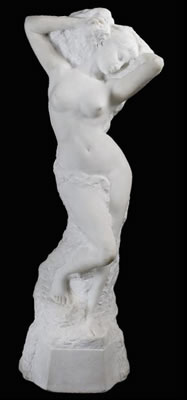
1850 Bouy-sur-Ovin near Nogent-on-Seing, France - 1934 Aix-les-Bains, France. Known for: Sculpture.
Alfred Boucher known for his sculptures was born in Bouy-sur-Ovin near Nogent-on-Seing, France on September 23, 1850. His parents worked for Marius Ramus and the sculptor took an interest in the... Read full biography
Alfred Boucher known for his sculptures was born in Bouy-sur-Ovin near Nogent-on-Seing, France on September 23, 1850. His parents worked for Marius Ramus and the sculptor took an interest in the young Boucher. Boucher taught for many years and one of his pupils was Camille Claudile who later... Read full biography
Alfred Boucher known for his sculptures was born in Bouy-sur-Ovin near Nogent-on-Seing, France on September 23, 1850. His parents worked for Marius Ramus and the sculptor took an interest in the young Boucher. Boucher taught for many years and one of his pupils was Camille Claudile who later created a bust of Boucher. During the 1880s, he asked Auguste Rodin to begin teaching in his place while he moved to Florence to create sculptures of presidents and royals. He won awards for his works at... Read full biography
Alfred Boucher known for his sculptures was born in Bouy-sur-Ovin near Nogent-on-Seing, France on September 23, 1850. His parents worked for Marius Ramus and the sculptor took an interest in the young Boucher. Boucher taught for many years and one of his pupils was Camille Claudile who later created a bust of Boucher. During the 1880s, he asked Auguste Rodin to begin teaching in his place while he moved to Florence to create sculptures of presidents and royals. He won awards for his works at the Grand Prix du Salon in 1881 and in 1900. Wanting to assist young artist, he established a studio for them in 1902. In 1934, at the age of 84 Alfred Boucher died in Aix-les-Bains, France. Sources:. Wikipedia - www.wikipedia.org. Design Tosccano -... Read full biography
Alfred Boucher known for his sculptures was born in Bouy-sur-Ovin near Nogent-on-Seing, France on September 23, 1850. His parents worked for Marius Ramus and the sculptor took an interest in the young Boucher. Boucher taught for many years and one of his pupils was Camille Claudile who later created a bust of Boucher. During the 1880s, he asked Auguste Rodin to begin teaching in his place while he moved to Florence to create sculptures of presidents and royals. He won awards for his works at the Grand Prix du Salon in 1881 and in 1900. Wanting to assist young artist, he established a studio for them in 1902. In 1934, at the age of 84 Alfred Boucher died in Aix-les-Bains, France. Sources:. Wikipedia - www.wikipedia.org. Design Tosccano - www.designtoscano.com... Read full biography
Artist Biography
Biography page for Alfred Boucher ((1850 - 1934)), known for Sculpture. Showing 2 biographical entries and 0 sample artworks.
Alfred Boucher - Artist Info
About Alfred Boucher
Biography from the Archives of askART
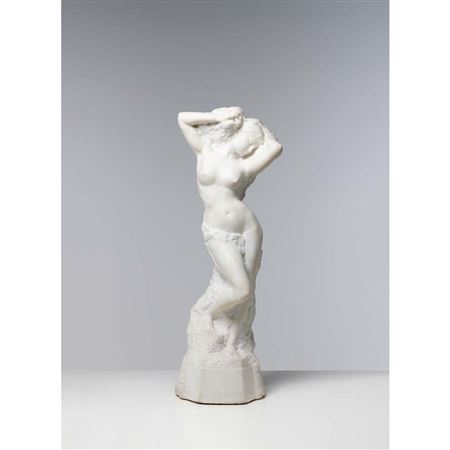 Alfred Boucher known for his sculptures was born in Bouy-sur-Ovin near Nogent-on-Seing, France on September 23, 1850. His parents worked for Marius Ramus and the sculptor took an interest in the young Boucher.
Boucher taught for many years and one of his pupils was Camille Claudile who later created a bust of Boucher. During the 1880s, he asked Auguste Rodin to begin teaching in his place while he moved to Florence to create sculptures of presidents and royals.
He won awards for his works at the Grand Prix du Salon in 1881 and in 1900. Wanting to assist young artist, he established a studio for them in 1902. In 1934, at the age of 84 Alfred Boucher died in Aix-les-Bains, France.
Sources:
Wikipedia - www.wikipedia.org
Design Tosccano - www.designtoscano.comBiography from Morton Subastas
A reference point for an entire generation of sculptors, Alfred Boucher, belongs to the tradition of late 19th-century French academicism, where sculpture displays impeccable technique with profound symbolic content and the material plays an essential role. He was awarded the Legion of Honor in various ranks: Knight in 1887, Officer in 1894, Commander in 1906, and Grand Officer in 1925. A disciple of the sculptor Paul Dubois, who influenced his technical rigor and sensitivity, he inherited a style with a marked realistic and naturalistic orientation, revealing a taste for Greco-Roman antiquity in an artistic context where new sensibilities rejected academic tradition.
Boucher revived and strengthened the classical canons of Greco-Roman beauty, such as proportion and harmony, contrapposto, and the idealization of the human body, resulting in sculptures with allegorical and mythological themes, where the female figure often embodies concepts such as History, Time, Philosophy, or moral virtues, as well as characters from classical mythology. He masterfully worked with various media: from cold marbles, malleable alabaster, and delicate terracotta to hard bronzes. With great versatility, Boucher combined symbolism and allegorical thought with the robustness of the materials he worked with, resulting in a vast legacy of carvings on diverse supports, refined finishes, and precise drawing.