Page loaded successfully. Showing biography for Anne Redpath.
Anne Redpath BIOGRAPHY
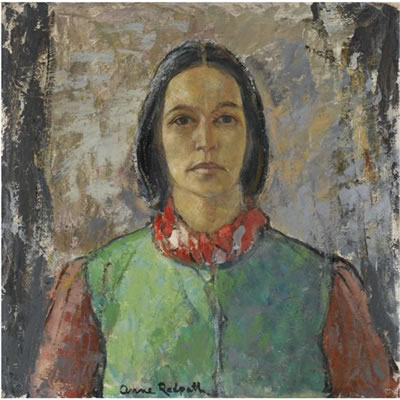
1895 Galashiels, United Kingdom - 1965 Edinburgh, Scotland. Known for: Vivid floral still life painting.
Born in Galashiels, the daughter of a tweed designer, Anne Redpath overcame initial parental opposition to the study of art on condition that she also trained as a teacher. She enrolled at Edinburgh... Read full biography
Born in Galashiels, the daughter of a tweed designer, Anne Redpath overcame initial parental opposition to the study of art on condition that she also trained as a teacher. She enrolled at Edinburgh College of Art in 1913 where she was taught by David Alison, Henry Lintott and D. M. Sutherland... Read full biography
Born in Galashiels, the daughter of a tweed designer, Anne Redpath overcame initial parental opposition to the study of art on condition that she also trained as a teacher. She enrolled at Edinburgh College of Art in 1913 where she was taught by David Alison, Henry Lintott and D. M. Sutherland amongst others. The College awarded her a traveling scholarship in 1919. Redpath traveled to Brussels, Bruges, Paris, Florence - where she lived for several months - and Siena, where she was impressed... Read full biography
Born in Galashiels, the daughter of a tweed designer, Anne Redpath overcame initial parental opposition to the study of art on condition that she also trained as a teacher. She enrolled at Edinburgh College of Art in 1913 where she was taught by David Alison, Henry Lintott and D. M. Sutherland amongst others. The College awarded her a traveling scholarship in 1919. Redpath traveled to Brussels, Bruges, Paris, Florence - where she lived for several months - and Siena, where she was impressed greatly by the work of the Sienese Primitives, particularly the brothers Lorenzetti. In 1920 she married James Beattie Michie, an architect with the War Graves Commission in France, spending 14 years bringing up a family, first in northern France and... Read full biography
Born in Galashiels, the daughter of a tweed designer, Anne Redpath overcame initial parental opposition to the study of art on condition that she also trained as a teacher. She enrolled at Edinburgh College of Art in 1913 where she was taught by David Alison, Henry Lintott and D. M. Sutherland amongst others. The College awarded her a traveling scholarship in 1919. Redpath traveled to Brussels, Bruges, Paris, Florence - where she lived for several months - and Siena, where she was impressed greatly by the work of the Sienese Primitives, particularly the brothers Lorenzetti. In 1920 she married James Beattie Michie, an architect with the War Graves Commission in France, spending 14 years bringing up a family, first in northern France and then on the Rivera, painting whenever she could. She and her three sons returned to Scotland in 1934, living in Hawick in... Read full biography
Artist Biography
Biography page for Anne Redpath ((1895 - 1965)), known for Vivid floral still life painting. Showing 1 biographical entries and 0 sample artworks.
Anne Redpath - Artist Info
About Anne Redpath
Biography from Sotheby's London, New Bond Street
Born in Galashiels, the daughter of a tweed designer, Anne Redpath overcame initial parental opposition to the study of art on condition that she also trained as a teacher. She enrolled at Edinburgh College of Art in 1913 where she was taught by David Alison, Henry Lintott and D. M. Sutherland amongst others. The College awarded her a traveling scholarship in 1919. Redpath traveled to Brussels, Bruges, Paris, Florence - where she lived for several months - and Siena, where she was impressed greatly by the work of the Sienese Primitives, particularly the brothers Lorenzetti.
In 1920 she married James Beattie Michie, an architect with the War Graves Commission in France, spending 14 years bringing up a family, first in northern France and then on the Rivera, painting whenever she could. She and her three sons returned to Scotland in 1934, living in Hawick in the Borders, where she had been brought up, and she moved to Edinburgh in 1949.
On her return to Scotland she took up painting again in earnest, forced to earn a living from it. Until she visited Spain in 1951 her paintings were mainly still-life and landscapes. Following her visit, her art developed a new strength and drama, her handling of paint was much freer and her work developed a more abstract quality. Color and texture fascinated her. The influence of her father's work remained with her - she remarked in later life "I do, with a spot of red or yellow in harmony with grey, what my father did in his tweed".
In the last 12 years of her life she painted in Corsica, the Canary Islands, Portugal, Amsterdam and Venice. Serious illnesses in 1955 and 1959 seemed only to intensify the emotion with which she charged her canvas.