Page loaded successfully. Showing biography for Arthur Hacker.
Arthur Hacker BIOGRAPHY
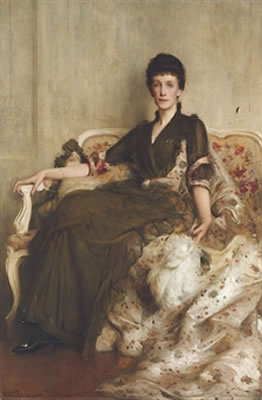
1858 London, England - 1919. Known for: Bucolic scene, figure and portrait painting, teaching.
Arthur Hacker was born in London, the son of Edward Hacker the line engraver. He went to the Royal Academy schools from 1876-1880, before studying in Paris at the atelier of Léon Bonnat (1833-1922),... Read full biography
Arthur Hacker was born in London, the son of Edward Hacker the line engraver. He went to the Royal Academy schools from 1876-1880, before studying in Paris at the atelier of Léon Bonnat (1833-1922), an internationally famous portrait painter and close friend of Degas. Having finished his studies,... Read full biography
Arthur Hacker was born in London, the son of Edward Hacker the line engraver. He went to the Royal Academy schools from 1876-1880, before studying in Paris at the atelier of Léon Bonnat (1833-1922), an internationally famous portrait painter and close friend of Degas. Having finished his studies, Hacker travelled with his friend Solomon J Solomon to study the Spanish Old Masters in Madrid, then on to Seville, Gibraltar and Tangiers. He later returned to visit various parts of North Africa... Read full biography
Arthur Hacker was born in London, the son of Edward Hacker the line engraver. He went to the Royal Academy schools from 1876-1880, before studying in Paris at the atelier of Léon Bonnat (1833-1922), an internationally famous portrait painter and close friend of Degas. Having finished his studies, Hacker travelled with his friend Solomon J Solomon to study the Spanish Old Masters in Madrid, then on to Seville, Gibraltar and Tangiers. He later returned to visit various parts of North Africa including Morocco and Algiers. Hacker was a founding member of the New English Art Club in 1886. His early work consisted largely of genre and historical scenes, such as Pelagia and Philemon (1887, Walker Art Gallery, Liverpool) and The Annunciation,... Read full biography
Arthur Hacker was born in London, the son of Edward Hacker the line engraver. He went to the Royal Academy schools from 1876-1880, before studying in Paris at the atelier of Léon Bonnat (1833-1922), an internationally famous portrait painter and close friend of Degas. Having finished his studies, Hacker travelled with his friend Solomon J Solomon to study the Spanish Old Masters in Madrid, then on to Seville, Gibraltar and Tangiers. He later returned to visit various parts of North Africa including Morocco and Algiers. Hacker was a founding member of the New English Art Club in 1886. His early work consisted largely of genre and historical scenes, such as Pelagia and Philemon (1887, Walker Art Gallery, Liverpool) and The Annunciation, (1892, Tate) which was purchased by the Chantry Bequest. He was elected an A... Read full biography
Artist Biography
Biography page for Arthur Hacker ((1858 - 1919)), known for Bucolic scene, figure and portrait painting, teaching. Showing 1 biographical entries and 0 sample artworks.
Arthur Hacker - Artist Info
About Arthur Hacker
Biography from Richard Green
Arthur Hacker was born in London, the son of Edward Hacker the line engraver. He went to the Royal Academy schools from 1876-1880, before studying in Paris at the atelier of Léon Bonnat (1833-1922), an internationally famous portrait painter and close friend of Degas.
Having finished his studies, Hacker travelled with his friend Solomon J Solomon to study the Spanish Old Masters in Madrid, then on to Seville, Gibraltar and Tangiers. He later returned to visit various parts of North Africa including Morocco and Algiers. Hacker was a founding member of the New English Art Club in 1886.
His early work consisted largely of genre and historical scenes, such as Pelagia and Philemon (1887, Walker Art Gallery, Liverpool) and The Annunciation, (1892, Tate) which was purchased by the Chantry Bequest.
He was elected an Associate of the Royal Academy in 1894, and began teaching there soon after, while developing his talent for portraiture, achieving considerable success. He was elected an Academician in 1910, his diploma work being Wet Night, Piccadilly Circus, part of a series of atmospheric London street scenes which met with a mixed reception from the critics.
In his later years he returned to painting mythological and allegorical subjects. He died on the 12th of September in London, where he had lived throughout his life.
The work of Arthur Hacker is represented at the Tate and Royal Academy of Arts, London, Brighton & Hove Museums, Manchester City Art Gallery and the Worcester City Art Gallery & Museum.