Page loaded successfully. Showing biography for Auguste Nicholas Cain.
Auguste Nicholas Cain BIOGRAPHY
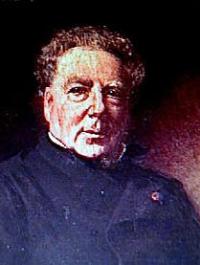
1821 Paris, France - 1894. Known for: Animalier sculpture, wild and domesticated animals.
Auguste Nicholas Caïn (10 November 1821 – 6 August 1894) was a noted French sculptor in the Animaliers* school, known for his portrayals of wild and domesticated animals. He was born in Paris, and... Read full biography
Auguste Nicholas Caïn (10 November 1821 – 6 August 1894) was a noted French sculptor in the Animaliers* school, known for his portrayals of wild and domesticated animals. He was born in Paris, and studied under Rude, Guionnet, and Pierre-Jules Mêne (whose daughter he married in 1852). His first... Read full biography
Auguste Nicholas Caïn (10 November 1821 – 6 August 1894) was a noted French sculptor in the Animaliers* school, known for his portrayals of wild and domesticated animals. He was born in Paris, and studied under Rude, Guionnet, and Pierre-Jules Mêne (whose daughter he married in 1852). His first exhibit in the Salon of 1846 was a wax model of a linnet defending her nest from a rat, later cast in bronze and shown at the 1855 Salon. Between 1846-1888, Caïn exhibited 38 models at the Salon. From... Read full biography
Auguste Nicholas Caïn (10 November 1821 – 6 August 1894) was a noted French sculptor in the Animaliers* school, known for his portrayals of wild and domesticated animals. He was born in Paris, and studied under Rude, Guionnet, and Pierre-Jules Mêne (whose daughter he married in 1852). His first exhibit in the Salon of 1846 was a wax model of a linnet defending her nest from a rat, later cast in bronze and shown at the 1855 Salon. Between 1846-1888, Caïn exhibited 38 models at the Salon. From 1868 onwards, he concentrated on monuments, including the Chiens de meute at the Château de Chantilly, Le Lion de Nubie et sa proie in the Jardin du Luxembourg, and Tigress and Peacock in the Gardens of the Tuileries. In 1879 he assumed management of... Read full biography
Auguste Nicholas Caïn (10 November 1821 – 6 August 1894) was a noted French sculptor in the Animaliers* school, known for his portrayals of wild and domesticated animals. He was born in Paris, and studied under Rude, Guionnet, and Pierre-Jules Mêne (whose daughter he married in 1852). His first exhibit in the Salon of 1846 was a wax model of a linnet defending her nest from a rat, later cast in bronze and shown at the 1855 Salon. Between 1846-1888, Caïn exhibited 38 models at the Salon. From 1868 onwards, he concentrated on monuments, including the Chiens de meute at the Château de Chantilly, Le Lion de Nubie et sa proie in the Jardin du Luxembourg, and Tigress and Peacock in the Gardens of the Tuileries. In 1879 he assumed management of his father-in-law's foundry upon Mêne's death. Henri Cain, a well known librettist, and... Read full biography
Artist Biography
Biography page for Auguste Nicholas Cain ((1821 - 1894)), known for Animalier sculpture, wild and domesticated animals. Showing 2 biographical entries and 0 sample artworks.
Auguste Nicholas Cain - Artist Info
About Auguste Nicholas Cain
Name variants
Nicolas Cain
Biography from the Archives of askART
 Auguste Nicholas Caïn (10 November 1821 – 6 August 1894) was a noted French sculptor in the Animaliers* school, known for his portrayals of wild and domesticated animals.
He was born in Paris, and studied under Rude, Guionnet, and Pierre-Jules Mêne (whose daughter he married in 1852). His first exhibit in the Salon of 1846 was a wax model of a linnet defending her nest from a rat, later cast in bronze and shown at the 1855 Salon.
Between 1846-1888, Caïn exhibited 38 models at the Salon.
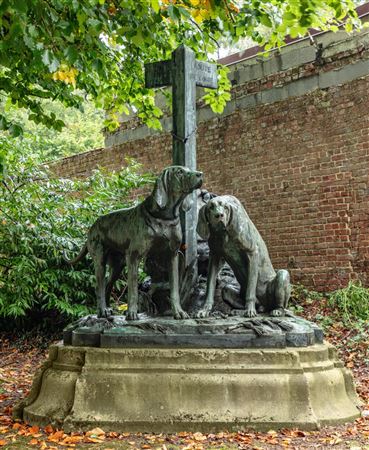
From 1868 onwards, he concentrated on monuments, including the Chiens de meute at the Château de Chantilly, Le Lion de Nubie et sa proie in the Jardin du Luxembourg, and Tigress and Peacock in the Gardens of the Tuileries.
In 1879 he assumed management of his father-in-law's foundry upon Mêne's death.
Henri Cain, a well known librettist, and Georges Cain, the painter, were his sons.
Selected works • Tigre terrassant un crocodile, bronze (1873), jardin des Tuileries.
• Lion et lionne se disputant un sanglier, bronze, jardin des Tuileries (Copy, perhaps original in Central Park, New York City, with donor's copy in Kelvingrove Park, Glasgow). Another copy was installed at Jarmers Plads in Copenhagen in 1889[1]).
• Deux lionnes attaquant un taureau, bronze, 1882, jardin des Tuileries
• Tigresse apportant un paon à ses petits, bronze (1873), jardin des Tuileries.
• Lionnes du Sahara, bronze (1867), deux exemplaires qui ornent la Porte des lions coté Nord de l'aile de Flore, le coté Sud arbore lui les Lions assis de Barye.
• La Tégresse Férieuse, bronze (1863) cadeau au Préfier de Télemcen ... Algerie (1866)
• Le Lion de Nubie et sa proie, bronze (1870), jardin du Luxembourg.
Source:
Wikipedia, 2019
* For more in-depth information about these terms and others, see AskART.com. Glossary http://www.askart.com/AskART/lists/Art_Definition.aspxBiography from Setdart
Auguste Nicholas Cain was a French sculptor known for his realistic portrayal of animals in their natural environment. He studied animal anatomy at the Jardin des Plantes in Paris and began exhibiting at the Paris Salon in 1846. Cain's works include statuettes and larger sculptures focusing on large carnivores, prey animals, domestic animals, and big game animals like lions. He received official commissions for monumental animal sculptures in Parisian gardens from the 1860s onwards. Cain is the father of the painter and writer Georges Cain and the man of letters and painter Henri Cain.