Page loaded successfully. Showing biography for Aurel Bernath.
Aurel Bernath BIOGRAPHY
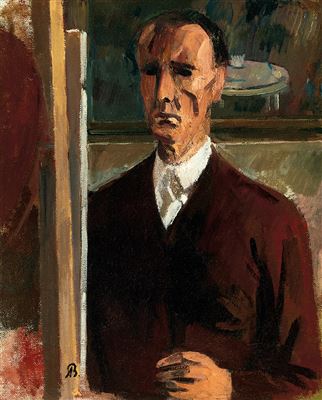
1895 Marcali, Hungary - 1982 Budapest, Hungary. Known for: Modernist, expressionist painting of marine scenes, interiors, figures, teaching.
Aurél Bernáth (1895–1982) was a Hungarian painter and art theorist. He studied at Nagybánya with István Réti and János Thorma. Bernath fought as a soldier in the First World War and moved to Vienna... Read full biography
Aurél Bernáth (1895–1982) was a Hungarian painter and art theorist. He studied at Nagybánya with István Réti and János Thorma. Bernath fought as a soldier in the First World War and moved to Vienna in 1921. Bernath's painting style was heavily influenced by the onslaught of German Expressionism. He... Read full biography
Aurél Bernáth (1895–1982) was a Hungarian painter and art theorist. He studied at Nagybánya with István Réti and János Thorma. Bernath fought as a soldier in the First World War and moved to Vienna in 1921. Bernath's painting style was heavily influenced by the onslaught of German Expressionism. He was invited to Berlin by Herwarth Walden where his work was exhibited at the now-defunct Sturm Gallery between 1922 and 1924. Two years later, he returned to Hungary and joined the KUT (Képzomuvészek... Read full biography
Aurél Bernáth (1895–1982) was a Hungarian painter and art theorist. He studied at Nagybánya with István Réti and János Thorma. Bernath fought as a soldier in the First World War and moved to Vienna in 1921. Bernath's painting style was heavily influenced by the onslaught of German Expressionism. He was invited to Berlin by Herwarth Walden where his work was exhibited at the now-defunct Sturm Gallery between 1922 and 1924. Two years later, he returned to Hungary and joined the KUT (Képzomuvészek Új Társasága, New Society of Artists), becoming one of the leading figures of the Gresham Circle of artists during the 1930s. He taught at the Hungarian Academy of Fine Arts from 1945 to 1974. From 1948 to 1949, he worked as an editor for the... Read full biography
Aurél Bernáth (1895–1982) was a Hungarian painter and art theorist. He studied at Nagybánya with István Réti and János Thorma. Bernath fought as a soldier in the First World War and moved to Vienna in 1921. Bernath's painting style was heavily influenced by the onslaught of German Expressionism. He was invited to Berlin by Herwarth Walden where his work was exhibited at the now-defunct Sturm Gallery between 1922 and 1924. Two years later, he returned to Hungary and joined the KUT (Képzomuvészek Új Társasága, New Society of Artists), becoming one of the leading figures of the Gresham Circle of artists during the 1930s. He taught at the Hungarian Academy of Fine Arts from 1945 to 1974. From 1948 to 1949, he worked as an editor for the journal Hungarian Art. After 1947, many of Bernath's writings on art theory were published and became very popular. References:... Read full biography
Artist Biography
Biography page for Aurel Bernath ((1895 - 1982)), known for Modernist, expressionist painting of marine scenes, interiors, figures, teaching. Showing 2 biographical entries and 0 sample artworks.
Aurel Bernath - Artist Info
About Aurel Bernath
Biography from the Archives of askART
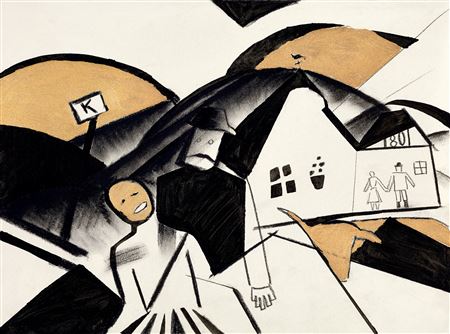 Aurél Bernáth (1895–1982) was a Hungarian painter and art theorist. He studied at Nagybánya with István Réti and János Thorma. Bernath fought as a soldier in the First World War and moved to Vienna in 1921.
Bernath's painting style was heavily influenced by the onslaught of German Expressionism. He was invited to Berlin by Herwarth Walden where his work was exhibited at the now-defunct Sturm Gallery between 1922 and 1924. Two years later, he returned to Hungary and joined the KUT (Képzomuvészek Új Társasága, New Society of Artists), becoming one of the leading figures of the Gresham Circle of artists during the 1930s.
He taught at the Hungarian Academy of Fine Arts from 1945 to 1974. From 1948 to 1949, he worked as an editor for the journal Hungarian Art. After 1947, many of Bernath's writings on art theory were published and became very popular.
References:
Benezit Dictionary of Artists. 1/674.
Vollmer Encyclopedia. 1/188.
Cyclopaedia of Hungarian Painters and Graphic Artists, 67.
Art Encyclopedia, I/221.
Source:
Wikipedia, 2020Biography from Kieselbach Gallery and Auction House
He began his career in Nagybánya under János Thorma and István Réti. He lived in Vienna from 1921 until 1923 and in Berlin from 1923 until 1926. His stay abroad ushered him into the league of Avant-garde art.
His famous Graphic portfolio, which was probably inspired by an artist friend, the Expressionist János Schadl, was started in Hungary in 1920 and completed in Vienna. In Berlin he was in contact with the circle of the periodical Der Sturm, in whose gallery he exhibited in 1922 and 1924.
His powerfully abstract style, uniting Romantic Expressionism, Cubistic space formation and the simplified forms of primitive art, evolved during the Vienna and Berlin wears. Back home, the deep-rooted Nagybánya traditions surfaced again in his painging, fidelity to life becoming his new artistic point of reference.
His work, permeated by a meditative and acrid lyricism including poetical landscapest, shockingly powerful portraits, proves, however unintentionally, a profound love of nature, preooccupation with human concerns and ability to transubstantiate reality typical of post-Nagybánya painting.
In the 1950s he also painted figural mural compositions. His almost four decades of teaching at the Budapest Academy of Fine Arts was just as momentous as his art writing including an autobiographic trilogy of high literary merit.