Page loaded successfully. Showing biography for Baccio Maria Bacci.
Baccio Maria Bacci BIOGRAPHY
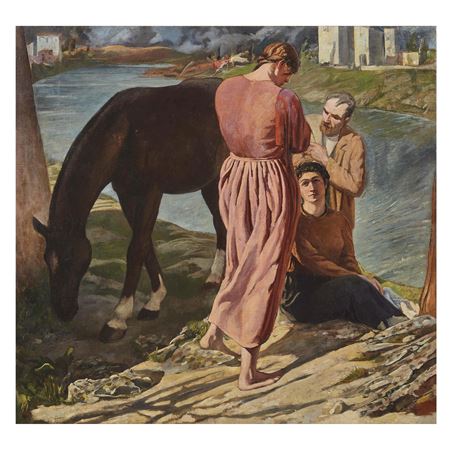
1888 Florence, Italy - 1974 Florence, Italy. Known for: Figure and religious themed painting, frescoes.
Baccio Maria Bacci was born in Florence in 1888. He came from a family of artists, but nevertheless his parents prevented him from studying art. This may be one of the reasons why he ran away from... Read full biography
Baccio Maria Bacci was born in Florence in 1888. He came from a family of artists, but nevertheless his parents prevented him from studying art. This may be one of the reasons why he ran away from home when he was seventeen and went to Munich and later Nuremberg. Eight months later, he returned to... Read full biography
Baccio Maria Bacci was born in Florence in 1888. He came from a family of artists, but nevertheless his parents prevented him from studying art. This may be one of the reasons why he ran away from home when he was seventeen and went to Munich and later Nuremberg. Eight months later, he returned to Florence and was advised to enroll at the Academy where he was taught by Adolfo de Carolis and Giovanni Fattori. But, he did not get his diploma because he stopped studying a month before the awards... Read full biography
Baccio Maria Bacci was born in Florence in 1888. He came from a family of artists, but nevertheless his parents prevented him from studying art. This may be one of the reasons why he ran away from home when he was seventeen and went to Munich and later Nuremberg. Eight months later, he returned to Florence and was advised to enroll at the Academy where he was taught by Adolfo de Carolis and Giovanni Fattori. But, he did not get his diploma because he stopped studying a month before the awards and concentrated on painting independently. Bacci also showed at two exhibitions, the first at Palazzo Gondi in 1910 and the second in 1912, a personal exhibition at the Società Artistica in Piazza Donatello. In 1913, he went to Paris where he... Read full biography
Baccio Maria Bacci was born in Florence in 1888. He came from a family of artists, but nevertheless his parents prevented him from studying art. This may be one of the reasons why he ran away from home when he was seventeen and went to Munich and later Nuremberg. Eight months later, he returned to Florence and was advised to enroll at the Academy where he was taught by Adolfo de Carolis and Giovanni Fattori. But, he did not get his diploma because he stopped studying a month before the awards and concentrated on painting independently. Bacci also showed at two exhibitions, the first at Palazzo Gondi in 1910 and the second in 1912, a personal exhibition at the Società Artistica in Piazza Donatello. In 1913, he went to Paris where he associated with intellectuals and got to know Apollinaire, and his art began to become more Futuristic and abstract. From 1915 to 1918, he enli... Read full biography
Artist Biography
Biography page for Baccio Maria Bacci ((1888 - 1974)), known for Figure and religious themed painting, frescoes. Showing 1 biographical entries and 0 sample artworks.
Baccio Maria Bacci - Artist Info
About Baccio Maria Bacci
Name variants
Maria Bacci Baccio
Biography from the Archives of askART
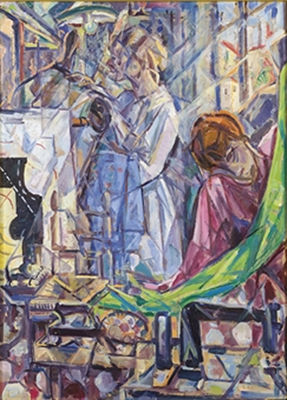 Baccio Maria Bacci was born in Florence in 1888. He came from a family of artists, but nevertheless his parents prevented him from studying art. This may be one of the reasons why he ran away from home when he was seventeen and went to Munich and later Nuremberg. Eight months later, he returned to Florence and was advised to enroll at the Academy where he was taught by Adolfo de Carolis and Giovanni Fattori. But, he did not get his diploma because he stopped studying a month before the awards and concentrated on painting independently. Bacci also showed at two exhibitions, the first at Palazzo Gondi in 1910 and the second in 1912, a personal exhibition at the Società Artistica in Piazza Donatello.
In 1913, he went to Paris where he associated with intellectuals and got to know Apollinaire, and his art began to become more Futuristic and abstract. From 1915 to 1918, he enlisted in the army and fought in the First World War. After the War, he exhibited in Geneva in 1920 at an avant-garde exhibition, and in 1921 at the great exhibition of the Fiorentina Primaverile. In 1922, together with his friends Primo Conti, Raffaello Franchi, Mario Tinti and Curzio Malaparte, Bacci came up with the idea of founding an Arts Association in Florence but the project never came to fruition.
In 1929, he started to get involved in a new job that was to keep him busy for years to come - that of the fresco cycle for the Verna Convent depicting events in the life of St. Francis. He got married to Elena Croon in 1933, and they had three children. During the period up until the outbreak of the Second World War, he lived and worked in Fiesole and his home became a retreat not only for artists, but also for writers and musicians. During the war years 1941 to 1944, he was appointed President of the Commission for the protection of works of art for Florence Municipality Council, a position of great responsibility that he shared with his highly esteemed colleagues. When the allied forces arrived, he went back to Fiesole but was reported and taken away to a concentration camp from 1944 to 1945. In 1946, he was readmitted to the Academy of Arts and Design where he also carried out managerial work.
From 1948, he started exhibiting regularly again, at a personal exhibition at Milan and then, from 1953 to 1955, he devoted himself entirely to the large mosaic in the apse of S. Matteo in Salerno Cathedral. When he had finished this job, he decided to move to Rome where he was to live until 1972.
In 1957 Bacci painted the frescos of the Collegiata di Montevarchi (Montevarchi Collegiate Church), with scenes from the life of St.Francis. In 1958, he had a personal exhibition in Rome at the Palazzo delle Esposizioni with a selection of his most famous works. From 1963 to 1964, Bacci designed and created the mosaics and glass windows for the Church of St. Joseph of Colasazio in Milan and later made the glass windows of what used to be the Papal chapel of the Verano Cemetry.
In January 1969, Bacci organized his first personal exhibition in Rome at the Galleria Hermes, showing works painted in the period when he was influenced by the Futurists. At the end of 1972 he returned to Tuscany, to Olmo, where he worked painting and writing until the year of his death.
Source:
Written by: Cecilia Iacopetti - Translated by: Catherine Biggerstaff
Galleria d'Arte Bacci di Capaci - Lucca - Italy
http://www.800artstudio.com/en/bacci.php