Page loaded successfully. Showing biography for Bernhard Hoetger.
Bernhard Hoetger BIOGRAPHY
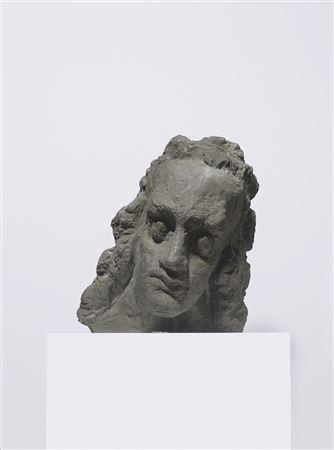
1874 Dortmund, Germany - 1949 Interlachen, Switzerland. Known for: Expressionist painting, sculpture, crafts.
Bernhard Hoetger was a German sculptor, painter and handicrafts artist of the Expressionist movement. Entrance to Böttcherstraße: Lichtbringer ("Bringer of Light") by Hoetger, April 1936. The son of... Read full biography
Bernhard Hoetger was a German sculptor, painter and handicrafts artist of the Expressionist movement. Entrance to Böttcherstraße: Lichtbringer ("Bringer of Light") by Hoetger, April 1936. The son of a Dortmund blacksmith, he studied sculpture in Detmold from 1888 to 1892, before directing a... Read full biography
Bernhard Hoetger was a German sculptor, painter and handicrafts artist of the Expressionist movement. Entrance to Böttcherstraße: Lichtbringer ("Bringer of Light") by Hoetger, April 1936. The son of a Dortmund blacksmith, he studied sculpture in Detmold from 1888 to 1892, before directing a workshop in Rheda-Wiedenbrück. After a spell at the Düsseldorf Arts Academy, he took a trip to Paris, where he was deeply influenced by Auguste Rodin, but also got to know Paula Modersohn-Becker. Later he... Read full biography
Bernhard Hoetger was a German sculptor, painter and handicrafts artist of the Expressionist movement. Entrance to Böttcherstraße: Lichtbringer ("Bringer of Light") by Hoetger, April 1936. The son of a Dortmund blacksmith, he studied sculpture in Detmold from 1888 to 1892, before directing a workshop in Rheda-Wiedenbrück. After a spell at the Düsseldorf Arts Academy, he took a trip to Paris, where he was deeply influenced by Auguste Rodin, but also got to know Paula Modersohn-Becker. Later he was able to familiarize himself with Antoni Gaudí. In 1911, Hoetger was called up to the "artistic colony" of Darmstadt, where he was to remain for some time. In 1914, inspired by Becker-Modersohn, he got to Worpswede. It was here where he met with... Read full biography
Bernhard Hoetger was a German sculptor, painter and handicrafts artist of the Expressionist movement. Entrance to Böttcherstraße: Lichtbringer ("Bringer of Light") by Hoetger, April 1936. The son of a Dortmund blacksmith, he studied sculpture in Detmold from 1888 to 1892, before directing a workshop in Rheda-Wiedenbrück. After a spell at the Düsseldorf Arts Academy, he took a trip to Paris, where he was deeply influenced by Auguste Rodin, but also got to know Paula Modersohn-Becker. Later he was able to familiarize himself with Antoni Gaudí. In 1911, Hoetger was called up to the "artistic colony" of Darmstadt, where he was to remain for some time. In 1914, inspired by Becker-Modersohn, he got to Worpswede. It was here where he met with Bremer's Ludwig Roselius, with whom he would go on to make his masterpiece, Bremen's Böttcherstrase, in an Expressionist style. Lik... Read full biography
Artist Biography
Biography page for Bernhard Hoetger ((1874 - 1949)), known for Expressionist painting, sculpture, crafts. Showing 1 biographical entries and 0 sample artworks.
Bernhard Hoetger - Artist Info
About Bernhard Hoetger
Biography from the Archives of askART
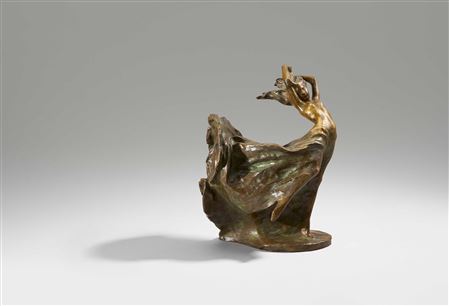 Bernhard Hoetger was a German sculptor, painter and handicrafts artist of the Expressionist movement.
Entrance to Böttcherstraße: Lichtbringer ("Bringer of Light") by Hoetger, April 1936
The son of a Dortmund blacksmith, he studied sculpture in Detmold from 1888 to 1892, before directing a workshop in Rheda-Wiedenbrück. After a spell at the Düsseldorf Arts Academy, he took a trip to Paris, where he was deeply influenced by Auguste Rodin, but also got to know Paula Modersohn-Becker. Later he was able to familiarize himself with Antoni Gaudí. In 1911, Hoetger was called up to the "artistic colony" of Darmstadt, where he was to remain for some time.
In 1914, inspired by Becker-Modersohn, he got to Worpswede. It was here where he met with Bremer's Ludwig Roselius, with whom he would go on to make his masterpiece, Bremen's Böttcherstrase, in an Expressionist style.
Like his patron Ludwig Roselius, Hoetger sympathised with the Nazi ideals and became a member of the Nazi Party. He tried, in vain, to instill himself through his art into the party, but in 1936 Hitler declared it to be degenerate art. Expelled from the party, he settled in Switzerland, where he died in 1949.
Source:
Wikipedia
http://en.wikipedia.org/wiki/Bernhard_Hoetger