Page loaded successfully. Showing biography for Bert Graves.
Bert Graves BIOGRAPHY
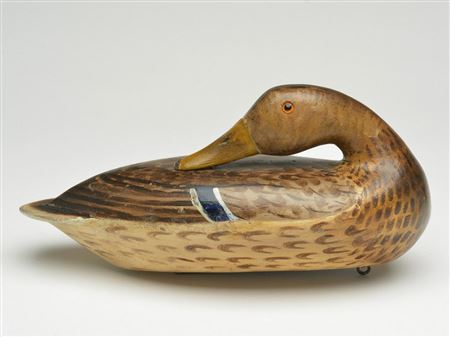
1880 Magnolia, Illinois - 1956 llinois. Known for: Decoy carving, printing.
Lots Sold: 84%, High Price: Subscribe.
Bert Graves. An excellent summary of Bert's life was published in a March/April 1997 issue of Decoy Magazine by Donna Tonelli. Subsequent scrutiny can add little or nothing to her research and most... Read full biography
Bert Graves. An excellent summary of Bert's life was published in a March/April 1997 issue of Decoy Magazine by Donna Tonelli. Subsequent scrutiny can add little or nothing to her research and most of what is presented here is a result of her article. Graves was born in rural Magnolia, IL, somewhat... Read full biography
Bert Graves. An excellent summary of Bert's life was published in a March/April 1997 issue of Decoy Magazine by Donna Tonelli. Subsequent scrutiny can add little or nothing to her research and most of what is presented here is a result of her article. Graves was born in rural Magnolia, IL, somewhat removed from the east side of the river and approximately 45 miles NE of Peoria. Through at least his twenties, he, and his brother, like their father, worked as teamsters. This hard-working... Read full biography
Bert Graves. An excellent summary of Bert's life was published in a March/April 1997 issue of Decoy Magazine by Donna Tonelli. Subsequent scrutiny can add little or nothing to her research and most of what is presented here is a result of her article. Graves was born in rural Magnolia, IL, somewhat removed from the east side of the river and approximately 45 miles NE of Peoria. Through at least his twenties, he, and his brother, like their father, worked as teamsters. This hard-working blue-collar lifestyle would remain with him for his entire life. Around 1905, he married the widow Anna Riley Corbin who brought her young son, Bransford, to the union and Graves would raise the boy as his own (see note 1). For a few years after the... Read full biography
Bert Graves. An excellent summary of Bert's life was published in a March/April 1997 issue of Decoy Magazine by Donna Tonelli. Subsequent scrutiny can add little or nothing to her research and most of what is presented here is a result of her article. Graves was born in rural Magnolia, IL, somewhat removed from the east side of the river and approximately 45 miles NE of Peoria. Through at least his twenties, he, and his brother, like their father, worked as teamsters. This hard-working blue-collar lifestyle would remain with him for his entire life. Around 1905, he married the widow Anna Riley Corbin who brought her young son, Bransford, to the union and Graves would raise the boy as his own (see note 1). For a few years after the marriage, Bert would support the family as a carpenter in Peoria. By about 1915, he either bought or (more likely) built for h... Read full biography
Artist Biography
Biography page for Bert Graves ((1880 - 1956)), known for Decoy carving, printing. Showing 1 biographical entries and 0 sample artworks.
Bert Graves - Artist Info
About Bert Graves
Name variants
G Bert Graves, GBert Graves, George "Bert" Graves
Biography from Guyette & Deeter, Inc.
Bert Graves
An excellent summary of Bert's life was published in a March/April 1997 issue of Decoy Magazine by Donna Tonelli. Subsequent scrutiny can add little or nothing to her research and most of what is presented here is a result of her article.
Graves was born in rural Magnolia, IL, somewhat removed from the east side of the river and approximately 45 miles NE of Peoria. Through at least his twenties, he, and his brother, like their father, worked as teamsters. This hard-working blue-collar lifestyle would remain with him for his entire life. Around 1905, he married the widow Anna Riley Corbin who brought her young son, Bransford, to the union and Graves would raise the boy as his own (see note 1).
For a few years after the marriage, Bert would support the family as a carpenter in Peoria. By about 1915, he either bought or (more likely) built for himself and Anna, a comfortable home and workshop at 706 McReynolds St and this would be his address for the remainder of his life. For whatever reason, between at least the dates of 1918 and 1920, he lists his primary occupation as "fisherman - commercial" working at the "foot of Bridge St". This was to be a short-term venture, for between the dates of 1921 through 1949 he returned to describing himself as a "carpenter" or "contractor". This was interrupted briefly when on the WWII draft registration, he states that he worked for the "City Hall Maintenance crew". By 1950 he was unable to work and had applied for his social security benefits. He died one year later.
It is unclear when Graves began to carve decoys. We can only assume that he may have begun to carve a few for his own use while working on the river circa 1918. We do know that, upon the death of Robert Elliston, Graves approached his widow and purchased the remaining Elliston patterns, decoys, and orders. By the 1930's he had printed, and was distributing, a business card advertising his decoys as well as boats, and this little piece of ephemera clearly lists "Elliston Pattern Decoys".
He did sell some of his carvings through the Portman's Sporting Goods store and orders flowed in from sportsmen around the country with quality rigs having been located throughout the Midwest, as well as Manitoba and elsewhere. At the pricey sum of between $75 and $100 per dozen in the 1940's and 50's, his decoys would have comprised a significant portion of Grave's income.
The Graves decoy carving operation was based out of his garage and was, by all accounts, somewhat of a low keyed, factory type, operation. The work was accomplished through the joint efforts of Graves, his brother Orville, Orville's wife Effie, their sister Nellie and at least three or four other individuals. As late as the mid 1930's he was still shipping unpainted birds to Elliston's wife (now living in Chicago) to paint. She, in turn, ultimately taught Effie and Nellie how to accomplish this delicate task. Other than perhaps a small number of decoys produced initially by Graves for his own use, as Donna Tonelli notes, of the "hundreds produced over a thirty-year period, it's quite possible that nary a one exists that was made solely by him".
Graves himself is remembered as a local "river rat", and an excellent shot with a fondness for fighting gamecocks. It is his decoys, however, that have justly earned him his rightful place in the Illinois River decoy carving hierarchy.
Notes: 1. This marriage may have occurred in 1907 in Chicago and the child's name has sometimes been mis-spelled as Bradford.