Page loaded successfully. Showing biography for Beth Swartz.
Beth Swartz BIOGRAPHY
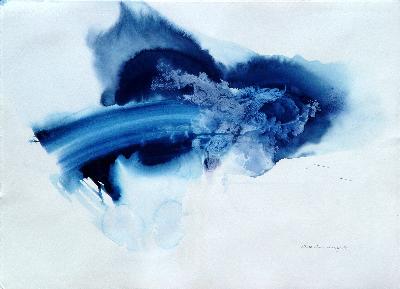
1936 New York, New York - n/a. Known for: Transcendental/spiritual-themed abstraction, multimedia installations.
Beth Swartz (b. 1936). Beth Ames Swartz (born February 5, 1936) is an American painter and visual artist. Primarily working in the idioms of abstraction and semi-abstraction, her paintings and... Read full biography
Beth Swartz (b. 1936). Beth Ames Swartz (born February 5, 1936) is an American painter and visual artist. Primarily working in the idioms of abstraction and semi-abstraction, her paintings and mixed-media works are commonly informed by philosophical and spiritual concepts shared by people of... Read full biography
Beth Swartz (b. 1936). Beth Ames Swartz (born February 5, 1936) is an American painter and visual artist. Primarily working in the idioms of abstraction and semi-abstraction, her paintings and mixed-media works are commonly informed by philosophical and spiritual concepts shared by people of different cultural world views, and incorporate both symbols and words in the vocabulary of their visual language. Her art practice has been guided by aesthetic philosophies including Wassily Kandinsky’s... Read full biography
Beth Swartz (b. 1936). Beth Ames Swartz (born February 5, 1936) is an American painter and visual artist. Primarily working in the idioms of abstraction and semi-abstraction, her paintings and mixed-media works are commonly informed by philosophical and spiritual concepts shared by people of different cultural world views, and incorporate both symbols and words in the vocabulary of their visual language. Her art practice has been guided by aesthetic philosophies including Wassily Kandinsky’s Concerning the Spiritual in Art and Robert Smithson’s Spiral Jetty, and inspired by various religious and philosophical systems including Native American Healing practices, Buddhism, Jewish Mysticism, and Christianity in order to facilitate... Read full biography
Beth Swartz (b. 1936). Beth Ames Swartz (born February 5, 1936) is an American painter and visual artist. Primarily working in the idioms of abstraction and semi-abstraction, her paintings and mixed-media works are commonly informed by philosophical and spiritual concepts shared by people of different cultural world views, and incorporate both symbols and words in the vocabulary of their visual language. Her art practice has been guided by aesthetic philosophies including Wassily Kandinsky’s Concerning the Spiritual in Art and Robert Smithson’s Spiral Jetty, and inspired by various religious and philosophical systems including Native American Healing practices, Buddhism, Jewish Mysticism, and Christianity in order to facilitate communication with viewers on both the conscious and unconscious level. Swartz synthesizes these spiritual traditions in h... Read full biography
Artist Biography
Biography page for Beth Swartz ((Born 1936)), known for Transcendental/spiritual-themed abstraction, multimedia installations. Showing 1 biographical entries and 0 sample artworks.
Beth Swartz - Artist Info
About Beth Swartz
Biography from Kelley Gallery - Pasadena
Beth Swartz (b. 1936)
Beth Ames Swartz (born February 5, 1936) is an American painter and visual artist.
Primarily working in the idioms of abstraction and semi-abstraction, her paintings and mixed-media works are commonly informed by philosophical and spiritual concepts shared by people of different cultural world views, and incorporate both symbols and words in the vocabulary of their visual language.
Her art practice has been guided by aesthetic philosophies including Wassily Kandinsky’s Concerning the Spiritual in Art and Robert Smithson’s Spiral Jetty, and inspired by various religious and philosophical systems including Native American Healing practices, Buddhism, Jewish Mysticism, and Christianity in order to facilitate communication with viewers on both the conscious and unconscious level. Swartz synthesizes these spiritual traditions in her work with the purpose of revealing the commonality between them.
Beth was born in New York City and grew up in Manhattan, and by her mid-teens was studying at the Art Students League in New York in the late 1940s. Her education continued at The High School of Music & Art in New York City, and Cornell University in Ithaca, New York, where she graduated in 1957 with a Bachelor of Science degree, followed by a Master of Arts degree in 1959 from New York University.
In 1959, at age twenty-three, she moved with first husband Melvin Swartz to Phoenix, Arizona. She taught in the Scottsdale school system until 1964, leaving to devote herself fully to her art career and the parenting of her daughter, Julianne, born 1967, and son, Jonathan, born 1970. Daughter Julianne Swartz has achieved her own notoriety and success as a New York-based artist.
Coming from a spiritual and artistic grounding rooted in an urban environment, Beth initially struggled with a feeling of displacement and disconnection in the desert environs of Arizona, eventually resolving these issues during the 1960s through painting a series of works on paper that she refers to as Abstracted Landscape.
Pilgrimage is a prominent theme in Swartz’s art, a catalyst she refers to as her way of going beyond the dwelling—beyond the container—beyond the limits of my own identity. A 1970 rafting trip down the Colorado River through the Grand Canyon provided a further transformative nature-bonding experience. Over the following decade, her art began to transition away from representation and into the realms of abstraction.
A prolific and serial creator, Swartz has undertaken a series of diverse personal pilgrimages and immersive theoretical, environmental, and psychological studies which have resulted in corresponding bodies of work that include:
She Is Joined to the Soul of Stone (1970), inspired by anthropomorphic connections gained from her profoundly transformative Colorado River rafting trip.
Meditation (1971-1973), inspired by studies and practice of the Zen teachings of Alan Watts.
The Elements (mid-late 1970s) comprised of multiple series exploring water, air/flight, earth, and fire, as well as prana life force. The fire-themed works began with the Smoke Drawings series which feature the technique of fumage that employs the manipulation of candle smoke to create imagery. Other works in the Fire series were created by channeling primal expressions of anger via ritual processes that began with passive meditation and culminated with aggressive and destructive transformation of media through mutilation by gauging and burning, with intermittent use of cold water/ice for neutralization and containment. In 1978, fifty-nine works from the Fire series formed the inaugural art exhibition of the Scottsdale Center for the Arts, which was documented with the catalog Inquiry into Fire: Beth Ames Swartz.
Israel Revisited (1981), inspired by visits to ten sacred sites in Israel where Beth performed fire rituals to honor Jewish female historical figures including Queen of Sheba and Rebekah, and spiritually unite them with their homeland, the corresponding paintings were created with pigments incorporating soil from the sacred sites. The exhibition opened at The Jewish Museum in NYC in 1981 and toured to nine other museums from 1981-1983. Catalog published 1981, Beth Ames Swartz / Israel Revisited.
A Moving Point of Balance (1983-1985) an immersive multimedia healing environment installation incorporating painting, light and sound. Based on both Native American and Hindu philosophies, the core of the installation was formed by seven paintings each measuring 7 by 7 feet, with each painting representing one of the East Indian body Chakras that govern spiritual, intellectual, and emotional equilibrium. This ambitious large- scale participatory environment was inspired by Swartz’s visit to the Rothko Chapel in Houston, Texas and her participation in a Navajo medicine wheel ceremony. The exhibition opened at Nickle Arts Museum, Calgary Canada and toured nine museums through 1990; Catalog published 1988, Beth Ames Swartz / 1982-88 which also featured Celestial Visitations (a series of 15 angelic-themed paintings inspired by Beth’s mother Dorothy Ames), and the Alchemy Series.
The Wounded Healer (1991), a study of shamanic vulnerability as explored through the wounded healer concept described in Jean Houston's book The Search for the Beloved.
A Story for the Eleventh Hour (1993-1994), a series of fifteen paintings based on a myth in which Earth and humanity, being on the brink of extinction, are eventually saved through human enlightenment; ideas from Rupert Sheldrake, Alice Bailey, Jean Houston, T. S. Eliot, Christianity, Hinduism, and Buddhism permeate this series.
Shen Qi (1996-1999), a series of paintings based on Shen Qi, a philosophical system that advances the belief in spiritual bonding through community; the works are characterized by distinctive gold-leaf grid overlays.
Reminders of Invisible Light (2002) Retrospective at The Phoenix Art Museum (Beth Ames Swartz, 1963-2002) accompanied by a monograph in 2002 published by Hudson Hills Press.
The Thirteenth Moon (2006-2008), inspired by the poetry of the eighth century Chinese poets Du Fu and Li Bai. In response, Arizona State University published a catalogue in 2008 titled The Word in Paint with essays on the Thirteenth Moon paintings, along with poetry written by students from the ASU MFA Creative Writing Program.
PBS Documentary: Beth Ames Swartz/ Reminders of Invisible Light ( 2017). Over a two year period (2014-2016) Beth participated in the making of a 29 minute PBS documentary, produced by Suzanne Johnson and edited by Penelope Price that aired on national PBS stations 2017-2019. The film chronicles Beth’s life and work with the aim of encouraging others to reflect on their own personal and spiritual value. The film focuses on Beth’s perseverance in overcoming a challenging childhood and building a successful career as an artist.
Tikkun Olam: Repairing the World (2016), an exhibition of selected works curated by Robert Pela, held at the Arizona Jewish Historical Society in Phoenix.
Community Activism: For 15 years, Beth has been hosting The Breakfast Club, which gives Phoenix area artists the opportunity to meet fellow artists, critique each other's work, and connect with curators and art professionals. The Breakfast Club currently hosts more than 55 participating artists. According to Swartz, her main love is advocating for Arizona artists, supporting and encouraging their careers.
In progress: Beth has participated in the Arizona Artists Oral History Project (AAOHP) which will eventually be incorporated into a research archive planned for The School of Art at ASU (Arizona State University).
Beth currently lives in Phoenix, Arizona with her second husband, art dealer and author John Rothschild.
Source/Submitted by: Michael Kelley/Kelley Gallery