Page loaded successfully. Showing biography for Billy Graham.
Billy Graham BIOGRAPHY
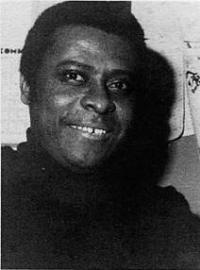
1935 New York City - 1999 New York City. Known for: Comic book illustration art, Marvel Comic and Jungle Action series.
Billy Graham (July 1, 1935-1999) was an African-American comic-book artist best known for his work on the Marvel Comics series Luke Cage, Hero for Hire, and the Jungle Action feature, Black Panther.... Read full biography
Billy Graham (July 1, 1935-1999) was an African-American comic-book artist best known for his work on the Marvel Comics series Luke Cage, Hero for Hire, and the Jungle Action feature, Black Panther. A graduate of New York City's Music & Art High School, Billy Graham had a specifically recognizable... Read full biography
Billy Graham (July 1, 1935-1999) was an African-American comic-book artist best known for his work on the Marvel Comics series Luke Cage, Hero for Hire, and the Jungle Action feature, Black Panther. A graduate of New York City's Music & Art High School, Billy Graham had a specifically recognizable style that drew its artistic influences from the work of Al Williamson, Frank Frazetta, Burne Hogarth, and George Tuska. One of his earliest comics projects was illustrating writer Don Glut's Death... Read full biography
Billy Graham (July 1, 1935-1999) was an African-American comic-book artist best known for his work on the Marvel Comics series Luke Cage, Hero for Hire, and the Jungle Action feature, Black Panther. A graduate of New York City's Music & Art High School, Billy Graham had a specifically recognizable style that drew its artistic influences from the work of Al Williamson, Frank Frazetta, Burne Hogarth, and George Tuska. One of his earliest comics projects was illustrating writer Don Glut's Death Boat! in Vampirella #1 (Sept. 1969), one of the earliest of Warren Publishing's influential black-and-white horror-comics magazines. Graham went on to pencil and self-ink a story in nearly each of the first dozen issues of Vampirella, and an additional... Read full biography
Billy Graham (July 1, 1935-1999) was an African-American comic-book artist best known for his work on the Marvel Comics series Luke Cage, Hero for Hire, and the Jungle Action feature, Black Panther. A graduate of New York City's Music & Art High School, Billy Graham had a specifically recognizable style that drew its artistic influences from the work of Al Williamson, Frank Frazetta, Burne Hogarth, and George Tuska. One of his earliest comics projects was illustrating writer Don Glut's Death Boat! in Vampirella #1 (Sept. 1969), one of the earliest of Warren Publishing's influential black-and-white horror-comics magazines. Graham went on to pencil and self-ink a story in nearly each of the first dozen issues of Vampirella, and an additional tale in issue #32 (April 1970) of its brethren publication Creepy. Publisher James Warren... Read full biography
Artist Biography
Biography page for Billy Graham ((1935 - 1999)), known for Comic book illustration art, Marvel Comic and Jungle Action series. Showing 1 biographical entries and 0 sample artworks.
Billy Graham - Artist Info
About Billy Graham
Name variants
William Henderson Graham
Biography from the Archives of askART
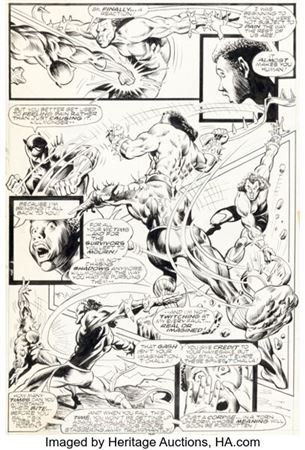 Billy Graham (July 1, 1935-1999) was an African-American comic-book artist best known for his work on the Marvel Comics series Luke Cage, Hero for Hire, and the Jungle Action feature, Black Panther.
A graduate of New York City's Music & Art High School, Billy Graham had a specifically recognizable style that drew its artistic influences from the work of Al Williamson, Frank Frazetta, Burne Hogarth, and George Tuska.
One of his earliest comics projects was illustrating writer Don Glut's Death Boat! in Vampirella #1 (Sept. 1969), one of the earliest of Warren Publishing's influential black-and-white horror-comics magazines. Graham went on to pencil and self-ink a story in nearly each of the first dozen issues of Vampirella, and an additional tale in issue #32 (April 1970) of its brethren publication Creepy.
Publisher James Warren recalled in 1999 that he promoted Graham to art director shortly after recruiting him as an artist:
"I sensed Billy had the ability to handle it; certain artists and writers are great but they can't shift out of their specialty and do something else. Billy could. So I said, 'Billy, you are now art director! Whether you like it or not.' Now you have to understand that all Billy wanted to do his whole life was just be Jack Kirby. I said, ' You'll be the Black Jack Kirby, but not today! Today you are art director of Warren Publishing.' But he said, 'I can't art direct!' And I said, 'I'll show you how. There's your office; you now have a full-time job. A paycheck every Friday. Do you accept?' And he said, 'Yer goddamn right!' And I taught him how to art direct during our slow period, and it only took a couple of issues — and he did pretty well (though I gave him a nervous breakdown)."
In a 2005 interview, Warren mentions tweaking a Rolling Stone reporter who asked about his decision to hire an African-American art director, a rarity in comics at the time:
"'What!?' mock-screamed Warren. 'Is Billy black? I didn't know that. Get him in here! Billy, are you black? You're fired!'"
Graham eventually left Warren and joined the creative team that launched Marvel's Luke Cage, Hero for Hire, inking the premiere issue (June 1972) over pencilers John Romita Sr. and George Tuska. He either inked or himself penciled every issue of the book's 16-issue run under its original title, and the first as the retitled Luke Cage, Power Man (Feb. 1974).
One reviewer of the reprint collection Essential Luke Cage, Power Man wrote,"The majority of the art is by George Tuska, initially inked by Billy Graham (with several solo pieces by Graham [that] give an intriguing record of his progression as an artist: His initial work has a rough, half-finished look to it, but his later issues are clean and beautifully detailed)....
Steve Englehart, who wrote issues #5-16, said Graham "helped me plot, so that by the end it was pretty much a co-production." Graham is formally credited as co-writer of issues #14-15, though as Englehart's writing collaborator for those issues, Tony Isabella recalled, "Billy Graham is credited as the co-scripter of my first issue [#15] and, try as I might, I simply do not recall getting anything other than the usual penciled pages to script. I skimmed a little of that issue and, making no judgment as to whether this is a good or bad thing, the writing does strike me as all mine."
Graham collaborated with writer Don McGregor on the critically lauded Black Panther series that ran in Jungle Action #6-24 (Sept. 1973 - Nov. 1976), becoming the series's regular penciler with issue #11 (Sept. 1974) and leaving after penciling the first five pages of issue #22 (July 1976).
Graham went on to illustrate issues #3-9 of McGregor's 1980s Eclipse Comics series Sabre, a spin-off of one of the first graphic novels. He also illustrated a story each by McGregor in Marvel's black-and-white horror-comics magazine Monsters Unleashed #11 (April 1975); an issue of the 1980s anthology Eclipse Monthly; and two issues of the black-and-white Eclipse magazine. He was both writer and artist of the six-page story "The Hitchhiker" in Eclipse magazine #5 (March 1982).
Graham's last comics work was co-penciling, with Steven Geiger, Power Man and Iron Fist (the again-retitled Luke Cage series) #114 (Feb. 1985), written by Jim Owsley, who had also written the Black Panther under his pen name, Christopher Priest.
Graham appeared as an extra in TV commercials for products including beer and chewing gum, and played the artist father of one of the lead characters in McGregor's unreleased, low-budget film adaptation of his Detectives Inc. graphic novels.
Source:
Wikipedia ("Billy Graham, comics), Accessed 5/2015