Page loaded successfully. Showing biography for Bryan Wynter.
Bryan Wynter BIOGRAPHY
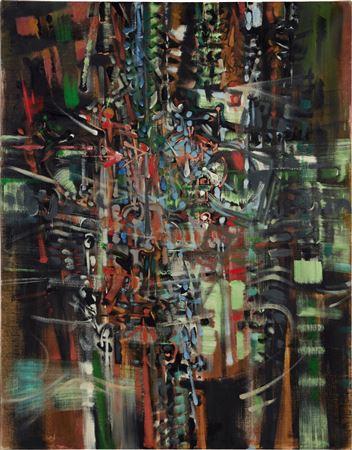
1915 London, England - 1975 Penzance, England. Known for: Constructions, abstract and non-objective painting.
Bryan Wynter (8 September 1915 - 2 February 1975) was one of the St. Ives group of British painters. His work was mainly abstract, drawing upon nature for inspiration. Born in London, he began in... Read full biography
Bryan Wynter (8 September 1915 - 2 February 1975) was one of the St. Ives group of British painters. His work was mainly abstract, drawing upon nature for inspiration. Born in London, he began in 1933 as a trainee in the family business of farming and laundering, training in Switzerland before his... Read full biography
Bryan Wynter (8 September 1915 - 2 February 1975) was one of the St. Ives group of British painters. His work was mainly abstract, drawing upon nature for inspiration. Born in London, he began in 1933 as a trainee in the family business of farming and laundering, training in Switzerland before his father finally allowed him to pursue his art talents. In 1937-38 he studied at Westminster School of Art*, and 1938-40 at the Slade School of Fine Art*, London. In the Second World War he was a... Read full biography
Bryan Wynter (8 September 1915 - 2 February 1975) was one of the St. Ives group of British painters. His work was mainly abstract, drawing upon nature for inspiration. Born in London, he began in 1933 as a trainee in the family business of farming and laundering, training in Switzerland before his father finally allowed him to pursue his art talents. In 1937-38 he studied at Westminster School of Art*, and 1938-40 at the Slade School of Fine Art*, London. In the Second World War he was a conscientious objector, first working on land drainage at St Ives, Cornwall, and then in Oxford looking after monkeys being studied by the zoologist Solly Zuckerman. There he tended laboratory animals in the Department of Human Anatomy at the University,... Read full biography
Bryan Wynter (8 September 1915 - 2 February 1975) was one of the St. Ives group of British painters. His work was mainly abstract, drawing upon nature for inspiration. Born in London, he began in 1933 as a trainee in the family business of farming and laundering, training in Switzerland before his father finally allowed him to pursue his art talents. In 1937-38 he studied at Westminster School of Art*, and 1938-40 at the Slade School of Fine Art*, London. In the Second World War he was a conscientious objector, first working on land drainage at St Ives, Cornwall, and then in Oxford looking after monkeys being studied by the zoologist Solly Zuckerman. There he tended laboratory animals in the Department of Human Anatomy at the University, and found this work very depressing, which increased his feelings of alienation. Inspired by Aldous Huxley's writ... Read full biography
Artist Biography
Biography page for Bryan Wynter ((1915 - 1975)), known for Constructions, abstract and non-objective painting. Showing 1 biographical entries and 0 sample artworks.
Bryan Wynter - Artist Info
About Bryan Wynter
Biography from the Archives of askART
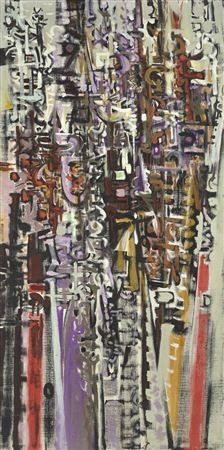 Bryan Wynter (8 September 1915 - 2 February 1975) was one of the St. Ives group of British painters. His work was mainly abstract, drawing upon nature for inspiration.
Born in London, he began in 1933 as a trainee in the family business of farming and laundering, training in Switzerland before his father finally allowed him to pursue his art talents. In 1937-38 he studied at Westminster School of Art*, and 1938-40 at the Slade School of Fine Art*, London. In the Second World War he was a conscientious objector, first working on land drainage at St Ives, Cornwall, and then in Oxford looking after monkeys being studied by the zoologist Solly Zuckerman. There he tended laboratory animals in the Department of Human Anatomy at the University, and found this work very depressing, which increased his feelings of alienation.
Inspired by Aldous Huxley's writing, Ends and Means, which expressed social reform through personal development, Wynter settled in 1945 in Zennor, Cornwall, a place he remembered from his childhood. For the next 20 years, he lived a simple, relatively secluded existence, using his artwork as expression of questions about human existence. Initially his subjects were typical scenes of the area, which were suggestive of death and decay such as gulls, boats, abandoned tin mines. In the late 1950s, he began to paint large scale abstract forms, "which suggest deep space, exploring his interest in organic processes and the collective unconscious." (Button, 48)
He also loved exploring local areas, doing a lot of canoeing on the local streams of Cornwall and around the rocky St. Ives coastline, experiences he translated into hard-edge geometric paintings. Some of his most remarkable works are constructions which he titled IMOOS (Images Moving Out Onto Space). Using a parabolic mirror, he would hang contrasting pairs of painted shapes, which rotated freely. Their reversed reflections enlarged, appearing to move in opposite directions
He did interact some with local artists as he was co-founder of the Crypt Group* in 1946, and joined the Penwith Society*. In the mid 1950s, he taught part time at Bath Academy of Art at Corsham Court.
He died at Penzance, Cornwall.
Some of his most remarkable works are constructions which he titled IMOOS (Images Moving Out Onto Space). Using a parabolic mirror, he would hang contrasting pairs of painted shapes, which rotated freely. Their reversed reflections enlarged, appearing to move in opposite directions.
Sources:
Virginia Button, St. Ives Artists, A Companion
Wikipedia, http://en.wikipedia.org/wiki/Bryan_Wynter
* For more in-depth information about these terms and others, see AskART.com Glossary http://www.askart.com/AskART/lists/Art_Definition.aspx