Page loaded successfully. Showing biography for Camillo Procaccini.
Camillo Procaccini BIOGRAPHY
1551 Bologna, Italy - 1629 Milan, Italy. Known for: Head study chalk drawings, pen and ink genre and figure scenes, nativity painting.
Camillo Procaccini (3 March 1561 at Parma – 21 August 1629) was an Italian painter. He has been posthumously referred to as the Vasari of Lombardy, for his prolific Mannerist fresco decoration. Born... Read full biography
Camillo Procaccini (3 March 1561 at Parma – 21 August 1629) was an Italian painter. He has been posthumously referred to as the Vasari of Lombardy, for his prolific Mannerist fresco decoration. Born in Bologna, he was the son of the painter Ercole Procaccini the Elder, and older brother to Giulio... Read full biography
Camillo Procaccini (3 March 1561 at Parma – 21 August 1629) was an Italian painter. He has been posthumously referred to as the Vasari of Lombardy, for his prolific Mannerist fresco decoration. Born in Bologna, he was the son of the painter Ercole Procaccini the Elder, and older brother to Giulio Cesare and Carlo Antonio, both painters. Works. In 1587 he distinguished in the fresco decoration of the Basilica della Ghiara in Reggio Emilia. In the late 1580s he moved to Milan, where count Camillo... Read full biography
Camillo Procaccini (3 March 1561 at Parma – 21 August 1629) was an Italian painter. He has been posthumously referred to as the Vasari of Lombardy, for his prolific Mannerist fresco decoration. Born in Bologna, he was the son of the painter Ercole Procaccini the Elder, and older brother to Giulio Cesare and Carlo Antonio, both painters. Works. In 1587 he distinguished in the fresco decoration of the Basilica della Ghiara in Reggio Emilia. In the late 1580s he moved to Milan, where count Camillo Visconti Borromeo commissioned him the decoration of his villa in Lainate. The organ shutters for the Cathedral of Milan were painted after 1590 by Camillo, Giuseppe Meda (died 1599), and Ambrogio Figino. He painted the frescoes of the nave and the... Read full biography
Camillo Procaccini (3 March 1561 at Parma – 21 August 1629) was an Italian painter. He has been posthumously referred to as the Vasari of Lombardy, for his prolific Mannerist fresco decoration. Born in Bologna, he was the son of the painter Ercole Procaccini the Elder, and older brother to Giulio Cesare and Carlo Antonio, both painters. Works. In 1587 he distinguished in the fresco decoration of the Basilica della Ghiara in Reggio Emilia. In the late 1580s he moved to Milan, where count Camillo Visconti Borromeo commissioned him the decoration of his villa in Lainate. The organ shutters for the Cathedral of Milan were painted after 1590 by Camillo, Giuseppe Meda (died 1599), and Ambrogio Figino. He painted the frescoes of the nave and the apse of the Cathedral of Piacenza in collaboration with Ludovico Carracci (1605–1609), and the vault and choir in San Barnaba o... Read full biography
Artist Biography
Biography page for Camillo Procaccini ((1551 - 1629)), known for Head study chalk drawings, pen and ink genre and figure scenes, nativity painting. Showing 2 biographical entries and 0 sample artworks.
Camillo Procaccini - Artist Info
About Camillo Procaccini
Biography from the Archives of askART
 Camillo Procaccini (3 March 1561 at Parma – 21 August 1629) was an Italian painter. He has been posthumously referred to as the Vasari of Lombardy, for his prolific Mannerist fresco decoration.
Born in Bologna, he was the son of the painter Ercole Procaccini the Elder, and older brother to Giulio Cesare and Carlo Antonio, both painters.
Works
In 1587 he distinguished in the fresco decoration of the Basilica della Ghiara in Reggio Emilia. In the late 1580s he moved to Milan, where count Camillo Visconti Borromeo commissioned him the decoration of his villa in Lainate.
The organ shutters for the Cathedral of Milan were painted after 1590 by Camillo, Giuseppe Meda (died 1599), and Ambrogio Figino. He painted the frescoes of the nave and the apse of the Cathedral of Piacenza in collaboration with Ludovico Carracci (1605–1609), and the vault and choir in San Barnaba of Milan.
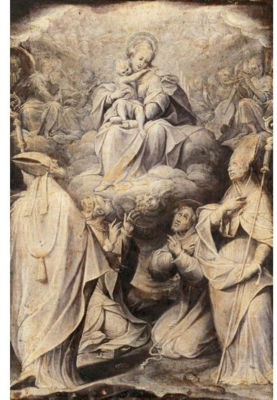
He painted a Nativity in the Sacro Monte d'Orta. He is known for a Martyrdom of St. Agnes painted in fresco in the sacristy of the Milan cathedral; a Madonna and Child painted for the church of Santa Maria del Carmine; an 'Adoration of the Shepherds found in the Brera; and the ceiling of the church of Padri Zoccolanti, representing the Assumption of the Virgin. He frescoed a large Last Judgment in the apse of the church of San Prospero at Reggio; He painted a St. Roch administering the Sacrament to the Plague-stricken.
Among his pupils was the painter Giovanni Battista Discepoli. Another pupil was Lorenzo Franchi (c. 1563 - c. 1630).
Source:
Wikipedia, 2021Biography from Christie's Paris
Camillo Procaccini
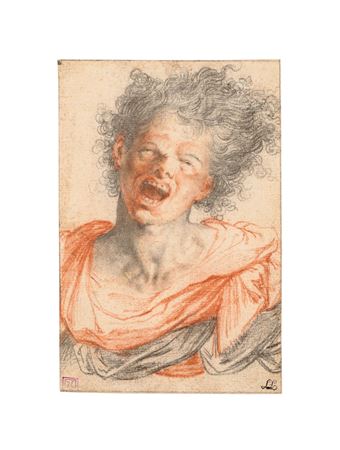
Although Camillo’s head studies may have been made as independent works of art, the artist may also have used them when working on some of his paintings; as noted in the 1994 sale catalogue (see Provenance), a very similar head can be seen lower left in his Last Judgement, painted in the apse of the church of San Prospero in Reggio Emilia, a commission given to him in 1585.(3)
The early art historian Carlo Cesare Malvasia praised ‘the strangest effects of wrath, fear, desperation and pain’ (‘i più strani effete d’ira, di timore, di disperazione e di dolore’) expressed in the fresco (Felsina pittrice, Bologna, 1678, p. 277).
A few years after he painted the apse of San Prospero, Camillo, his brother Giulio Cesare and their father and teacher, Ercole, moved to Milan, where the brothers remained active into the third decade of the seventeenth century.