Page loaded successfully. Showing biography for Carl Bloch.
Carl Bloch BIOGRAPHY
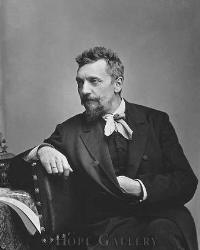
1834 Copenhagen, Denmark - 1890 Copenhagen, Denmark. Known for: Religious and portrait painting, etching.
The Danish painter, Carl Heinrich Bloch, was born on May 23, 1834, in Copenhagen, Denmark. He was the son of merchant Joergen Peter Bloch and Ida Emilie Ulrikke Henriette Weitzmann Bloch. Counter to... Read full biography
The Danish painter, Carl Heinrich Bloch, was born on May 23, 1834, in Copenhagen, Denmark. He was the son of merchant Joergen Peter Bloch and Ida Emilie Ulrikke Henriette Weitzmann Bloch. Counter to his parent's wishes, he became a painter rather than an officer in the Danish Navy. In January 1849,... Read full biography
The Danish painter, Carl Heinrich Bloch, was born on May 23, 1834, in Copenhagen, Denmark. He was the son of merchant Joergen Peter Bloch and Ida Emilie Ulrikke Henriette Weitzmann Bloch. Counter to his parent's wishes, he became a painter rather than an officer in the Danish Navy. In January 1849, he began study at the Royal Danish Academy of Art. In 1852, he was awarded a small silver medal for one of his drawings, which was exhibited the following year at the Academy. In 1855, Bloch joined... Read full biography
The Danish painter, Carl Heinrich Bloch, was born on May 23, 1834, in Copenhagen, Denmark. He was the son of merchant Joergen Peter Bloch and Ida Emilie Ulrikke Henriette Weitzmann Bloch. Counter to his parent's wishes, he became a painter rather than an officer in the Danish Navy. In January 1849, he began study at the Royal Danish Academy of Art. In 1852, he was awarded a small silver medal for one of his drawings, which was exhibited the following year at the Academy. In 1855, Bloch joined the Royal Danish Academy of Art, where on August 1, 1859 he received a travel grant, which he used to study in Holland, France and Italy with his best friend and fellow artist, Anton Dorph. Here, Bloch's love and admiration for Rembrandt further... Read full biography
The Danish painter, Carl Heinrich Bloch, was born on May 23, 1834, in Copenhagen, Denmark. He was the son of merchant Joergen Peter Bloch and Ida Emilie Ulrikke Henriette Weitzmann Bloch. Counter to his parent's wishes, he became a painter rather than an officer in the Danish Navy. In January 1849, he began study at the Royal Danish Academy of Art. In 1852, he was awarded a small silver medal for one of his drawings, which was exhibited the following year at the Academy. In 1855, Bloch joined the Royal Danish Academy of Art, where on August 1, 1859 he received a travel grant, which he used to study in Holland, France and Italy with his best friend and fellow artist, Anton Dorph. Here, Bloch's love and admiration for Rembrandt further developed, and the old Master became a major driving force in Bloch's development as an artist.... Read full biography
Artist Biography
Biography page for Carl Bloch ((1834 - 1890)), known for Religious and portrait painting, etching. Showing 1 biographical entries and 0 sample artworks.
Carl Bloch - Artist Info
About Carl Bloch
Biography from the Archives of askART
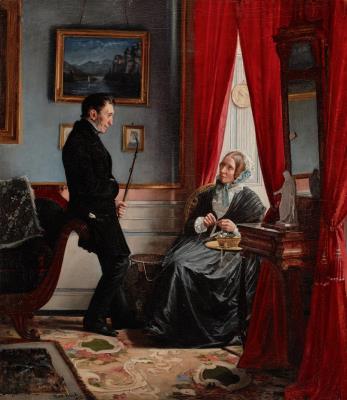 The Danish painter, Carl Heinrich Bloch, was born on May 23, 1834, in Copenhagen, Denmark. He was the son of merchant Joergen Peter Bloch and Ida Emilie Ulrikke Henriette Weitzmann Bloch. Counter to his parent's wishes, he became a painter rather than an officer in the Danish Navy.
In January 1849, he began study at the Royal Danish Academy of Art. In 1852, he was awarded a small silver medal for one of his drawings, which was exhibited the following year at the Academy.
In 1855, Bloch joined the Royal Danish Academy of Art, where on August 1, 1859 he received a travel grant, which he used to study in Holland, France and Italy with his best friend and fellow artist, Anton Dorph.
Here, Bloch's love and admiration for Rembrandt further developed, and the old Master became a major driving force in Bloch's development as an artist.
He then went to Rome, which served as his "home base" until 1865. Here the works of the Old Italian masters greatly influenced him, and he did Italian genre and folklore paintings that brought him popularity. However, portrait painitng became his signature work
In 1888 he was asked to paint his self-portrait that was to be hung at the Uffizi in Florence, Italy, something that was a great honor.
After seeing many of Bloch paintings that were coming out of Italy, the Danish maecenas of the time, Brewer J. C. Jacobsen, commissioned Bloch to paint 23 new paintings for the King's Praying Chamber in the newly restored Frederiksborg Castle Chapel (which was ravaged by fire in 1859). This commission came toward the end of Bloch's time in Italy.
The assignment of this commission was to illustrate the life of Christ, and Bloch worked on this monumental project for nearly fourteen years. The commission to paint the 23 paintings for The Praying Chamber changed not only Carl Bloch's personal life but also his artistic legacy from portraiture to religious subjects.
Carl Bloch also excelled through his etchings.
Carl Bloch met his wife, Alma Trepka, in Rome, and the married in May 1868. They had a very happy and prosperous life together until her early death in January 1886. The sorrow over losing his wife weighed heavily on Bloch, and being left alone with their eight children after her death was very difficult for him.
Besides his religious masterpieces, many of his genre-and portrait paintings are exhibited in the Frederiksborg Castle, Denmark.
Carl Bloch died of cancer on February 22, 1890. A prominent Danish art critic, Karl Madsen, stated that Carl Bloch reached higher toward the great heaven of art than all other Danish art up to that date. Madsen also said "If there is an Elysium, where the giant, rich, warm and noble artist souls meet, there Carl Bloch will sit among the noblest of them all!"
Source:
http://www.carlbloch.com/php/artist.php?artist=3