Page loaded successfully. Showing biography for Carl Constantin Steffeck.
Carl Constantin Steffeck BIOGRAPHY
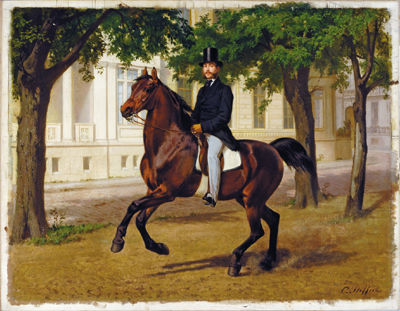
1818 Berlin - 1890. Known for: Animal and landscape painting.
A son of an art-loving privateer, Carl Steffeck attended the Berlin Art Academy as early as his days at school. In 1837 he became a master student of the horse painter Franz Krüger (1797-1857). After... Read full biography
A son of an art-loving privateer, Carl Steffeck attended the Berlin Art Academy as early as his days at school. In 1837 he became a master student of the horse painter Franz Krüger (1797-1857). After his return from study trips to Paris and Italy, Steffeck focused on animal and hunting scenes. In... Read full biography
A son of an art-loving privateer, Carl Steffeck attended the Berlin Art Academy as early as his days at school. In 1837 he became a master student of the horse painter Franz Krüger (1797-1857). After his return from study trips to Paris and Italy, Steffeck focused on animal and hunting scenes. In addition to various horse depictions he also created portraits, history paintings as well as a number of animal sculptures. Since the 1850s, Steffeck was increasingly active in teaching: in 1859 he... Read full biography
A son of an art-loving privateer, Carl Steffeck attended the Berlin Art Academy as early as his days at school. In 1837 he became a master student of the horse painter Franz Krüger (1797-1857). After his return from study trips to Paris and Italy, Steffeck focused on animal and hunting scenes. In addition to various horse depictions he also created portraits, history paintings as well as a number of animal sculptures. Since the 1850s, Steffeck was increasingly active in teaching: in 1859 he held, for instance, lectures as a professor of the Königlich-Preußische Akademie der Künste in Berlin and in 1880 he was chosen to function as director of the Kunstakademie Königsberg. Among his pupils were well-known representatives of the... Read full biography
A son of an art-loving privateer, Carl Steffeck attended the Berlin Art Academy as early as his days at school. In 1837 he became a master student of the horse painter Franz Krüger (1797-1857). After his return from study trips to Paris and Italy, Steffeck focused on animal and hunting scenes. In addition to various horse depictions he also created portraits, history paintings as well as a number of animal sculptures. Since the 1850s, Steffeck was increasingly active in teaching: in 1859 he held, for instance, lectures as a professor of the Königlich-Preußische Akademie der Künste in Berlin and in 1880 he was chosen to function as director of the Kunstakademie Königsberg. Among his pupils were well-known representatives of the impressionist movement, including Max Liebermann (1847-1935). (cbo)
Artist Biography
Biography page for Carl Constantin Steffeck ((1818 - 1890)), known for Animal and landscape painting. Showing 1 biographical entries and 0 sample artworks.
Carl Constantin Steffeck - Artist Info
About Carl Constantin Steffeck
Name variants
Carl Steffek
Biography
A son of an art-loving privateer, Carl Steffeck attended the Berlin Art Academy as early as his days at school. In 1837 he became a master student of the horse painter Franz Krüger (1797-1857). After his return from study trips to Paris and Italy, Steffeck focused on animal and hunting scenes. In addition to various horse depictions he also created portraits, history paintings as well as a number of animal sculptures.
Since the 1850s, Steffeck was increasingly active in teaching: in 1859 he held, for instance, lectures as a professor of the Königlich-Preußische Akademie der Künste in Berlin and in 1880 he was chosen to function as director of the Kunstakademie Königsberg. Among his pupils were well-know...But wait, there's more...
Displaying 858 of 842 characters.
Subscriber Members, please Sign In for full artist biographies and all services.
For non-paying users, good news! Full text bios for all artists are available every Friday.
If you are not currently a member, please See Details about membership.