Page loaded successfully. Showing biography for Charles (Karel Joseph) Biederman.
Charles (Karel Joseph) Biederman BIOGRAPHY
1906 Cleveland, Ohio - 2004 Red Wing, Minnesota. Known for: Abstract sculpture reliefs, painting.
Describing himself as the "best unknown artist in America" (Time 26 Jan 1970), Charles Biederman was a constructivist painter and sculptor of structural reliefs, the latter a medium he is credited... Read full biography
Describing himself as the "best unknown artist in America" (Time 26 Jan 1970), Charles Biederman was a constructivist painter and sculptor of structural reliefs, the latter a medium he is credited with inventing. It has been said that he enjoyed a greater reputation in England and Canada than at... Read full biography
Describing himself as the "best unknown artist in America" (Time 26 Jan 1970), Charles Biederman was a constructivist painter and sculptor of structural reliefs, the latter a medium he is credited with inventing. It has been said that he enjoyed a greater reputation in England and Canada than at home. He was born in Cleveland, Ohio, and as a teenager went to work as an apprentice in a commercial art studio where he stayed four years. From 1926 to 1929, he studied at the Art Institute of Chicago... Read full biography
Describing himself as the "best unknown artist in America" (Time 26 Jan 1970), Charles Biederman was a constructivist painter and sculptor of structural reliefs, the latter a medium he is credited with inventing. It has been said that he enjoyed a greater reputation in England and Canada than at home. He was born in Cleveland, Ohio, and as a teenager went to work as an apprentice in a commercial art studio where he stayed four years. From 1926 to 1929, he studied at the Art Institute of Chicago and remained in Chicago until 1934 when he moved to New York. In 1936, he traveled to Europe where he met many modernists including Piet Mondrian and Fernand Leger, both whom had a great influence on his art. In 1937, he returned to New York and... Read full biography
Describing himself as the "best unknown artist in America" (Time 26 Jan 1970), Charles Biederman was a constructivist painter and sculptor of structural reliefs, the latter a medium he is credited with inventing. It has been said that he enjoyed a greater reputation in England and Canada than at home. He was born in Cleveland, Ohio, and as a teenager went to work as an apprentice in a commercial art studio where he stayed four years. From 1926 to 1929, he studied at the Art Institute of Chicago and remained in Chicago until 1934 when he moved to New York. In 1936, he traveled to Europe where he met many modernists including Piet Mondrian and Fernand Leger, both whom had a great influence on his art. In 1937, he returned to New York and then moved to Chicago in 1941, marrying Mary Katherine Moore. In 1944, the couple moved to Red Wing, Minneso... Read full biography
Artist Biography
Biography page for Charles (Karel Joseph) Biederman ((1906 - 2004)), known for Abstract sculpture reliefs, painting. Showing 2 biographical entries and 0 sample artworks.
Charles (Karel Joseph) Biederman - Artist Info
About Charles (Karel Joseph) Biederman
Biography from the Archives of askART
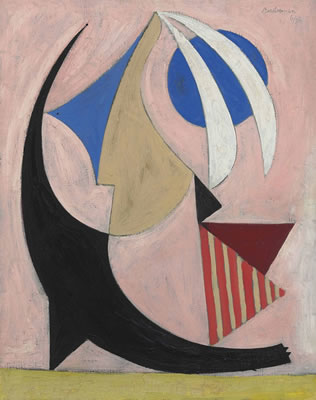 Describing himself as the "best unknown artist in America" (Time 26 Jan 1970), Charles Biederman was a constructivist painter and sculptor of structural reliefs, the latter a medium he is credited with inventing. It has been said that he enjoyed a greater reputation in England and Canada than at home.
He was born in Cleveland, Ohio, and as a teenager went to work as an apprentice in a commercial art studio where he stayed four years. From 1926 to 1929, he studied at the Art Institute of Chicago and remained in Chicago until 1934 when he moved to New York. In 1936, he traveled to Europe where he met many modernists including Piet Mondrian and Fernand Leger, both whom had a great influence on his art.
In 1937, he returned to New York and then moved to Chicago in 1941, marrying Mary Katherine Moore. In 1944, the couple moved to Red Wing, Minnesota where they remained the rest of their lives. Mary Katherine died in 1975.
Soon after his return from Europe, he gave up painting entirely as being obsolete and worked for a brief time as a sculptor before settling on the three-dimensional structurist reliefs that represent his mature work.
In 1973, he stated that his preferred media was painted aluminum, and that he created "three dimensional art that is neither sculpture nor painting". His pieces are in numerous collections with the Frederick R. Weisman Art Museum having a major number of his works.
He seldom titled his pieces and usually identified them only by the place where he was when he painted them.
Biederman was also a prolific writer, and self-published books on art theory and the relationships between art and nature.
Source:
Peter Hastings Falk (Editor), Who Was Who in American Art
Ken Johnson, 'Charles Biederman, 98, Artist Who Created Geometric Reliefs', Obituary in The New York Times, January 1, 2005.Biography from Kramer Gallery, Inc.
Abstract artist and theorist Charles Biederman began his career as a painter in Paris and New York in the 1930s. Although his biomorphic abstractions were praised by critics and included in important exhibits, Biederman rejected involvement with the art establishment and settled in rural Red Wing, Minnesota in 1942. Living and working in voluntary isolation from global art centers, he refined his Cubist and Constructivist-influenced works into three-dimensional wall works with a "machine aesthetic" of industrial materials and surfaces, wires, strings, primary colors and other modern means.
Biederman's signature works of later decades are painted aluminum reliefs, in which small rectangular elements project from a flat vertical surface at varying angles. Meticulously crafted, the multicolored pieces combine Mondrian-like composition with the little third dimension of low-relief sculpture.
Biederman wrote and self-published a number of densely philosophical treatises on art and nature, including "Art as the Evolution of Visual Knowledge" (1948), "The New Cezanne: From Monet to Mondriaan" (1958) and "Search for New Arts" (1979). An archive of Biederman's artworks and papers is at the Frederick R. Weisman Art Museum at the University of Minnesota, Minneapolis.
Written and submitted by Thomas O'Sullivan, museum curator and freelance writer.
Citations
Susan C. Larson and Patricia McDonnell: CHARLES BIEDERMAN (2003)
Charles Biederman: CHARLES BIEDERMAN: A RETROSPECTIVE (Minneapolis Institute of Arts, 1976)
Charles Biederman: ART AS THE EVOLUTION OF VISUAL KNOWLEDGE (1948)
Museums
Minneapolis Institute of Arts, Minneapolis MN
Frederick R. Weisman Art Museum, University of Minnesota, Minneapolis MN
Whitney Museum of American Art, New York NY