Page loaded successfully. Showing biography for Charles Chaplin.
Charles Chaplin BIOGRAPHY
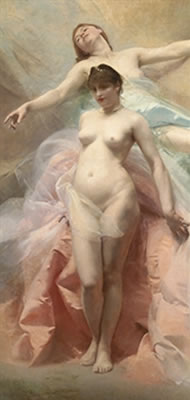
1825 Les Andelys, France - 1891 Paris, France. Known for: Portrait, landscapes, genre, floral still life and female figure paintings, prints, teaching.
Born to a French mother and an English father, Charles Chaplin worked in France for his entire career and, though he continued to retain his English citizenship until 1886, considered himself French... Read full biography
Born to a French mother and an English father, Charles Chaplin worked in France for his entire career and, though he continued to retain his English citizenship until 1886, considered himself French and actually spoke very little English. Chaplin took private lessons in the studio of the painter... Read full biography
Born to a French mother and an English father, Charles Chaplin worked in France for his entire career and, though he continued to retain his English citizenship until 1886, considered himself French and actually spoke very little English. Chaplin took private lessons in the studio of the painter Michel-Martin Drolling before entering the Ecole des Beaux-Arts* in 1843. He first exhibited at the Salon in 1845, showing a portrait of his mother, and continued to do so regularly, showing portraits,... Read full biography
Born to a French mother and an English father, Charles Chaplin worked in France for his entire career and, though he continued to retain his English citizenship until 1886, considered himself French and actually spoke very little English. Chaplin took private lessons in the studio of the painter Michel-Martin Drolling before entering the Ecole des Beaux-Arts* in 1843. He first exhibited at the Salon in 1845, showing a portrait of his mother, and continued to do so regularly, showing portraits, landscapes, genre subjects and floral still lifes. While his early work was in a more Realist vein, by the late 1850s he began to work in an elegant and graceful neo-Rococo manner reminiscent of the work of such artists as François Boucher,... Read full biography
Born to a French mother and an English father, Charles Chaplin worked in France for his entire career and, though he continued to retain his English citizenship until 1886, considered himself French and actually spoke very little English. Chaplin took private lessons in the studio of the painter Michel-Martin Drolling before entering the Ecole des Beaux-Arts* in 1843. He first exhibited at the Salon in 1845, showing a portrait of his mother, and continued to do so regularly, showing portraits, landscapes, genre subjects and floral still lifes. While his early work was in a more Realist vein, by the late 1850s he began to work in an elegant and graceful neo-Rococo manner reminiscent of the work of such artists as François Boucher, Jean-Honoré Fragonard, Jean-Baptiste Chardin and Thomas Gainsborough. (As he once wrote to a friend, ‘If I would, I would lose myself in the Pas... Read full biography
Artist Biography
Biography page for Charles Chaplin ((1825 - 1891)), known for Portrait, landscapes, genre, floral still life and female figure paintings, prints, teaching. Showing 2 biographical entries and 0 sample artworks.
Charles Chaplin - Artist Info
About Charles Chaplin
Name variants
Charles Chapelin
Biography from the Archives of askART
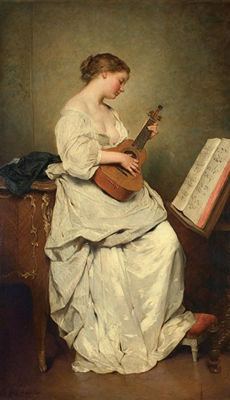 Born to a French mother and an English father, Charles Chaplin worked in France for his entire career and, though he continued to retain his English citizenship until 1886, considered himself French and actually spoke very little English. Chaplin took private lessons in the studio of the painter Michel-Martin Drolling before entering the Ecole des Beaux-Arts* in 1843.
He first exhibited at the Salon in 1845, showing a portrait of his mother, and continued to do so regularly, showing portraits, landscapes, genre subjects and floral still lifes. While his early work was in a more Realist vein, by the late 1850s he began to work in an elegant and graceful neo-Rococo manner reminiscent of the work of such artists as François Boucher, Jean-Honoré Fragonard, Jean-Baptiste Chardin and Thomas Gainsborough.
(As he once wrote to a friend, ‘If I would, I would lose myself in the Past. I have a particular love for the charming French school of the last century.’) Best known for elegant portraits of young women and children, as well as allegorical or mythological genre paintings, all painted with a lightness and delicacy of touch, Chaplin delighted in depicting woman and young girls in carefree moments.
The paintings of this ‘Peintre des Grâces’, praised by such writers as Charles Baudelaire and Théophile Gautier and artists like Edouard Manet, were very popular throughout the Second Empire, and were sought after by collectors. Among his fervent admirers were Napoleon III and the Empress Eugénie, for whom he worked extensively.
As has been noted by one recent scholar, ‘Chaplin could portray all the charms of feminine beauty to their greatest advantage, achieving a sort of innocent sensuality that, at its best, fell short of being over-sentimental, and was never vulgar.’ In 1861 Chaplin contributed paintings to the decoration of the Salon des Fleurs in the Palais des Tuileries, destroyed by fire a decade later, and also worked in the Elysée palace in 1861. He was also a fine draughtsman, watercolourist and engraver.
Apart from the annual Salons in Paris, Chaplin regularly sent paintings to the Royal Academy in London. His reputation also spread to America, as can be seen in an American art journal of 1879: ‘“The De Musset of painting – the painter par excellence of youth.” are terms which have been applied to Charles Chaplin, a popular French artist, who has long been before the public, and whose works are always welcome on both sides of the Atlantic...At the Chicago Exhibition, held during the summer of 1878, a fine work by Chaplin, belonging to the White estate, was to be seen in the art gallery, much commended for its extreme delicacy in conception, refinement in color and grace in treatment.’
Chaplin’s success as a painter made him wealthy and earned him several awards and honours, including membership in the Legion d’Honneur. Chaplin’s studio was one of the few in Paris that welcomed women as students, and among his pupils were Louise Abbéma, Madeleine Lemaire, Eva Gonzalès and Mary Cassatt.
Source:
Website of Stephen Ongpin Fine Art, London, 2020
*For more in-depth information about these terms and others, see AskART.com. Glossary http://www.askart.com/AskART/lists/Art_Definition.aspxBiography from The Cambridge Art Gallery
Charles Chaplin was one of France's most famous artists during his lifetime as well as afterward. Born in Les Andelys, Eure, France in 1825 to an English father and a French mother, he waited nearly a lifetime to be naturalized although he lived and worked in France his whole life. He obtained citizenship a mere five years before his death.
He achieved tremendous artistic success not only as a painter but also as a decorator, pastellist, engraver, etcher, lithographer and teacher. His work has been highly sought after since the beginning of his career although it is his later work that is considered more desirable because of its subject matter.
He began his education at the Ecole des Beaux-Arts* in Paris in 1840 under the instruction of Michel-Martin Drolling, whose famed students consist of Paul Baudry, Jean-Jacques Henner, and Jules Breton. In the mid 1840s he began exhibiting regularly at the Paris Salons and the Royal Academy* in London and quickly became well recognized.
His early work consists mainly of Realist landscapes. He soon thereafter abandoned this style to pursue his famed portraits of women, children, and animals. He rapidly gained popularity throughout Paris fist shocking then seducing audiences. His portraits of women were at first controversial as they were perceived as erotic and seductive and were even prohibited.
The scandal died down later, as his work became highly regarded and was collected by Napoleon and l'imperatrice Eugene during the 1860s. His career was highly decorated with awards and medals. His greatest scholarly achievement perhaps came upon being elected to Chevalier de la Legion d'honneur and promoted to an officer only a few years later.
Sources:various internet sites