Page loaded successfully. Showing biography for Charles Christian Eisele.
Charles Christian Eisele BIOGRAPHY
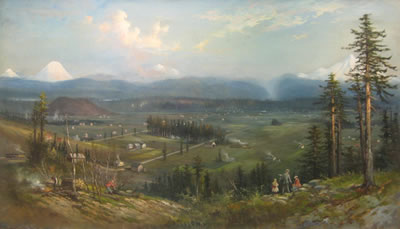
1854 Essling, Germany - 1919 Oregon City, Oregon. Known for: Itinerant landscape and genre painting.
Charles Christian Eisele, born in 1854, was a native of Essling, Germany. Little is known about his life prior to his immigration to the United States in 1869, where he would produce a large number... Read full biography
Charles Christian Eisele, born in 1854, was a native of Essling, Germany. Little is known about his life prior to his immigration to the United States in 1869, where he would produce a large number of works inspired by the vast, mountainous terrain of the Midwest. His work, primarily landscapes,... Read full biography
Charles Christian Eisele, born in 1854, was a native of Essling, Germany. Little is known about his life prior to his immigration to the United States in 1869, where he would produce a large number of works inspired by the vast, mountainous terrain of the Midwest. His work, primarily landscapes, drew considerable attention in Utah, which he visited in 1887, and again in 1889, when he was commissioned by the World's Fair Commission of Utah to produce a painting of Salt Lake City for the World’s... Read full biography
Charles Christian Eisele, born in 1854, was a native of Essling, Germany. Little is known about his life prior to his immigration to the United States in 1869, where he would produce a large number of works inspired by the vast, mountainous terrain of the Midwest. His work, primarily landscapes, drew considerable attention in Utah, which he visited in 1887, and again in 1889, when he was commissioned by the World's Fair Commission of Utah to produce a painting of Salt Lake City for the World’s Columbian Exposition. The often spiritual nature of his work has earned him recognition in modern academic works on the Mormon faith, signaling the value of his contribution to the Midwest’s cultural and spiritual history. Information on Eisele is... Read full biography
Charles Christian Eisele, born in 1854, was a native of Essling, Germany. Little is known about his life prior to his immigration to the United States in 1869, where he would produce a large number of works inspired by the vast, mountainous terrain of the Midwest. His work, primarily landscapes, drew considerable attention in Utah, which he visited in 1887, and again in 1889, when he was commissioned by the World's Fair Commission of Utah to produce a painting of Salt Lake City for the World’s Columbian Exposition. The often spiritual nature of his work has earned him recognition in modern academic works on the Mormon faith, signaling the value of his contribution to the Midwest’s cultural and spiritual history. Information on Eisele is contained in the Utah Artists Project at the J. Willard Marriott Library at the University of Utah. Although he found his inspiration pri... Read full biography
Artist Biography
Biography page for Charles Christian Eisele ((1854 - 1919)), known for Itinerant landscape and genre painting. Showing 2 biographical entries and 0 sample artworks.
Charles Christian Eisele - Artist Info
About Charles Christian Eisele
Biography from the Archives of askART
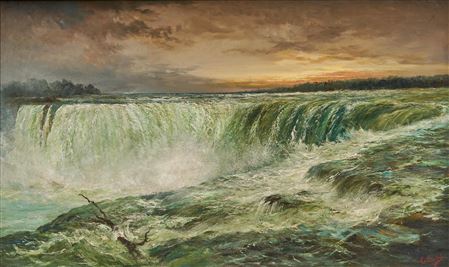 Charles Christian Eisele, born in 1854, was a native of Essling, Germany. Little is known about his life prior to his immigration to the United States in 1869, where he would produce a large number of works inspired by the vast, mountainous terrain of the Midwest. His work, primarily landscapes, drew considerable attention in Utah, which he visited in 1887, and again in 1889, when he was commissioned by the World's Fair Commission of Utah to produce a painting of Salt Lake City for the World’s Columbian Exposition.
The often spiritual nature of his work has earned him recognition in modern academic works on the Mormon faith, signaling the value of his contribution to the Midwest’s cultural and spiritual history. Information on Eisele is contained in the Utah Artists Project at the J. Willard Marriott Library at the University of Utah.
Although he found his inspiration primarily in small mountain communities of the North and Midwest, Eisele also produced a number of signed works depicting native Florida riverine landscapes with watercraft and human figures in the late 1880s. By the time he produced Moonlight on the Oklawaha, the distinctive north-flowing offshoot of the St. Johns River was already a bustling highway for commerce and sightseeing tourists who investigated the mysterious Ocklawaha basin from the decks of busy steamboats.
The detailed and accurate depictions of Florida native species growing along the river bank in Eisele’s painting are characteristic of the works he produced in Florida, indicating his appreciation for the unique beauty of the Florida landscape. As a nocturne, a painting traditionally produced to capture the moods of the evening, the dark blend of blues and purples contrasted by explosions of bright yellow and orange in Eisele’s palette invites the viewer to rely on the imagination to understand what he attempts to convey in Moonlight on the Oklawaha. The bright orb of the moon, centered above the river, competes for the eye’s attention with the bright blaze of the steamboat’s firestack and the mysterious glare of the kerosene lanterns on board. One can almost hear the chortling chugging of the steamboat as an interruption in the quiet, dark night, as the craft comes around the river’s bend.
Consistent with Eisele’s accurate painting style, the steamboat itself is detailed enough to allow for comparison to known steamboat designs of the time, resulting in the conclusion that the steamboat depicted in the painting is one of the unique, smaller models specifically designed by entrepreneur Hubbbard Hart to navigate the narrow Oklawaha. More information on the unique steamboat design featured in Moonlight on the Oklawaha can be found in Steven Noll and M. David Tegeder’s From Exploitation to Conservation: A History of the Marjorie Harris Carr Cross Florida Greenway, a publication of the University of Florida, Gainesville.
Because there is scant information on Eisele’s life, one can make an educated guess based on the painting’s elements, as to how he may have used this painting as an aesthetic medium through which to also express a philosophical message. And by comparing the disharmonious presence of the steamboat in Moonlight on the Oklawaha to his other Florida works, such as Evening on the Suwanee (1885), which features human activity on a quieter, humbler scale, one can conclude that this painting also serves as a comment on man’s dissonant presence in nature during the start of the American industrial revolution in Florida.
The large size of the painting also suggests that it was likely produced for a public space, as were many of Eisele’s known Florida paintings. Following his visit to Florida, which is assumed to have occurred in the late 1880s according to dates on several of his paintings, Eisele returned the Midwest, where he lived and painted until his death in 1919 in Oregon City, Oregon.
Eisele’s life and work in Florida is included in Reflections – Paintings of Florida 1865-1965 by Gary R. Libby.
Written by Cameron Ramey, Honors College Scholar at the University of Florida, for a class taught by Dr. Gary Libby, art scholar and author whose specialty is Florida art history.
Submitted by Gary R. LibbyBiography from Anthony's Fine Art
An itinerant painter from Essling, Germany, Christian Eisele immigrated to the United States in 1869 following the pattern of many of his contemporary European artists who were lured by the romanticism of the American West.
Although he did get as far as the Northwest, his travels seem to have been concentrated in the Rocky Mountain region as indicated by his numerous paintings of Utah and Wyoming as well as Yellowstone National Park.
In 1893 he was commissioned by the World's Fair Commission of Utah to send a large painting of Salt Lake City to Chicago for exhibition at the Columbian Exposition. Sixteen years later in 1909, Eisele was still contributing to Utah art, winning first prize in the Utah State Fair.
Eisele died in Oregon City, Oregon.
Sources:
Masterworks from the Collection of the Church of Jesus Christ of Latter-Day Saints, catalog and essay by Linda Jones Gibbs, 1984
Springville Museum of Art