Page loaded successfully. Showing biography for Charles Henry Alston.
Charles Henry Alston BIOGRAPHY
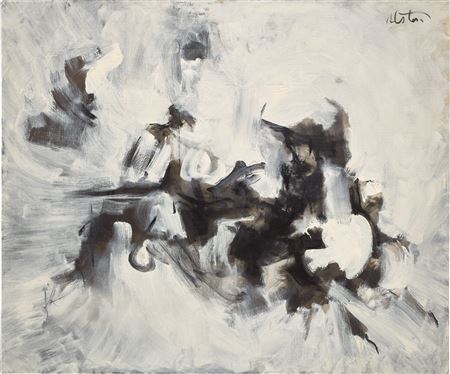
1907 Charlotte, North Carolina - 1977. Known for: Abstract expressionist painting, portraits, lithography, murals.
Born in Charlotte, North Carolina, Charles Alston was a long-time instructor at the Art Students League of New York and was known for his grasp of abstract design and his ability to express in his... Read full biography
Born in Charlotte, North Carolina, Charles Alston was a long-time instructor at the Art Students League of New York and was known for his grasp of abstract design and his ability to express in his artwork the social forces that where shaping America at that time. His mediums were painting,... Read full biography
Born in Charlotte, North Carolina, Charles Alston was a long-time instructor at the Art Students League of New York and was known for his grasp of abstract design and his ability to express in his artwork the social forces that where shaping America at that time. His mediums were painting, sculpture, and murals, and his mural titled Man on the Threshold of Space, is at the Harriet Tubman School and another, Emerging Man, is at the Harlem Hospital, both in New York. Charles Alston earned his... Read full biography
Born in Charlotte, North Carolina, Charles Alston was a long-time instructor at the Art Students League of New York and was known for his grasp of abstract design and his ability to express in his artwork the social forces that where shaping America at that time. His mediums were painting, sculpture, and murals, and his mural titled Man on the Threshold of Space, is at the Harriet Tubman School and another, Emerging Man, is at the Harlem Hospital, both in New York. Charles Alston earned his B.A. and M.A. degrees at Columbia, University, and in 1930, received the Arthur Wesley Dow Fellowship. From 1950, he began several decades of teaching at the Art Students League and was also a member of the National Society of Mural Painters. In 1958,... Read full biography
Born in Charlotte, North Carolina, Charles Alston was a long-time instructor at the Art Students League of New York and was known for his grasp of abstract design and his ability to express in his artwork the social forces that where shaping America at that time. His mediums were painting, sculpture, and murals, and his mural titled Man on the Threshold of Space, is at the Harriet Tubman School and another, Emerging Man, is at the Harlem Hospital, both in New York. Charles Alston earned his B.A. and M.A. degrees at Columbia, University, and in 1930, received the Arthur Wesley Dow Fellowship. From 1950, he began several decades of teaching at the Art Students League and was also a member of the National Society of Mural Painters. In 1958, he was a U.S. representative to the Brussels Worlds Fair and in 1967 was appointed to the Advisory Board of the Nationa... Read full biography
Artist Biography
Biography page for Charles Henry Alston ((1907 - 1977)), known for Abstract expressionist painting, portraits, lithography, murals. Showing 5 biographical entries and 0 sample artworks.
Charles Henry Alston - Artist Info
About Charles Henry Alston
Biography from the Archives of askART
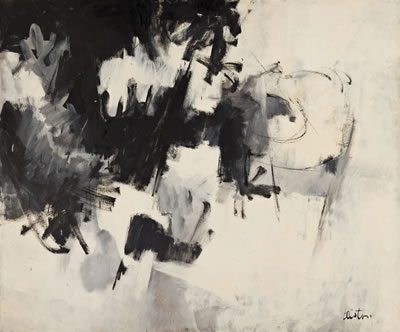 Born in Charlotte, North Carolina, Charles Alston was a long-time instructor at the Art Students League of New York and was known for his grasp of abstract design and his ability to express in his artwork the social forces that where shaping America at that time. His mediums were painting, sculpture, and murals, and his mural titled Man on the Threshold of Space, is at the Harriet Tubman School and another, Emerging Man, is at the Harlem Hospital, both in New York.
Charles Alston earned his B.A. and M.A. degrees at Columbia, University, and in 1930, received the Arthur Wesley Dow Fellowship. From 1950, he began several decades of teaching at the Art Students League and was also a member of the National Society of Mural Painters. In 1958, he was a U.S. representative to the Brussels Worlds Fair and in 1967 was appointed to the Advisory Board of the National Council of the Arts.
He exhibited at the John Heller Gallery in New York and in 1969 had a large retrospective exhibition at the Gallery of Modern Art in New York. However, he declined an invitation to participate in a 1971 exhibition of Black Artists at the Whitney Museum of Art writing to the Curator: "The idea of separating artists on the basis of color is a repulsive affirmation of the racism and bigotry which permeate American society . . . I would hate to think that I was in an exhibition because I's Black, rather than because I am a good painter." (Herskovic 26)
Sources:
American Art Review
ARTnews
Marika Herskovic, Editor, American Abstract Expressionists of the 1950s, An Illustrated SurveyBiography from Tobin Reese Fine Art
Charles Alston (1907-1977) was a prominent African-American artist. Prolific during the Harlem Renaissance, Alston displayed a wide variety of artistic talent, producing paintings, illustrations, sculptures, and many famous murals. He was a founding member of the Harlem Artists' Guild.
Alston was born in Charlotte, North Carolina. At a young age, Alston began to learn art from his older brother, Wendell. After moving to New York in 1915, his artistic talent was recognized at Public School 179 where he drew all of the school's posters. His artistic recognition continued at DeWitt Clinton High School where he was the art editor of The Magpie, the school's magazine. Accepted into the National Honor Society for his excellence in school, he nevertheless found time to study drawing and anatomy at the National Academy of Art on the weekend; it was here that Alston first began to work with oils. He gained acceptance to Columbia University, studying fine arts there, and was the recipient of a fellowship to study at Columbia's Teachers College upon completing his undergraduate degree; he graduated with a Master's Degree in 1931. During this period, he began his teaching career, teaching at the Harlem Arts Workshop close to where he lived. He also fostered a career as an illustrator for many prominent magazines such as The New Yorker and Fortune.
In 1938, Alston received a fellowship from the Rosenwald Fund; he used this money to travel to the south, his first time back since his family relocated over two decades earlier. There, he photographed portraits of the lives of various African-Americans, later turning these photographs into a series of portraits. Pleased with his work, the Rosenwald Fund awarded Alston an additional grant in 1940 in order for him to return to the south again and continue his work from 1938.
After serving in Arizona during World War II, Alston returned to New York. In 1950, the Metropolitan Museum of Art displayed Painting, later purchasing it. His first solo exhibition followed in 1953 at the John Heller Gallery. In 1956, he took a job as the first African-American teacher at the Museum of Modern Art. This job led to his ascension as a member of the American Academy of Arts and Letters in 1958. A decade later, he was made a member of the National Council of Culture and Arts by President Lyndon Johnson. He attained the rank of professor at the City College of New York in 1973, a position he would hold for the rest of his life.
During his career, Alston experimented with many different mediums in a variety of different styles, leading to a vast output which shows periods of fame in specific art forms. He explored the subjects of race, religion, the civil rights movement, and everyday life in the south. His styles cross vast ranges from realistic depictions of working people to abstract modernism, heavily influenced by repeated studies of African art. His murals gained him particular fame, leading him to find mural projects in which he could depict African-Americans in places frequented by African-Americans. As such, Alston was an individualist, never feeling the need to conform to artistic standards and trends of the day, instead painting what he experienced around him. He was a lifelong student as well as a teacher, constantly expanding his artistic vocabulary through exploration of new art forms and styles.
Alston died in 1977 from cancer. To honor his academic legacy, the Art Student's League created the Charles Alston Merit Scholarship the same year. In 1990, Alston's bust of Martin Luther King Jr. became the first art piece depicting an African-American displayed in the White House.
Source: Ian Martyn For Tobin Reese Fine ArtBiography from Michael Rosenfeld Gallery
Born in Charlotte, North Carolina, Charles "Spinky" Alston moved to New York City with his family in 1915, but continued to spend summers in North Carolina until he was fifteen years old. A talented student, Charles Alston took classes at the National Academy of Art and went on to receive his B.A. with a concentration in fine arts from Columbia University (1925-1929).
While completing his M.F.A at Columbia University Teachers College, Alston was introduced to African art and aesthetics and was deeply influenced by modern art. After receiving his Master's Degree (1931), Alston worked at the Harlem Arts Workshop run by Augusta Savage at the 135th Street branch of the New York Public Library. The workshop was partially funded by the Carnegie Foundation and later came under the jurisdiction of the WPA Federal Arts Project. When the school needed more space, Alston found additional room for the school at 306 West 141 Street. Known as "306," the school became a center for Harlem's creative community. When funding for the school disappeared, Alston, along with Augusta Savage and Arthur Schomburg, became a founding members of the Harlem Artists Guild.
In 1935, Alston became the first black supervisor within the Federal Arts Project when he was assigned to direct the WPA's Harlem Hospital murals project. Alston's work was influenced by the social realist art of the 1930s, the politically charged work of the Mexican Muralists, and by jazz and nightclub culture.
An accomplished sculptor, painter, illustrator, and printmaker, Alston was also an influential teacher at both the Art Students League (where he became the first black instructor in 1950) and the City University of New York.Biography from The Johnson Collection
CHARLES HENRY "SPINKY" ALSTON (1907–1977)
A pivotal figure within the Harlem Renaissance, Charles Henry "Spinky" Alston was passionately dedicated to empowering African Americans through cultural enrichment and artistic advancement. In his distinguished career as an artist and an educator, he continually sought to reclaim and explore racial identity and its complicated implications. Inspired by the modern idiom of Modigliani and Picasso, as well as African art, Alston’s work addresses both the personal and communal aspects of the Black experience.
Alston was born in Charlotte, North Carolina, where his parents were educated leaders in that city’s African American community. He moved with his family to Harlem at the age of seven, but continued to spend summers in the South. After matriculating at Columbia University in 1925, Alston was barred from enrolling in drawing classes because of his race. However, his talent did not go unnoticed, and he was later awarded the Arthur Wesley Dow Fellowship which funded graduate work at Columbia’s Teachers College. It was during his time there that he designed the cover for one of Duke Ellington’s jazz albums, as well as book jackets for Langston Hughes and Eudora Welty, assignments that led to a successful career as an illustrator for popular magazines during the 1930s and 1940s. A self-described “figure painter,” Alston embraced abstraction, but never completely abandoned the figural.
Alston’s association with Alain Locke and the New Negro Movement began during his graduate school days. He began teaching alongside Augusta Savage at the Harlem Community Art Center and led programing for Harlem youth at Utopia House. His studio, located at 306 West 141st Street, became a gathering space for intellectual and creative exchange for African American artists—including Jacob Lawrence, Norman Lewis, and Alston’s cousin Romare Bearden. He was appointed the first African American supervisor within the Federal Art Project in 1935; he capitalized on his new position by forming the Harlem Artists Guild in hopes of convincing the Works Progress Administration to fund more African American artists.
Although he participated in the 1933 Harmon Foundation exhibition, Alston later joined Bearden, Savage, and others in boycotting the program due to its segregated format. Eager to explore political and aesthetic topics in African American art, Alston also cofounded the art collective known as the Spiral Group in 1963. Other significant milestones in Alston’s career include serving as the first African American instructor at the Art Students League and at the Museum of Modern Art. Charles Alston’s work is represented in the collections of the Butler Institute of Art, National Portrait Gallery, Studio Museum in Harlem, and Whitney Museum of Art.
The Johnson Collection, Spartanburg, South Carolina
thejohnsoncollection.orgBiography from Phillips New York
Harlem Renaissance artist Charles Alston has become known as a trailblazing artist who defied conventions and paved the way for greater recognition of African American artists. In 1935, having founded the Harlem Artist's Guild, he became the first African-American supervisor to work for the WPA's Federal Art Project (FAP) in New York.
He was the first black instructor at both the Arts Student League and the Museum of Modern Art, New York, in 1959 and 1956 respectively. In 1968, he received a presidential appointment from Lyndon Johnson to the National Council of Culture and the Arts. A year later, he was appointed to the New York City Art Commission. In 1990, Alston's portrait sculpture of Martin Luther King, Jr. became the first image of an African American displayed at the White House.
Alston left an important mark on art history, equally as artist, arts educator and activist who notably served as a central influence on Jacob Lawrence. Refusing to adhere to any stylistic conventions, Alston pursued both figurative and abstract painting simultaneously.
After making a name for himself with his portraits and large-scale murals in the 1940s, Alston became known for his socio-politically charged artworks responding to the Civil Rights era that explored themes such as inequality and race relations in the United States. Along with Romare Bearden and Hale Woodruff, Alston co-founded the collective Spiral in 1963 for artists "who addressed how Black artists should relate to American society in time of segregation."