Page loaded successfully. Showing biography for Chris Burden.
Chris Burden BIOGRAPHY

1946 Boston, Massachusetts - 2015 Los Angeles, California. Known for: Performance art, installation, graphics, teaching.
Following is the Los Angeles Times obituary of Chris Burden by Christopher Knight, May 10, 2015. When he had himself shot in the arm for a performance piece at a Santa Ana gallery, Chris Burden... Read full biography
Following is the Los Angeles Times obituary of Chris Burden by Christopher Knight, May 10, 2015. When he had himself shot in the arm for a performance piece at a Santa Ana gallery, Chris Burden became fleetingly famous. But years later, when he created such outsized, imagination-charged works as... Read full biography
Following is the Los Angeles Times obituary of Chris Burden by Christopher Knight, May 10, 2015. When he had himself shot in the arm for a performance piece at a Santa Ana gallery, Chris Burden became fleetingly famous. But years later, when he created such outsized, imagination-charged works as Urban Light, the ranks of vintage lampposts tightly arrayed outside the Los Angeles County Museum of Art, he left a longer-lasting legacy. Burden, the protean Conceptual artist who rose from doing... Read full biography
Following is the Los Angeles Times obituary of Chris Burden by Christopher Knight, May 10, 2015. When he had himself shot in the arm for a performance piece at a Santa Ana gallery, Chris Burden became fleetingly famous. But years later, when he created such outsized, imagination-charged works as Urban Light, the ranks of vintage lampposts tightly arrayed outside the Los Angeles County Museum of Art, he left a longer-lasting legacy. Burden, the protean Conceptual artist who rose from doing controversial performances in the 1970s to become one of the most compelling and widely admired sculptors of his generation, died Sunday at his home in Topanga Canyon. He was 69. Paul Schimmel, a close friend of the artist and the former chief curator at... Read full biography
Following is the Los Angeles Times obituary of Chris Burden by Christopher Knight, May 10, 2015. When he had himself shot in the arm for a performance piece at a Santa Ana gallery, Chris Burden became fleetingly famous. But years later, when he created such outsized, imagination-charged works as Urban Light, the ranks of vintage lampposts tightly arrayed outside the Los Angeles County Museum of Art, he left a longer-lasting legacy. Burden, the protean Conceptual artist who rose from doing controversial performances in the 1970s to become one of the most compelling and widely admired sculptors of his generation, died Sunday at his home in Topanga Canyon. He was 69. Paul Schimmel, a close friend of the artist and the former chief curator at the Museum of Contemporary Art who had organized Burden’s first retrospective exhibition in 1988, said the cause was... Read full biography
Artist Biography
Biography page for Chris Burden ((1946 - 2015)), known for Performance art, installation, graphics, teaching. Showing 2 biographical entries and 0 sample artworks.
Chris Burden - Artist Info
About Chris Burden
Biography from the Archives of askART
 Following is the Los Angeles Times obituary of Chris Burden by Christopher Knight, May 10, 2015.
When he had himself shot in the arm for a performance piece at a Santa Ana gallery, Chris Burden became fleetingly famous. But years later, when he created such outsized, imagination-charged works as Urban Light, the ranks of vintage lampposts tightly arrayed outside the Los Angeles County Museum of Art, he left a longer-lasting legacy.
Burden, the protean Conceptual artist who rose from doing controversial performances in the 1970s to become one of the most compelling and widely admired sculptors of his generation, died Sunday at his home in Topanga Canyon. He was 69.
Paul Schimmel, a close friend of the artist and the former chief curator at the Museum of Contemporary Art who had organized Burden’s first retrospective exhibition in 1988, said the cause was malignant melanoma. Burden was diagnosed 18 months ago, Schimmel said, but kept the information private except for a few family members and friends.
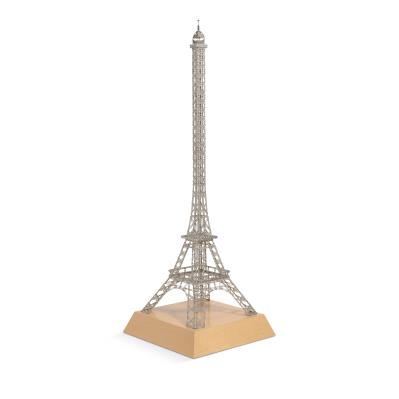
Burden’s final sculpture, a lyrical homage to Alberto Santos-Dumont, the Brazilian aviator who flew the first practical dirigible around the Eiffel Tower in a momentous 1901 flight, will be shown for a month at the Los Angeles County Museum of Art in a special exhibition beginning May 18.
LACMA’s entry plaza is home to Urban Light, Burden’s sculpture in the form of a Classical Greek temple unexpectedly composed of 202 restored, antique cast-iron street lamps. Installed in 2008, it rapidly became something of an L.A. symbol.
“Chris’ work combines the raw truth of our reality and an optimism of what humans can make and do,” said LACMA director Michael Govan. With Urban Light, he said, Burden told him that he “wanted to put the miracle back in the Miracle Mile.”
Few might have guessed that his work would someday hold such an exalted position within the civic consciousness. Burden gained notoriety in 1971 as a 25-year-old graduate student at UC Irvine, when performance art was still a relatively new genre.
For his master’s thesis, he executed Five Day Locker Piece, a durational performance in which he locked himself inside an ordinary school locker measuring just two feet high, two feet wide and three feet deep. The locker directly above contained five gallons of bottled water, and the locker directly below held an empty five-gallon bottle.
The university’s administration was deeply divided over granting Burden’s degree. The performance, however, was not mere sensationalism, grounded instead in a precocious understanding of fundamental shifts taking place in American art.
Burden harnessed a basic, industrially fabricated form prominent in 1960s Minimalist sculpture and — simply by inhabiting it with his body — transformed an inert box into an unnerving site of stomach-churning anxiety, both for himself and for increasingly uneasy viewers. Suddenly in the vanguard of emerging Post-Minimal artists, young Burden was awarded his degree.
He quickly connected with a group of Northern California artists centered around Tom Marioni, who hosted a new Burden performance a few months later at his ground-breaking Museum of Conceptual Art in San Francisco. Burden had a small, star-shaped metal stud hammered into his sternum, then shaved his head and changed clothes to dress in what he described as the sort of inconspicuous jacket and tie an FBI agent might wear.
Titled I Became a Secret Hippy the performance turned on the sometimes painful friction between inner and outer realities, private thoughts and public faces, rebellion and conformity. It also resonated with larger social divides as the United States, riven with conflict abroad and at home, entered its second decade of involvement in Vietnam
But it was a performance six weeks later that, for good or ill, cemented Burden’s work in the public mind. At F Space, an alternative gallery in Santa Ana, Burden performed Shoot. He arranged to have himself shot in the left arm by a rifle-wielding friend positioned about 15 feet away.
The performance was recorded in a grainy, eight-second Super-8 film. In what could have been a fatal event, the bullet just grazed Burden’s arm, causing a painful trickle of blood. Henceforth he would be known as “the artist who had himself shot” — caricatured by detractors, puzzled over by many, and closely scrutinized in Los Angeles’ growing art community.
Power was a central motif in Burden’s work. Over the next 44 years he approached it as an almost tactile, palpable material, one with visual, physical, emotional and social meanings.
His work delved into the power of individuals, tribes and nations. Often he explored the realm of science and technology as distinctly modern manifestations of power’s dual capacity for the creation of magical delight or total annihilation. Always he courted the power of art.
The Big Wheel was a dramatic turning point. Having completed about 50 performances over the course of a decade, including some that consisted of brief video clips broadcast locally to startled late-night television viewers, the monumental 1979 work introduced a new direction for Burden’s art.
The Big Wheel is a performance sculpture — an object activated by the artist, but one that seems almost to have a life of its own. The new genre became his primary focus for the rest of his prolific career.
In the work, a three-ton, cast-iron flywheel eight feet in diameter is powered by a motorcycle. When the engine revs and the motorcycle’s rear tire is engaged with the sculpture, the flywheel begins to spin — first slowly, then faster, eventually gaining fearsome speed.
The motorcycle is disengaged, the engine shut down, and the big wheel spins — silently and with awesome force — for several hours. Farcical and playful, this simple but massive demonstration of Isaac Newton’s laws of motion rivets audiences with an almost childlike sense of wonder.
The Big Wheel is a post-industrial recollection of Marcel Duchamp (1887-1968), the Dada artist whose absurdist 1913 sculpture of a bicycle wheel affixed to a kitchen stool presaged his standing in the 1970s as the decade’s most influential artistic ancestor. He was art’s big wheel, duly celebrated in Burden’s magnificent work.
The Big Wheel is now in MOCA’s collection.
It was followed by important sculptures such as The Reason for the Neutron Bomb, 50,000 nickels topped with 50,000 match heads and painstakingly laid out on the floor in a precise, urban grid; Samson, an industrial-strength turnstile placed at a museum’s entry, which threatens to topple the building’s walls if enough visitors crowd into the museum; and Exposing the Foundation of the Museum, a trio of trenches dug into a museum floor to recall an archaeological dig at a lost civilization’s ancient tomb.
He also was known for L.A.P.D. Uniforms, a string of oversize, navy-blue garments, large enough for a giant, made in the wake of the Rodney King beating at the hands of local police; and, What My Dad Gave Me, a 65-foot skyscraper made entirely of Erector set parts that was temporarily installed at New York’s Rockefeller Center in 2008.
In 1996 Burden made The Flying Steamroller, a jaw-dropping sculpture in which an actual steamroller was connected to a counterbalanced pivot arm. Driven in a circle at high speed, the steamroller eventually lifted off the ground, centrifugally transcending the weighty machine’s apparent physical limitations.
The Flying Steamroller is an eccentric precursor to Ode to Santos-Dumont, the as-yet unseen new work that will make its debut next week at LACMA. KCRW art commentator Hunter Drohojowska-Philp, who witnessed a test run of the dirigible at a Camarillo airplane hangar last weekend, described Burden’s homage to heavier than air flight as “mesmerizing. In this as in much of his other work, she said, “Chris honored, examined and emulated the big dreams of others.”
Burden was the first artist to join Gagosian Gallery when it opened in Los Angeles in 1978. His work is best known in California and Europe, where it has been the subject of numerous museum exhibitions. His first major solo show in a New York museum came in 2013, when “Chris Burden: Extreme Measures” was organized by the New Museum.
Burden was born in Boston on April 11, 1946, to Rhoda and Robert Burden, a biologist and an engineer. The eldest of three children, he grew up in France and Italy and, at 17, won a National Science Foundation grant to spend the summer studying in San Diego. In 1965 he enrolled at Pomona College, where he pursued architecture, physics and art, before entering graduate school at UC Irvine.
Burden began teaching at UCLA part time in 1978, becoming a tenured professor in 1986. A thoughtful, intensely focused, compact man, he was instrumental in developing the department’s reputation as one of the nation’s leading art schools. That same year he made his first collaborative work with artist Nancy Rubins, his second wife, who survives him.Biography from the Archives of askART
 Chris Burden is best known for his performance art pieces associated with the Conceptual art movement. He first achieved notoriety in the 1970's by subjecting himself to danger and physical risk for the sake of artistic expression.
Burden was born in Boston in 1946. His father was an engineer, and Burden himself was always fascinated by technology and construction. He attended Pomona College, Claremont, California and received a B.A. from there in 1969. He went on to study at the University of California, Irvine where he received a Master's degree in Fine Art in 1971. For his Master's thesis Burden locked himself in a two by two by three-foot locker for five days. This piece called the "five day locker piece" gained him immediate underground notoriety.
His dramatic performance work included shocking acts involving electrocution; risk of drowning, and one instance of having a friend shoot him in the arm at his request. Burden used his body as an art object to complete a connection with his audience inviting them into the process.
In the late 1970s, Burden began producing complex installation pieces, which evolved from his performance work. He created giant assemblages of tiny, multiple objects like five-thousand toy soldiers, or numbers of tiny plastic battleships hanging from the ceiling. He also assembled more personal pieces created from a few found objects encased in hand-made wooden display boxes.
His work always hinted at the greater issues at hand, making moral statements about the societal affects of technology, money, violence and military might. In 1974, he began working with video and also began a new phase of building and implementation. Burden designed and built a one-passenger prototype vehicle in 1977 and was also fascinated by bridge construction.
His art work and personal performances have been staged for audiences at a number of national and international institutions including the Museum of Conceptual Art, San Francisco, the Institute of Contemporary Art, Boston, the Museum of Modern Art, New York, the Centre Georges Pompidou, Paris, France and the Whitney Museum of American Art, New York. Although he began exhibiting in 1971, a retrospective of his work, "Chris Burden: A Twenty Year Survey", was organized in 1988 by the Newport Harbor Art Museum, California. Chris Burden teaches at the University of California, Los Angeles.