Page loaded successfully. Showing biography for Claude Auclair.
Claude Auclair BIOGRAPHY
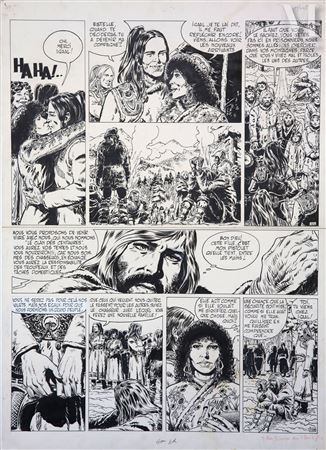
1943 - 1990. Known for: Comics.
Claude Auclair (1943-1990). He took courses in Fine Arts in Nantes. Afterwards, he became a theater decorator. He got involved with comics through Robert Roquemartine, the founder of Futuropolis. In... Read full biography
Claude Auclair (1943-1990). He took courses in Fine Arts in Nantes. Afterwards, he became a theater decorator. He got involved with comics through Robert Roquemartine, the founder of Futuropolis. In the late 1960s, he began illustrating science-fiction periodicals. Encouraged by his fellow artists... Read full biography
Claude Auclair (1943-1990). He took courses in Fine Arts in Nantes. Afterwards, he became a theater decorator. He got involved with comics through Robert Roquemartine, the founder of Futuropolis. In the late 1960s, he began illustrating science-fiction periodicals. Encouraged by his fellow artists Moebius and Philippe Druillet, he joined Pilote magazine in 1970. There, he drew several short stories, and later the Jason Muller series. When editor-in-chief René Goscinny cancelled the series,... Read full biography
Claude Auclair (1943-1990). He took courses in Fine Arts in Nantes. Afterwards, he became a theater decorator. He got involved with comics through Robert Roquemartine, the founder of Futuropolis. In the late 1960s, he began illustrating science-fiction periodicals. Encouraged by his fellow artists Moebius and Philippe Druillet, he joined Pilote magazine in 1970. There, he drew several short stories, and later the Jason Muller series. When editor-in-chief René Goscinny cancelled the series, Auclair moved over to Record, where he began drawing the Catriona McKilligan series (text by Jacques Acar). Auclair began his most famous series, Simon du Fleuve, in Tintin, doing both text and artwork. This post-apocalyptic saga ran until 1978 and had a... Read full biography
Claude Auclair (1943-1990). He took courses in Fine Arts in Nantes. Afterwards, he became a theater decorator. He got involved with comics through Robert Roquemartine, the founder of Futuropolis. In the late 1960s, he began illustrating science-fiction periodicals. Encouraged by his fellow artists Moebius and Philippe Druillet, he joined Pilote magazine in 1970. There, he drew several short stories, and later the Jason Muller series. When editor-in-chief René Goscinny cancelled the series, Auclair moved over to Record, where he began drawing the Catriona McKilligan series (text by Jacques Acar). Auclair began his most famous series, Simon du Fleuve, in Tintin, doing both text and artwork. This post-apocalyptic saga ran until 1978 and had a brief reappearance in 1988, when Auclair took on a second c... Read full biography
Artist Biography
Biography page for Claude Auclair ((1943 - 1990)), known for Comics. Showing 1 biographical entries and 0 sample artworks.
Claude Auclair - Artist Info
About Claude Auclair
Biography from the Archives of askART
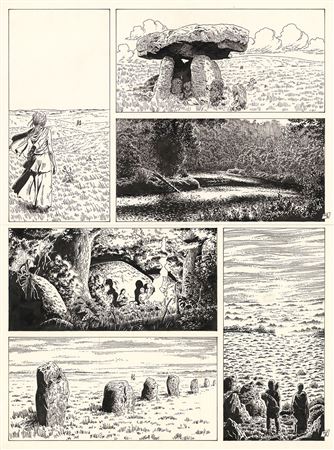 Claude Auclair (1943-1990)
He took courses in Fine Arts in Nantes. Afterwards, he became a theater decorator. He got involved with comics through Robert Roquemartine, the founder of Futuropolis. In the late 1960s, he began illustrating science-fiction periodicals. Encouraged by his fellow artists Moebius and Philippe Druillet, he joined Pilote magazine in 1970. There, he drew several short stories, and later the Jason Muller series. When editor-in-chief René Goscinny cancelled the series, Auclair moved over to Record, where he began drawing the Catriona McKilligan series (text by Jacques Acar).
Auclair began his most famous series, Simon du Fleuve, in Tintin, doing both text and artwork. This post-apocalyptic saga ran until 1978 and had a brief reappearance in 1988, when Auclair took on a second cycle until 1989. Claude Auclair joined the team of À Suivre in 1978. For this magazine, he began producing humanistic stories about Negro slavery (Le Sang Flamboyant) and Breton history (Bran Ruz). While working on the final part of his Celui-là trilogy, Auclair prematurely passed away in 1990, leaving the book to be finished by his friends Mézières and Tardi.
Sources include:
lambiek.net
other open internet sources