Page loaded successfully. Showing biography for Conrad Wise Chapman.
Conrad Wise Chapman BIOGRAPHY
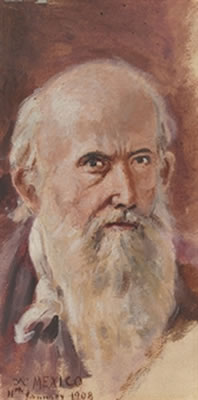
1842 Washington, D.C. - 1910 Hampton, Virginia. Known for: Military genre, history and portrait painting, illustration.
Conrad Wise Chapman was born in 1842, in Washington, D.C. and is known for his depictions of the Civil War, in particular a series of thirty-one oil paintings depicting the forts and batteries in the... Read full biography
Conrad Wise Chapman was born in 1842, in Washington, D.C. and is known for his depictions of the Civil War, in particular a series of thirty-one oil paintings depicting the forts and batteries in the area of Charleston, South Carolina. He was the son of John Gadsby Chapman, an Alexandria, Virginia... Read full biography
Conrad Wise Chapman was born in 1842, in Washington, D.C. and is known for his depictions of the Civil War, in particular a series of thirty-one oil paintings depicting the forts and batteries in the area of Charleston, South Carolina. He was the son of John Gadsby Chapman, an Alexandria, Virginia artist and teacher, who moved his family to Rome in 1850 when Conrad was eight. While in Italy, Conrad was trained by his father. Although he was raised in Europe, he was strongly attracted to the... Read full biography
Conrad Wise Chapman was born in 1842, in Washington, D.C. and is known for his depictions of the Civil War, in particular a series of thirty-one oil paintings depicting the forts and batteries in the area of Charleston, South Carolina. He was the son of John Gadsby Chapman, an Alexandria, Virginia artist and teacher, who moved his family to Rome in 1850 when Conrad was eight. While in Italy, Conrad was trained by his father. Although he was raised in Europe, he was strongly attracted to the Southern United States, and returned in 1861 to Virginia at the age of nineteen to enlist in the Confederate Army as the Civil War began. He was soon branded with the nickname of "Old Rome". He participated in the Siege of Vicksburg and received head... Read full biography
Conrad Wise Chapman was born in 1842, in Washington, D.C. and is known for his depictions of the Civil War, in particular a series of thirty-one oil paintings depicting the forts and batteries in the area of Charleston, South Carolina. He was the son of John Gadsby Chapman, an Alexandria, Virginia artist and teacher, who moved his family to Rome in 1850 when Conrad was eight. While in Italy, Conrad was trained by his father. Although he was raised in Europe, he was strongly attracted to the Southern United States, and returned in 1861 to Virginia at the age of nineteen to enlist in the Confederate Army as the Civil War began. He was soon branded with the nickname of "Old Rome". He participated in the Siege of Vicksburg and received head wounds at Shiloh. Upon recovery, he returned to Virginia, and then transferred a year later to Charleston. There,... Read full biography
Artist Biography
Biography page for Conrad Wise Chapman ((1842 - 1910)), known for Military genre, history and portrait painting, illustration. Showing 2 biographical entries and 0 sample artworks.
Conrad Wise Chapman - Artist Info
About Conrad Wise Chapman
Biography from the Archives of askART
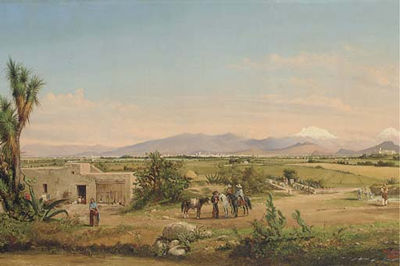 Conrad Wise Chapman was born in 1842, in Washington, D.C. and is known for his depictions of the Civil War, in particular a series of thirty-one oil paintings depicting the forts and batteries in the area of Charleston, South Carolina.
He was the son of John Gadsby Chapman, an Alexandria, Virginia artist and teacher, who moved his family to Rome in 1850 when Conrad was eight. While in Italy, Conrad was trained by his father. Although he was raised in Europe, he was strongly attracted to the Southern United States, and returned in 1861 to Virginia at the age of nineteen to enlist in the Confederate Army as the Civil War began. He was soon branded with the nickname of "Old Rome".
He participated in the Siege of Vicksburg and received head wounds at Shiloh. Upon recovery, he returned to Virginia, and then transferred a year later to Charleston. There, on the recommendation of his father's friend General Henry A. Wise, he became part of the staff of General P.G.T. Beauregard. He was soon given orders to create a pictorial record of the Confederate Army's defense of Charleston Harbor, and other forts and batteries of the city.
Chapman completed a series of illustrations between September 1863 and March 1864, which laid the groundwork for thirty-one small paintings. These historical documents are noted for their strong contrasts, deep perspective, and color clarity. In 1864, Chapman had moved to Richmond, Virginia, along with other artists such as portrait painter Edward C Bruce, landscapist John Ross Key, Adalbert Volck, and the political caricaturist, William Ludwell Sheppard. Perhaps never again would Richmond experience such a concentration of creativity.
Chapman's notable series of thirty-one paintings were painted, however, in Rome, where he had traveled on leave, due to family illnesses. An example would be Fort Sumter Interior, Sunrise, December 9, 1864 (oil on board, Museum of the Confederacy, Richmond, VA). In this work he underscored the tragic dimensions of the bombardment of the fort, contrasting the desolate destruction with the beauty of its natural setting.
When Chapman returned to the Confederacy, the war was almost over. After Lee's surrender, he followed the Confederate General John B. Magruder to Mexico to serve the Emperor Maxmillian. During the next seven years his paintings concentrated on that country's landscape, the first American artist to do so. His paintings of the Valley of Mexico constitute his other most significant body of work. His works there have been compared to Mexico's Jose Maria Velasco, a great nineteenth-century landscape artist.
Overall, Chapman's works have great historical significance as Civil War record. In addition, his art is included for the first time, in the category of Southern, as well as American art.
He lived primarily in Rome, Paris, and Mexico for the rest of his life, though Conrad Chapman died in Hampton, Virginia, in 1910.Biography from The Johnson Collection
CONRAD WISE CHAPMAN (1842–1910)
The son of the artist John Gadsby Chapman, Conrad Wise Chapman was born in Washington, D.C., but spent the majority of his youth in Rome, Italy. There, his art education was overseen by his father and nurtured by the extended community of American expatriate artists, notably the sculptors Thomas Crawford and William Wetmore Story and the painters George Loring Brown and Cephas Giovanni Thompson. Though living abroad, young Conrad was deeply versed in Southern tradition, so much so that in 1861 he felt compelled to join the Confederate cause, later writing that a "duty more sacred than even family ties rose to bid me move forward and meet whatever my fate might be." As a member of Kentucky's famous "Orphan Brigade," Chapman suffered a serious head wound during the April 1862 Battle of Shiloh, an injury that would plague him for the rest of his life.
During Chapman's recuperation in the summer of 1862, General P. G. T. Beauregard commissioned him to create a series of works illustrating the siege of Charleston. The resulting group of paintings provided the most detailed images of Confederate forces produced by a painter in the South. In March 1864, Chapman returned to Rome as secretary to Bishop Patrick Neeson Lynch, President Jefferson Davis' commissioner to the papal states. Although he tried to rejoin Confederate forces in March 1865, a blockade resulted in a lengthy detour to Mexico, where he remained until 1866, painting several large panoramas of the countryside which account for some of his best received work. For the next few years, Chapman worked on commissions and speculation in Rome, Paris and London. While living in London in 1871, he suffered a mental breakdown—perhaps as a result of his war injuries—and was confined to an asylum. The expense of his hospitalization contributed to a sharp decline in the family fortunes. For the balance of his years, Chapman would alternate between periods of mental, physical, professional and financial instability, prompting a series of moves between Mexico and the United States, often relying on the generosity of others to support him.
While in Italy, Conrad Chapman, along with his father and brother, enjoyed regular patronage from American tourists who were fascinated by local color and ancient ruins. In response, the family of artists executed landscapes and paintings featuring the terrain and inhabitants of the Roman Campagna and the Appian Way, ideal souvenirs of the rich Italian scene. Though numerous examples of his father and brother's Campagna scenes survive, few by Conrad are known to exist. View of Italy exhibits the clear light and warm color contrasts between the verdure of the land and the costumes of the peasantry characteristic of the Chapman style.
The Johnson Collection, Spartanburg, South Carolina
thejohnsoncollection.org