Page loaded successfully. Showing biography for Dan Liu.
Dan Liu BIOGRAPHY
Born 1953 Nanjing, Jiangsu, China. Known for: Chinese landscape scrolls, florals, rocks.
Chinese painter Liu Dan was born in 1953 into a scholarly family that educated its children in philosophy, poetry, painting and calligraphy. "My grandfather taught me calligraphy because he believed... Read full biography
Chinese painter Liu Dan was born in 1953 into a scholarly family that educated its children in philosophy, poetry, painting and calligraphy. "My grandfather taught me calligraphy because he believed that writing was the mark of a gentleman, just as in the Western world, it is his speech," he says.... Read full biography
Chinese painter Liu Dan was born in 1953 into a scholarly family that educated its children in philosophy, poetry, painting and calligraphy. "My grandfather taught me calligraphy because he believed that writing was the mark of a gentleman, just as in the Western world, it is his speech," he says. Thanks to him, Liu's calligraphically-trained hand marked him as an exceptional artist in later life. Liu's formal education, however, was short-lived. In 1966, Mao's Cultural Revolution tore the... Read full biography
Chinese painter Liu Dan was born in 1953 into a scholarly family that educated its children in philosophy, poetry, painting and calligraphy. "My grandfather taught me calligraphy because he believed that writing was the mark of a gentleman, just as in the Western world, it is his speech," he says. Thanks to him, Liu's calligraphically-trained hand marked him as an exceptional artist in later life. Liu's formal education, however, was short-lived. In 1966, Mao's Cultural Revolution tore the family apart. Liu, with other young intellectuals, was sent to the countryside, where he spent years farming rice. The purpose of the Revolution, according to the artist, was to erase the four "olds"old thinking, old culture, old customs and old habits.... Read full biography
Chinese painter Liu Dan was born in 1953 into a scholarly family that educated its children in philosophy, poetry, painting and calligraphy. "My grandfather taught me calligraphy because he believed that writing was the mark of a gentleman, just as in the Western world, it is his speech," he says. Thanks to him, Liu's calligraphically-trained hand marked him as an exceptional artist in later life. Liu's formal education, however, was short-lived. In 1966, Mao's Cultural Revolution tore the family apart. Liu, with other young intellectuals, was sent to the countryside, where he spent years farming rice. The purpose of the Revolution, according to the artist, was to erase the four "olds"old thinking, old culture, old customs and old habits. Despite the physical hardships and suffering he witnessed, Liu practiced drawing and writing whenever he could, to counteract the forces aimed a... Read full biography
Artist Biography
Biography page for Dan Liu ((Born 1953)), known for Chinese landscape scrolls, florals, rocks. Showing 2 biographical entries and 0 sample artworks.
Dan Liu - Artist Info
About Dan Liu
Name variants
Liu Dan
Biography from the Archives of askART
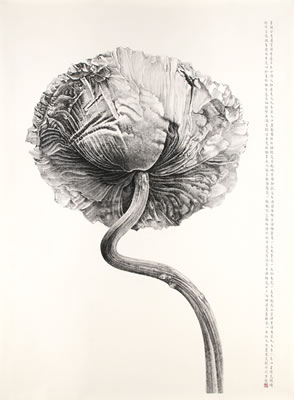 Chinese painter Liu Dan was born in 1953 into a scholarly family that educated its children in philosophy, poetry, painting and calligraphy. "My grandfather taught me calligraphy because he believed that writing was the mark of a gentleman, just as in the Western world, it is his speech," he says. Thanks to him, Liu's calligraphically-trained hand marked him as an exceptional artist in later life.
Liu's formal education, however, was short-lived. In 1966, Mao's Cultural Revolution tore the family apart. Liu, with other young intellectuals, was sent to the countryside, where he spent years farming rice. The purpose of the Revolution, according to the artist, was to erase the four "olds"old thinking, old culture, old customs and old habits. Despite the physical hardships and suffering he witnessed, Liu practiced drawing and writing whenever he could, to counteract the forces aimed at destroying individuality.
After the Cultural Revolution ended, Liu entered the reopened Jiangsu Academy for Graduate Studies in Nanjing in 1978. Resisting the voices of liberalization in art, he continued to study ink painting from ancient models while trying to find his own way. He also studied drawings by Michelangelo, Leonardo da Vinci and Albrecht Durer. Renaissance etchings proved even more useful models for Liu in learning how to impart different densities of crosshatched lines to create shape and mass with a limited tool.
Liu became a leader in the underground pro-Western, pro-democracy movement. Constant harassment by officials soon led him to leave China.
In 1981, Liu immigrated to the United States and forged a new kind of arta synthesis of the old and newwhich he attributes to the "greatest luxury of America, the right to individuality." Here, he embarked upon a new branch of painting that dissolves the boundaries between the old and new with his monumental landscapes.
"In Chinese art," Liu notes, "landscape is a tool for dealing with nature. It allows you to see how people touch nature, how they travel through mountains, on water, how they regard trees and rocks."
But Liu brought changes to this concept. He explains, "in ancient Chinese paintings, you can look at or even imagine you live in the landscape, but in mine, you don't want to travel. It's like looking through a microscope and seeing a different universe." Yet, Liu's work is not abstract. Liu says, "My paintings have forms and shapes that look like clouds or rocks, but you're not sure what you are seeing. I have shifted the viewer's attention to the micro world."
Liu paints on gigantic sheets of paper. His hand-scroll in the San Diego Museum of Art is sixty feet long and consists of ten sheets of six-foot-wide paper; his most recent painting, "Medusa's Seduction," is a single seven and one-half by eighteen foot sheet. The paper was purchased in Hong Kong and is no longer available; the artist has only a few precious sheets left.
Before Liu starts a painting, he makes a small but minutely detailed graphite drawing on a grid. "There can be no mistakes on Chinese paper," he warns. "The brush and ink are there to stay." He makes a proportionately larger grid on his painting paper, then blocks in the drawing outlines with charcoal. When the painting process begins, he usually works from light to dark. The paper he uses is white or light-toned, white space being a very important element in Chinese painting. "The black ink strokes are the bones," he says, "but even in the darkest areas, you can see white."
Liu paints standing in front of his paper, which he secures to a wall. "My work is very physical. You can use only a certain amount of ink on the brush, so I must constantly exert different amounts of pressure, painting with dots and lines, almost like weaving or etching. Also, since the paper is sensitive to water and my diluted ink will run, I must paint with speed to control the brushstrokes and ink suffusion."
The artist applies as many as twenty layers of ink, some allowed to fuse when moist and some left to dry, to build up forms. In the end, all these strokes, dots, crisscrossing lines and washes grow and expand until the whole work turns into a great, flowing pattern of undulating forces and counter-forces. These enormous ink scrolls take many months to complete; the San Diego work was a year in the making, while "Medusa's Seduction" took seven months.
Liu's large paintings of sunflowers and mysterious rocks further exemplify his command of the medium. He employs a soft technique with the flowers, brushing on many dry washes until the texture becomes chalk-like. The rocks require a hard-edge touch. In these paintings, Liu again dips into the past. Strangely faceted rocksthought of as miniature mountainshave been treasured by the Chinese for over a millennium, going back as far as the Tang Dynasty. With their eroded surfaces and gaping holes, such rocks were considered the "bones of the earth."
Liu puts it differently. He sees such rocks as the stem cells for his landscapes. "Only a rock can turn into every kind of form," he states, but notes that this is not just a Chinese idea. "Henry Moore's sculptures and, I believe, Georgia O'Keeffe's skulls are similar expressions of this sensibility.
From "Watercolor Magazine", Fall 2002
By Diane CochranBiography from Bonhams Bond Street
Dan Liu is one of the most internationally renowned painters of his generation, known for his meticulously detailed ink paintings of rocks, trees and flowers that combine literati traditions with western hyper-realism. Liu's paintings of trees are rare, and most of his work usually depicts rocks or flowers.
Born in Nanjing, Jiangsu Province, Liu studied the Confucian classics, poetry, painting, and calligraphy with his grandfather at an early age. After the disruption of the Cultural Revolution and joining the Nanjing Red Guards, Liu returned to traditional painting under Ya Ming (1924-2002) at the newly reopened Jiangsu Academy of Chinese Painting, Hangzhou, from 1978 to 1981. He later moved to Hawaii and studied Western art. Liu then moved to New York in 1992, and after fourteen years there, he returned to China in 2006.
Despite his highly privileged training with noted ink painter Ya Ming, and years of study at the Jiangsu Provincial Academy of Painting in his native town of Nanjing, Liu's work departs from the dramatic expressive qualities of the brush and brushstrokes that were central to his education. Having mastered the art of self-expression via the brushstroke, for centuries regarded as key to the most sophisticated Chinese ink painting revealing the hand and heart of the artist, Liu rejected it in favour of a focus on structure.
There are three reasons why Liu's painting moved away from brush-strokes to hyper-realism: Firstly, he found it imperative to reconnect with an original pure creative spirit and for this reason he delighted in the less self-conscious forms of classical and medieval Western art, and Chinese art of the Yuan dynasty (1271-1368) and earlier. Secondly, while living in the West - primarily Hawaii and New York, from 1981 until moving to Beijing in 2006 - he concluded that most twentieth-century Chinese art had been produced in response to external pressures. He aspired to be an agent of self-directed creativity rather than reactive production. Thirdly, he developed a personal philosophy of nature's generative force, observing that natural forms evolve and duplicate on a grand scale, such that rocks can be considered the 'stem cells of landscape, see, C.von Spee, Modern Chinese Ink Paintings, London, 2012, p.101.
Liu explains his doctrine as an artist: 'Your one responsibility as an artist is changing the visual experience of people, the way they look at things. Your one purpose is to encourage an openness of mind that allows them to look beyond everyday concerns and think freely.' Liu's ink paintings, whether of landscapes, scholar's rocks, or old cypress trees in the Forbidden City, are all fastidiously conceived, complex works which highlight his concern to emphasise underlying compositional structure over virtuoso expressions of brushwork.