Page loaded successfully. Showing biography for David Hagerbaumer.
David Hagerbaumer BIOGRAPHY
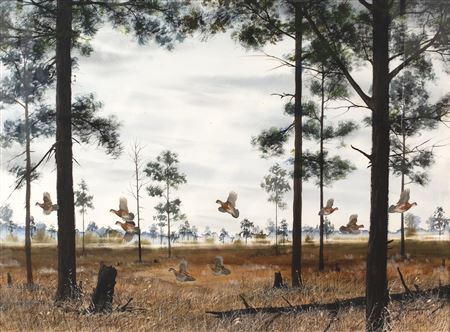
1921 Quincy, Illinois - 2014. Known for: Waterfowl and wildlife in landscape, skyscape painting.
Born in 1921 in Quincy, Illinois, Hagerbaumer grew up during the Great Depression and began duck hunting, trapping, and fishing at the age of eight in order to help support his family. After serving... Read full biography
Born in 1921 in Quincy, Illinois, Hagerbaumer grew up during the Great Depression and began duck hunting, trapping, and fishing at the age of eight in order to help support his family. After serving in the Marines in World War II, he returned home and began working as a taxidermist in a decoy... Read full biography
Born in 1921 in Quincy, Illinois, Hagerbaumer grew up during the Great Depression and began duck hunting, trapping, and fishing at the age of eight in order to help support his family. After serving in the Marines in World War II, he returned home and began working as a taxidermist in a decoy factory. He then attended San Diego State College majoring in art but never graduated. Hagerbaumer worked as preparator in the Nevada State Museum and then became a staff artist at the Santa Barbara Museum... Read full biography
Born in 1921 in Quincy, Illinois, Hagerbaumer grew up during the Great Depression and began duck hunting, trapping, and fishing at the age of eight in order to help support his family. After serving in the Marines in World War II, he returned home and began working as a taxidermist in a decoy factory. He then attended San Diego State College majoring in art but never graduated. Hagerbaumer worked as preparator in the Nevada State Museum and then became a staff artist at the Santa Barbara Museum in 1957. He painted at night and sold his work at shows each weekend. It was at this point that he switched from oils to watercolor because he needed a medium that would dry faster. Soon, he realized that he could make a living selling his... Read full biography
Born in 1921 in Quincy, Illinois, Hagerbaumer grew up during the Great Depression and began duck hunting, trapping, and fishing at the age of eight in order to help support his family. After serving in the Marines in World War II, he returned home and began working as a taxidermist in a decoy factory. He then attended San Diego State College majoring in art but never graduated. Hagerbaumer worked as preparator in the Nevada State Museum and then became a staff artist at the Santa Barbara Museum in 1957. He painted at night and sold his work at shows each weekend. It was at this point that he switched from oils to watercolor because he needed a medium that would dry faster. Soon, he realized that he could make a living selling his paintings, and he dedicated himself to his art full-time. His commercial success as an artist began when he connec... Read full biography
Artist Biography
Biography page for David Hagerbaumer ((1921 - 2014)), known for Waterfowl and wildlife in landscape, skyscape painting. Showing 2 biographical entries and 0 sample artworks.
David Hagerbaumer - Artist Info
About David Hagerbaumer
Biography from the Archives of askART
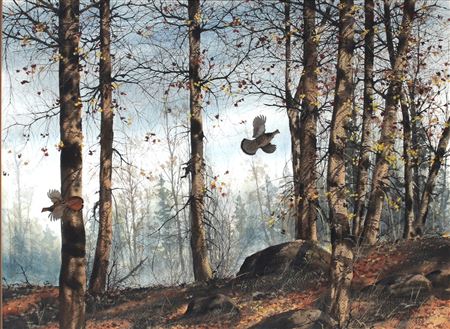 Born in 1921 in Quincy, Illinois, Hagerbaumer grew up during the Great Depression and began duck hunting, trapping, and fishing at the age of eight in order to help support his family.
After serving in the Marines in World War II, he returned home and began working as a taxidermist in a decoy factory. He then attended San Diego State College majoring in art but never graduated. Hagerbaumer worked as preparator in the Nevada State Museum and then became a staff artist at the Santa Barbara Museum in 1957. He painted at night and sold his work at shows each weekend. It was at this point that he switched from oils to watercolor because he needed a medium that would dry faster. Soon, he realized that he could make a living selling his paintings, and he dedicated himself to his art full-time.
His commercial success as an artist began when he connected with Ralph Terrill of Crossroads of Sport in New York City. Their 1956 catalogue offered the first Hagerbaumer watercolors for sale — four prints published by Frost & Reed in England.
Along with his painting he illustrated a number of books, several authored by Worth Mathewson, and two of his own, “The Bottoms” (1987), and “Waterfowling These Past Fifty Years — Mostly Brant” (1998). (Hagerbaumer’s dedication in this book reads in part “to the little sea geese with whom I’ve kept vigil on many’s the lonely bay”).
Outdoor writer John Orrelle became a good friend and featured the work of his longtime friend when he published, “David Hagerbaumer, Sporting Images, Etchings, Drypoints & Drawings — Volume I” and “The Art Of A Sporting Life, The Wildlife Art of David Hagerbaumer Volume II”.
When Hagerbaumer died on February 23, 2014, Orrelle wrote the following (excerpt from the obituary):
With his passing the world of wildlife art has lost one of the great pioneer painters of the 20th century. Celebrated for his art and revered as a man, his legacy is rich and enduring. He was indeed a remarkable man who had a remarkable career.
Hagerbaumer’s art reflects the way he lived. A self-professed “river rat,” he never lost his love of the outdoors that started as a boy, roaming the swamps and river bottoms of Illinois. As one writer observed, Dave liked to “slug it out in the mud.”
Slugging in the mud is an apt description and indirectly touches on a chief characteristic of Hagerbaumer art, namely his accurate portrayal of landscape and habitat.
Adding to the excellence of his art is a sure knowledge of the variability of terrain, not overlooking the hazards familiar to any seasoned duck hunter, the bad spots where you might go in over your boots or sink up to your knees in marsh muck. These are the details that earned him widespread admiration and contributed to his legendary status as both artist and waterfowler.
As David Maass once said of Hagerbaumer, “He was truly a sportsman’s artist and has done it all, both with gun and brush.”
Hagerbaumer’s paintings touch us with that which is basic and elemental, the attraction of his art lying in the arousal of primal excitement and satisfaction, simply walking over the ground, delighting in the pleasure of our senses.
As for the ducks themselves, it might be the sight of bluebills raking the decoys with afterburners at full thrust; mallards in that peculiar slip-sliding motion, adjusting wings for a proper landing; the quick buzz and dash of teal; or pintails dropping in soft descent against a graying winter sky, uniting birds, landscape and viewer in a static tapestry of perfect harmony.
During his lifetime, Hagerbaumer showed great versatility in his art, mostly stylistic variations reflecting changes in attitudes and goals. Many earlier paintings are minimalist works — serene, contemplative and marked by oriental simplicity, with birds portrayed against the sky in austere brevity and elegance.
With the viewer kept at a distance, they are of a more formal nature without the inviting drama and intimacy of later works.
Whatever the mood — quiet and reflective or vigorous and dynamic — by consensus it is generally acknowledged that Hagerbaumer’s watercolors of waterfowl are without peer. They are distinctive and immediately identifiable, and while others have tried to imitate his style, none have succeeded.
Hagerbaumer’s fame rests mostly on his watercolors, but his black-and-white work — etchings, drypoints and drawings — are an important part of his overall work. Along with his paintings, they reflect a grand odyssey, a great adventurous exploration of all the places hunted, the waterfowl pursued, and the varied upland birds brought to hand.
Notable too are his sketches of duck shacks and blinds, a collective and indelible record of disappearing markers from a bygone era, all imbued with a sense of wistful nostalgia and timelessness. As for Hagerbaumer himself, they speak of an undiminished enthusiasm for all that held him captive and enthralled for a lifetime.
Sources include:
National Museum of Wildlife Art
http://www.goskagit.com/Biography from Collectors Covey (CLOSED)
"I got my break in 1954, when a mentor, Edward Selden Spaulding, showed my work to Ralph Terrill, who managed the Crossroads of Sport in New York City. At that time, there were only a few sporting artists on the scene and only 16 American artists appeared in the Crossroads' catalog that year. Today, very likely, there are 50 times that number painting the same subjects.
I enjoy a career that let me live where I choose, paint mostly what I want and make a decent living doing so. My goals for the coming year are to do a few watercolors, work on a new book and start painting landscapes in oils again.
I am a loner and that's how I would like to be remembered. I've gone my own way, created my own style, and gathered my own reference material with field sketches and photos. I hope to be remembered as one did his best and walked his talk." - David Hagerbaumer