Page loaded successfully. Showing biography for David Ward Jr.
David Ward Jr BIOGRAPHY
1839 Ward's Island, Lake Ontario, Canada - 1912. Known for: Decoy carving.
Lots Sold: 100%, High Price: Subscribe.
David Ward Jr. (1839 - 1912) was a prominent Toronto, Ontario businessman, sportsman and decoy* carver. Attached below is his biography excerpted and abridged from the book Traditions in Wood: A... Read full biography
David Ward Jr. (1839 - 1912) was a prominent Toronto, Ontario businessman, sportsman and decoy* carver. Attached below is his biography excerpted and abridged from the book Traditions in Wood: A History of Wildfowl Decoys in Canada":. At the age of 19, David Ward Jr. watched as a storm crashing off... Read full biography
David Ward Jr. (1839 - 1912) was a prominent Toronto, Ontario businessman, sportsman and decoy* carver. Attached below is his biography excerpted and abridged from the book Traditions in Wood: A History of Wildfowl Decoys in Canada":. At the age of 19, David Ward Jr. watched as a storm crashing off Lake Ontario breached the Toronto peninsula and reshaped the harbour behind it, creating Ward's Island out of the land on which his family lived. More firmly rooted, apparently, than the Peninsula... Read full biography
David Ward Jr. (1839 - 1912) was a prominent Toronto, Ontario businessman, sportsman and decoy* carver. Attached below is his biography excerpted and abridged from the book Traditions in Wood: A History of Wildfowl Decoys in Canada":. At the age of 19, David Ward Jr. watched as a storm crashing off Lake Ontario breached the Toronto peninsula and reshaped the harbour behind it, creating Ward's Island out of the land on which his family lived. More firmly rooted, apparently, than the Peninsula itself, successive generations of the family remained there from the time David Ward Sr. emigrated from Yarmouth, England, in 1798, until 1982. The eldest of three sons, Ward spent his early years working with his father as a commercial fisherman and... Read full biography
David Ward Jr. (1839 - 1912) was a prominent Toronto, Ontario businessman, sportsman and decoy* carver. Attached below is his biography excerpted and abridged from the book Traditions in Wood: A History of Wildfowl Decoys in Canada":. At the age of 19, David Ward Jr. watched as a storm crashing off Lake Ontario breached the Toronto peninsula and reshaped the harbour behind it, creating Ward's Island out of the land on which his family lived. More firmly rooted, apparently, than the Peninsula itself, successive generations of the family remained there from the time David Ward Sr. emigrated from Yarmouth, England, in 1798, until 1982. The eldest of three sons, Ward spent his early years working with his father as a commercial fisherman and serving the island both as a policeman and as an oarsman on the Lake Ontario lifeboats. In 1862, however, he moved from the is... Read full biography
Artist Biography
Biography page for David Ward Jr ((1839 - 1912)), known for Decoy carving. Showing 1 biographical entries and 0 sample artworks.
David Ward Jr - Artist Info
About David Ward Jr
Biography from the Archives of askART
 David Ward Jr. (1839 - 1912) was a prominent Toronto, Ontario businessman, sportsman and decoy* carver. Attached below is his biography excerpted and abridged from the book Traditions in Wood: A History of Wildfowl Decoys in Canada":
At the age of 19, David Ward Jr. watched as a storm crashing off Lake Ontario breached the Toronto peninsula and reshaped the harbour behind it, creating Ward's Island out of the land on which his family lived. More firmly rooted, apparently, than the Peninsula itself, successive generations of the family remained there from the time David Ward Sr. emigrated from Yarmouth, England, in 1798, until 1982.
The eldest of three sons, Ward spent his early years working with his father as a commercial fisherman and serving the island both as a policeman and as an oarsman on the Lake Ontario lifeboats. In 1862, however, he moved from the island to the mainland and set up Toronto's first pawn-brokers shop at the corner of Church and Adelaide streets - a career which was considered highly respectable in the 1800s and which brought Ward into contact with many of the leading figures in the Toronto sporting community. It is as a sportsman that he is best remembered.
Ward's closest companion, another member of the harbour community, was the famed boat builder, carver and hunter George Warin [see AskART]. The two men cosponsored Warin's rowing student Ned Hanlan [1]. They also spent days at a time together, shooting on the bountiful marshes that lined the Toronto shores of Lake Ontario; later, they hunted together at the St.Clair Flats Shooting Company on Walpole Island, Lake St. Clair [south-western Ontario], and at the nearby St. Anne's Club where they went every season from 1878 until the turn of the century. [2]
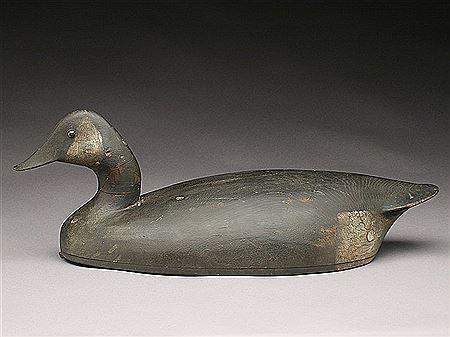
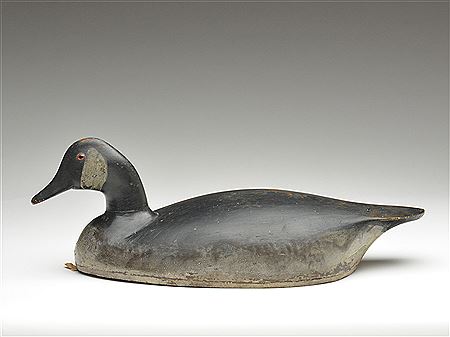
Decoys marked "D. Ward" have a distinctive style, subtly different from the work of other Toronto carvers. Usually hollow, the geese, canvasbacks, redheads and bluebills curve in a single continuous line from neck to tail and show no attempt to depict the flattened spread of tail feathers. This pattern gives Ward's birds a tidy, unadorned look, a fine complement to the delicate Toronto style of head carving.
Many of the decoys Ward used are still in the possession of his family, and each carving has his name carefully stamped on the board covering the bottom of the hollowed body. Other carvings that have been attributed to Ward have turned up not only in Toronto but also as far afield as Manitoba. In all of the areas where Ward is known to have hunted, examples have been discovered of the round-backed birds attributed to him ever since collectors searching the Toronto waterfront first heard about him and about the distinctive body shape he employed.
Although Ward hunted with men who made their own decoys, he is reported to have been a carver himself and seems to have been the only man to use decoys sculpted in the so-called Ward style. But there is a puzzling gap in his story: in spite of many claims to the contrary, Ward's descendants insist that he did not make the decoys credited to him. While they admit that the carvings originally belonged to him and that of his son - whose initials also appear on the bottom of many - used them for years, they deny that Ward himself carved the birds. This mystery will probably never be solved. But even if Ward did not produce his own hunting rigs, collectors will remain intrigued by the style of an entirely anonymous late-19th-century carver who supplied fine decoys to David Ward Jr.
Source: Traditions in Wood: A History of Wildfowl Decoys in Canada (1987), edited by Patricia Fleming (see AskART book references).
Footnotes:
[1] 'Ned Hanlan (1855 - 1908) was the first Canadian athlete to be world champion in an individual event and the first Canadian athlete to gain international recognition.' He was the world sculling champion for five consecutive years from 1880 - 1884. Nicolas Cage portrayed Hanlan in the 1986 film "The Boy in Blue, " which is based on Hanlan's life. Sources: The Canadian Encyclopedia online and the Hanlan Boat Club, Toronto.
[2] For more information about the St.Clair Flats Shooting Company and the St. Anne's Club please see the AskART record for Thomas Chambers (1860 - 1948) . MDS
Additional sources:
The Great Book of Wildfowl Decoys (2000), edited by Joe Engers (see AskART book references)
* For more in-depth information about these terms and others, see AskART.com. Glossary http://www.askart.com/AskART/lists/Art_Definition.aspx.
Prepared and contributed to askART by M.D. Silverbrooke.