Page loaded successfully. Showing biography for Dick Higgins.
Dick Higgins BIOGRAPHY
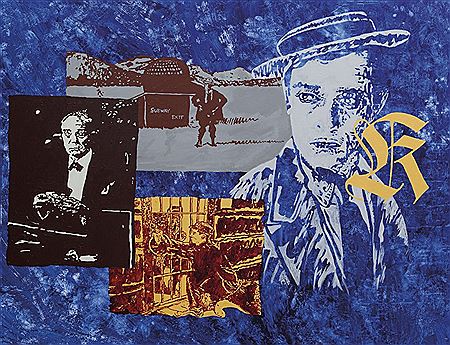
1938 Cambridge, England - 1998 Quebec City. Known for: Mod imagery, graphics.
A composer, publisher and author, he studied music in New York with John Cage and created "Happenings" with Allan Kaprow and George Maciunas and helped found "Fluxus."... Read full biography
A composer, publisher and author, he studied music in New York with John Cage and created "Happenings" with Allan Kaprow and George Maciunas and helped found "Fluxus."... Read full biography
A composer, publisher and author, he studied music in New York with John Cage and created "Happenings" with Allan Kaprow and George Maciunas and helped found "Fluxus."... Read full biography
A composer, publisher and author, he studied music in New York with John Cage and created "Happenings" with Allan Kaprow and George Maciunas and helped found "Fluxus."... Read full biography
A composer, publisher and author, he studied music in New York with John Cage and created "Happenings" with Allan Kaprow and George Maciunas and helped found "Fluxus."... Read full biography
Artist Biography
Biography page for Dick Higgins ((1938 - 1998)), known for Mod imagery, graphics. Showing 2 biographical entries and 0 sample artworks.
Dick Higgins - Artist Info
About Dick Higgins
Biography from the Archives of askART
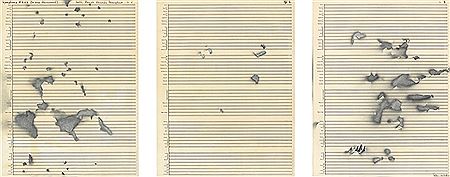 A composer, publisher and author, he studied music in New York with John Cage and created "Happenings" with Allan Kaprow and George Maciunas and helped found "Fluxus."
Biography from Rosenthal Fine Art
Dick Higgins was a co-founder of the Fluxus movement and coined the term Intermedia. His dedication to the Fluxus Movement (whose title derives from the Latin verb to flow) initiated the participation of an international network of artists, composers, and designers noted for blending various artistic media in the 1960s. The interaction between physical and theoretical elements of a transient Happening was his focus and inspired his intermedia theory, where the art “falls between” mediums and intricacies become the art.
The process and display of his work encompasses music, performance, and even traditional media (paint), thus combining various artistic practices to create ephemeral artwork which can never be reproduced precisely. His interest in conceptual work began during his childhood, and he always believed artistic activity to be limitless. Through his poetry, plays, performances, lectures, and musical happenings, he applied his creativity to various niche areas of artistic practice. He was appropriately referred to as a maximal artist; in everything from a car engine to a brush stroke, there was art to be made.
Fluxus Experience, written by his daughter Hannah Higgins, espouses the philosophy of Fluxus. “The strong basis of smell and taste in Fluxus work stands apart from the standard hierarchy of senses in the west, where vision is followed by sound, then touch, and at a distance, smell and taste…But Fluxus is better understood on its own terms: as producing diverse primary experiences and interactions with reality, plain and simple.” Hannah Higgins elucidates the often misunderstood conceptual underpinnings of her father’s work. His work involved contrary notions of engagement and withdrawal from everyday life, a sort of “substitution of art and anti-art with life, as art” (Higgins 103) as a means of constructing a “conceptual fusion”.
Further Readings: Kostelanetz, Dick Higgins (1938-1998), 1999 Higgins, E. T. (2002). How self-regulation creates distinct values: The case of promotion and prevention decision making. Journal of Consumer Psychology, 12, 177-191