Page loaded successfully. Showing biography for Earle Erik Heikka.
Earle Erik Heikka BIOGRAPHY
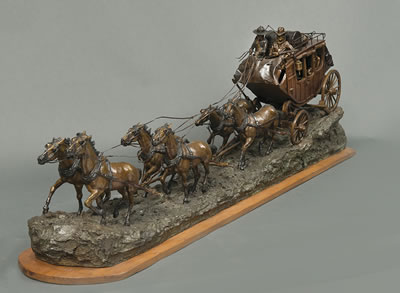
1910 Belt, Montana - 1941 Great Falls, Montana. Known for: Western genre sculpture, dioramas.
In 1963 Joe De Yong—Charles M. Russell’s only protégé—wrote a tribute to Earl E. Heikka, “What has received far less attention than deserved is the wholly untrained, yet artistically admirable... Read full biography
In 1963 Joe De Yong—Charles M. Russell’s only protégé—wrote a tribute to Earl E. Heikka, “What has received far less attention than deserved is the wholly untrained, yet artistically admirable quality of modeling that was produced in the all-too-short-lifetime of Earl Heikka of Great Falls.” Heikka... Read full biography
In 1963 Joe De Yong—Charles M. Russell’s only protégé—wrote a tribute to Earl E. Heikka, “What has received far less attention than deserved is the wholly untrained, yet artistically admirable quality of modeling that was produced in the all-too-short-lifetime of Earl Heikka of Great Falls.” Heikka was born in Belt, Montana on May 3, 1910 to Finnish parents. When he was two years old, the family moved to Great Falls. He was only sixteen years-old when Charles Russell died, so it is uncertain... Read full biography
In 1963 Joe De Yong—Charles M. Russell’s only protégé—wrote a tribute to Earl E. Heikka, “What has received far less attention than deserved is the wholly untrained, yet artistically admirable quality of modeling that was produced in the all-too-short-lifetime of Earl Heikka of Great Falls.” Heikka was born in Belt, Montana on May 3, 1910 to Finnish parents. When he was two years old, the family moved to Great Falls. He was only sixteen years-old when Charles Russell died, so it is uncertain how much time, if any, he observed Russell working in his studio in Great Falls. Like Russell, he learned a great deal about big game by hunting and packing. He also learned from spending time in Rumford’s Taxidermy Shop in Great Falls. Unfortunately,... Read full biography
In 1963 Joe De Yong—Charles M. Russell’s only protégé—wrote a tribute to Earl E. Heikka, “What has received far less attention than deserved is the wholly untrained, yet artistically admirable quality of modeling that was produced in the all-too-short-lifetime of Earl Heikka of Great Falls.” Heikka was born in Belt, Montana on May 3, 1910 to Finnish parents. When he was two years old, the family moved to Great Falls. He was only sixteen years-old when Charles Russell died, so it is uncertain how much time, if any, he observed Russell working in his studio in Great Falls. Like Russell, he learned a great deal about big game by hunting and packing. He also learned from spending time in Rumford’s Taxidermy Shop in Great Falls. Unfortunately, his most productive years were during the Great Depression when prices for all goods and services dropped dramatically. Spending on... Read full biography
Artist Biography
Biography page for Earle Erik Heikka ((1910 - 1941)), known for Western genre sculpture, dioramas. Showing 2 biographical entries and 0 sample artworks.
Earle Erik Heikka - Artist Info
About Earle Erik Heikka
Biography from the Archives of askART
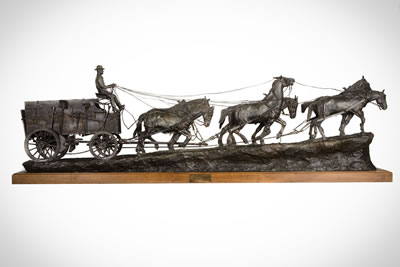 In 1963 Joe De Yong—Charles M. Russell’s only protégé—wrote a tribute to Earl E. Heikka, “What has received far less attention than deserved is the wholly untrained, yet artistically admirable quality of modeling that was produced in the all-too-short-lifetime of Earl Heikka of Great Falls.” Heikka was born in Belt, Montana on May 3, 1910 to Finnish parents. When he was two years old, the family moved to Great Falls. He was only sixteen years-old when Charles Russell died, so it is uncertain how much time, if any, he observed Russell working in his studio in Great Falls. Like Russell, he learned a great deal about big game by hunting and packing. He also learned from spending time in Rumford’s Taxidermy Shop in Great Falls.
Unfortunately, his most productive years were during the Great Depression when prices for all goods and services dropped dramatically. Spending on art for even the wealthy was greatly reduced until after WW II. Heikka worked with mainly water-based air drying clay known as Marblex and used solid wire armature anchored to a wooden base. Many of his models were then beautifully and finely painted before they were ready for sale. Best known for his pack train sculptures, often with a number of riders and horses that were designed for mantles in lodges, Heikka sculpted them as his tribute to Glacier National Park and the Rocky Mountains. His finest was Taking Up the Slack, and others included: Trophy Hunters, Bringing Home the Bacon, Sun River Packers, Hunter’s Return, Pack Train, Pack String, and Successful. He was also a master of predicament subjects such as Pursued.
Heikka struggled for sales his entire shortened life. Like so many others during the brutal days of the Depression, he committed suicide on May 18, 1941 in Great Falls and left a young family behind. Only a number of years after he died were his models cast in bronze and his sculpting abilities better appreciated. Today, his sculptures are highly prized and collectible.
Source: Excerpt from The American West Reimagined (2021) by Dr. Larry Len Peterson
Submitted by: Dr. Larry Len PetersonBiography from the Archives of askART
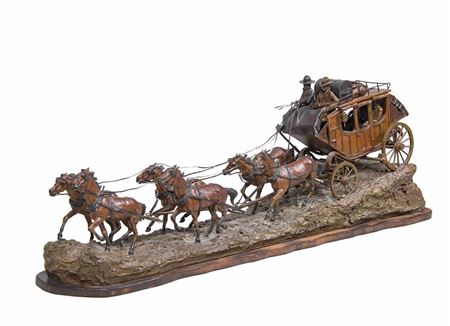 A sculptor and painter of western genre in realistic style, Earle Heikka became a sculptor whose primary subjects were pack trains, stagecoaches, and cowboys and Indians.
He was born in Belt, Montana to Finnish parents in 1910 and was raised in Great Falls, Montana, where he was directly exposed to the painting and sculpture of C.M. Russell. He is thought to have been self taught although he received advice from the staff of the Field Museum of Natural History in Chicago and from sculptors Gutzon Borglum, Lorado Taft and Frederick Hibbard. He also worked as a taxidermist and painter of dioramas.
By 1928, Heikka was considered a major sculptor with some of his subjects being the cowboys at the Gary Cooper ranch. He had a successful exhibition in Los Angeles and exhibited at the 1932 World's Fair in Chicago.
Source:Peggy and Harold Samuels, Encyclopedia of Artists of the American West
Glenn Opitz, Editor: Dictionary of American Sculptors