Page loaded successfully. Showing biography for Edwin Georgi.
Edwin Georgi BIOGRAPHY
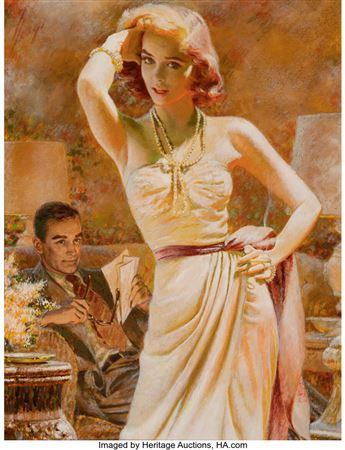
1896 New York, New York - 1964. Known for: Illustrator-female figure, genre.
Edwin Georgi is an illustrator best known for his depictions of women. He was studying civil engineering at Princeton when World War I broke out. After serving as a pilot in the U. S. Air Force... Read full biography
Edwin Georgi is an illustrator best known for his depictions of women. He was studying civil engineering at Princeton when World War I broke out. After serving as a pilot in the U. S. Air Force during the war, Georgi accepted his first job doing paste-ups in an advertising agencys art department... Read full biography
Edwin Georgi is an illustrator best known for his depictions of women. He was studying civil engineering at Princeton when World War I broke out. After serving as a pilot in the U. S. Air Force during the war, Georgi accepted his first job doing paste-ups in an advertising agencys art department and began his practical training as an artist. His early illustrations were for advertisers. Over the years, he did a number of notable series for such clients as Hartford Fire Insurance, Crane Paper... Read full biography
Edwin Georgi is an illustrator best known for his depictions of women. He was studying civil engineering at Princeton when World War I broke out. After serving as a pilot in the U. S. Air Force during the war, Georgi accepted his first job doing paste-ups in an advertising agencys art department and began his practical training as an artist. His early illustrations were for advertisers. Over the years, he did a number of notable series for such clients as Hartford Fire Insurance, Crane Paper Co., Hockanum Woolens, and Yardley & Co. Georgis ability to depict beautiful women and sumptuous settings also brought him story manuscripts: he was soon illustrating for most of the national magazines, including Womans Home Companion, Redbook,... Read full biography
Edwin Georgi is an illustrator best known for his depictions of women. He was studying civil engineering at Princeton when World War I broke out. After serving as a pilot in the U. S. Air Force during the war, Georgi accepted his first job doing paste-ups in an advertising agencys art department and began his practical training as an artist. His early illustrations were for advertisers. Over the years, he did a number of notable series for such clients as Hartford Fire Insurance, Crane Paper Co., Hockanum Woolens, and Yardley & Co. Georgis ability to depict beautiful women and sumptuous settings also brought him story manuscripts: he was soon illustrating for most of the national magazines, including Womans Home Companion, Redbook, McCalls, Cosmopolitan, The Ladies Home Journal, and The Saturday Evening Post. His use of color was lavish and dramatic, giving his pict... Read full biography
Artist Biography
Biography page for Edwin Georgi ((1896 - 1964)), known for Illustrator-female figure, genre. Showing 1 biographical entries and 0 sample artworks.
Edwin Georgi - Artist Info
About Edwin Georgi
Biography from the Archives of askART
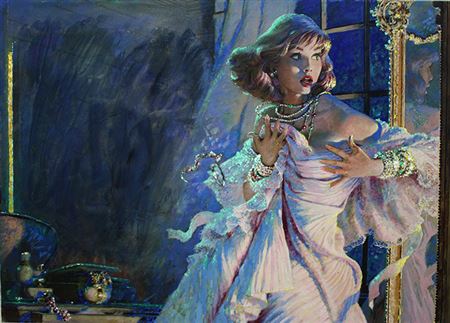 Edwin Georgi is an illustrator best known for his depictions of women.
He was studying civil engineering at Princeton when World War I broke out. After serving as a pilot in the U. S. Air Force during the war, Georgi accepted his first job doing paste-ups in an advertising agencys art department and began his practical training as an artist.
His early illustrations were for advertisers. Over the years, he did a number of notable series for such clients as Hartford Fire Insurance, Crane Paper Co., Hockanum Woolens, and Yardley & Co.
Georgis ability to depict beautiful women and sumptuous settings also brought him story manuscripts: he was soon illustrating for most of the national magazines, including Womans Home Companion, Redbook, McCalls, Cosmopolitan, The Ladies Home Journal, and The Saturday Evening Post. His use of color was lavish and dramatic, giving his pictures great impact on the printed page.
(Information on the biography above is based on writings from the book, "The Illustrator in America, 1880-1980," A Century of Illustrators, by Walt and Roger Reed.)