Page loaded successfully. Showing biography for Elijah Pierce.
Elijah Pierce BIOGRAPHY
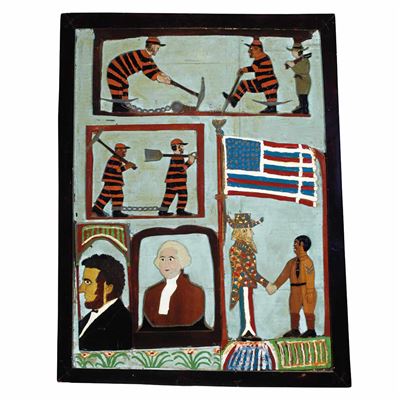
1892 near Baldwin, Mississippi - 1984 Columbus, Ohio. Known for: Folk art carvings, narrative, teacher, collaborative art.
A folk-art carver of bas reliefs, Elijah Pierce created works that "are considered to be among the most important American folk carvings" of the 20th Century. (Rosenak 215). Described as a sculptural... Read full biography
A folk-art carver of bas reliefs, Elijah Pierce created works that "are considered to be among the most important American folk carvings" of the 20th Century. (Rosenak 215). Described as a sculptural storyteller, he did carvings of African-American sports heroes, biblical subjects and political and... Read full biography
A folk-art carver of bas reliefs, Elijah Pierce created works that "are considered to be among the most important American folk carvings" of the 20th Century. (Rosenak 215). Described as a sculptural storyteller, he did carvings of African-American sports heroes, biblical subjects and political and social issues. He is best known for his religious carvings including the Book of Wood, a series of thirty-three large reliefs with each representing one of the thirty-three years of the life on earth... Read full biography
A folk-art carver of bas reliefs, Elijah Pierce created works that "are considered to be among the most important American folk carvings" of the 20th Century. (Rosenak 215). Described as a sculptural storyteller, he did carvings of African-American sports heroes, biblical subjects and political and social issues. He is best known for his religious carvings including the Book of Wood, a series of thirty-three large reliefs with each representing one of the thirty-three years of the life on earth of Jesus Christ. Elijah Pierce began carving as a young child in Mississippi and settled in Columbus, Ohio where he ran his barbershop that had two rooms---one for the barber customers and one for displaying his carving. The largest collection of... Read full biography
A folk-art carver of bas reliefs, Elijah Pierce created works that "are considered to be among the most important American folk carvings" of the 20th Century. (Rosenak 215). Described as a sculptural storyteller, he did carvings of African-American sports heroes, biblical subjects and political and social issues. He is best known for his religious carvings including the Book of Wood, a series of thirty-three large reliefs with each representing one of the thirty-three years of the life on earth of Jesus Christ. Elijah Pierce began carving as a young child in Mississippi and settled in Columbus, Ohio where he ran his barbershop that had two rooms---one for the barber customers and one for displaying his carving. The largest collection of work including the "Book of Wood" series is at The Columbus Museum of Art in Columbus, Ohio. In 1993, that museum held a retrospecti... Read full biography
Artist Biography
Biography page for Elijah Pierce ((1892 - 1984)), known for Folk art carvings, narrative, teacher, collaborative art. Showing 2 biographical entries and 0 sample artworks.
Elijah Pierce - Artist Info
About Elijah Pierce
Biography from the Archives of askART
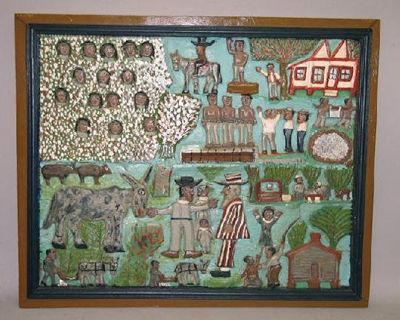 A folk-art carver of bas reliefs, Elijah Pierce created works that "are considered to be among the most important American folk carvings" of the 20th Century. (Rosenak 215). Described as a sculptural storyteller, he did carvings of African-American sports heroes, biblical subjects and political and social issues. He is best known for his religious carvings including the Book of Wood, a series of thirty-three large reliefs with each representing one of the thirty-three years of the life on earth of Jesus Christ.
Elijah Pierce began carving as a young child in Mississippi and settled in Columbus, Ohio where he ran his barbershop that had two rooms---one for the barber customers and one for displaying his carving.
The largest collection of work including the "Book of Wood" series is at The Columbus Museum of Art in Columbus, Ohio. In 1993, that museum held a retrospective exhibition of his work, "Elijah Pierce, Woodcarver". With more than 170 pieces, the exhibit traveled to several venues.
Source:
Chuck and Jan Rosenak, Contemporary American Folk Art: A Collector's GuideBiography from The Johnson Collection
ELIJAH PIERCE (1892–1984)
Elijah Pierce is primarily remembered as an artist, but for those who knew him well, he was also a recognized preacher, barber, and invaluable community spokesperson. In many ways, his self-taught woodcarving practice was intertwined with the network of people who surrounded him—specifically, the African American community in which he lived, worked, and worshipped. His painted relief carvings and freestanding sculptures address themes of religious salvation, politics, and deep family bonds, but also celebrate notable black figures in American culture.
Pierce often described himself as a “peculiar” child due to his early obsession with woodcarving. Born in 1892 on a Mississippi cotton farm, he avoided joining his brothers and father in agricultural work and would instead journey into the nearby woods, pocketknife at the ready, to carve figures and animals into tree trunks.
Pierce once remarked that he began carving at the early age of seven, assisted by a knife gifted from Santa Claus. His uncle was a basket maker and also crafted wooden chairs; it was through his mentorship that Pierce learned the many varieties of wood and their individual material properties. Pierce’s early memories, which he eventually translated into wood, revolved around his Mississippi upbringing and the bonds shared between his close-knit religious family.
His mother was a deeply influential figure who guided Pierce in his spiritual education. Outside the rich home life provided by his parents, however, Pierce’s social environment was limited. Although the system of slavery was legally abolished in 1865, African-descended peoples still endured racial segregation in many parts of Mississippi, including the town where the Pierce family lived and worked. His father had been formerly enslaved and continued to labor on a plantation along with his brother and children. Later in life, Pierce would depict this stark reality in his carvings, using recollections of his father’s oral histories as source material.
Pierce was one of many African Americans who departed the South during the early twentieth century, seeking greater employment opportunities and social emancipation. After the death of his first wife, Zetta Palm, he relocated to Danville, Illinois where he worked as a barber. The year 1923 marked an important turning point in his life: the widowed Pierce met and married Cornelia Houeston, with whom he would collaborate artistically and spiritually over the next few decades. Pierce moved to Columbus, Ohio where his spouse’s family resided and resumed his barbering career.
After witnessing her new husband’s profound faith and woodcarving talent, Houeston encouraged Pierce to create The Book of Wood (1932)—a large compilation of thirty-three carved biblical scenes, which were then painted and bound together. Years prior, he received his preacher’s license at the Mount Zion Baptist Church in Baldwyn, which propelled his interest in a spiritual artistic practice.
Pierce and Houeston would use the book as a teaching tool, traveling to state fairs and other public gatherings and preaching to interested local audiences. After Houeston’s passing in 1948, Pierce opened his own barbershop and continued his spiritually inclined woodcarvings. He was also a Prince Hall Freemason—one of the oldest recognized organizations founded by African Americans, responsible for efforts toward citizenship, education, and civil rights. One of the most important legacies of Pierce’s practice is his ability to translate and communicate the human condition, using himself as an example.
As a preacher and artist, he intended to carve every sermon he was unable to deliver to his congregation. His autobiographical carvings frequently conveyed the precariousness of sin and salvation in Christian faith. Most of his carvings and sculptures were housed in his barbershop, which inevitably generated conversation between Pierce and his clients. These works were unique in their ability to merge humor and cautionary tales, or even deliver witty political criticism.
His freestanding sculptures monumentalized figures important in African American culture, such as Martin Luther King Jr., or would depict the likeness of friends and family. While some works merge text and figures to tell a story, others resemble fantastic beasts or anthropomorphic animals.
Throughout his life, Pierce garnered many supporters who collected his work, but also established a barber-studio to receive visitors both local and international. His woodcarvings were first exhibited in the early 1970s but have since been collected by major institutions such as the Smithsonian American Art Museum, the Columbus Museum of Art, the High Museum of Art, the Philadelphia Museum of Art, and the Barnes Foundation. Two years before his death, at age ninety-two, he received a National Heritage Fellowship for lifetime achievement from the National Endowment for the Arts.
The Johnson Collection, Spartanburg, South Carolina
thejohnsoncollection.org