Page loaded successfully. Showing biography for Emil Fuchs.
Emil Fuchs BIOGRAPHY
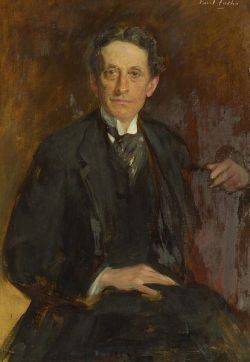
1866 Vienna, Austria - 1929 New York City. Known for: Carved marble sculpture, medals, painting, illustration, etching.
Emil Fuchs - 1866 (Vienna, Austria) - 1929 (NYC (suicide)) Taught at the Royal Academy in London, Paris Berlin, Munich, Vienna and Rome. Austrian sculptor, medallist and painter, he studied at the... Read full biography
Emil Fuchs - 1866 (Vienna, Austria) - 1929 (NYC (suicide)) Taught at the Royal Academy in London, Paris Berlin, Munich, Vienna and Rome. Austrian sculptor, medallist and painter, he studied at the Akademie der Bildenden Künste, Vienna, and at the Berlin Akademie. He traveled to Rome before settling... Read full biography
Emil Fuchs - 1866 (Vienna, Austria) - 1929 (NYC (suicide)) Taught at the Royal Academy in London, Paris Berlin, Munich, Vienna and Rome. Austrian sculptor, medallist and painter, he studied at the Akademie der Bildenden Künste, Vienna, and at the Berlin Akademie. He traveled to Rome before settling in London in 1897, exhibiting at the Royal Academy the following year. His sculptural oeuvre consists of large groups, portrait busts, statuettes and memorials in marble, bronze and silver. The... Read full biography
Emil Fuchs - 1866 (Vienna, Austria) - 1929 (NYC (suicide)) Taught at the Royal Academy in London, Paris Berlin, Munich, Vienna and Rome. Austrian sculptor, medallist and painter, he studied at the Akademie der Bildenden Künste, Vienna, and at the Berlin Akademie. He traveled to Rome before settling in London in 1897, exhibiting at the Royal Academy the following year. His sculptural oeuvre consists of large groups, portrait busts, statuettes and memorials in marble, bronze and silver. The bronze statue La pensierosa (New York, Met.) is a good example of his contemplative style, and the marble Mother-love (exh. London, RA, 1898; untraced, see autobiography, opp. p. 28) of his liking for melodramatic allegory; his memorials include The... Read full biography
Emil Fuchs - 1866 (Vienna, Austria) - 1929 (NYC (suicide)) Taught at the Royal Academy in London, Paris Berlin, Munich, Vienna and Rome. Austrian sculptor, medallist and painter, he studied at the Akademie der Bildenden Künste, Vienna, and at the Berlin Akademie. He traveled to Rome before settling in London in 1897, exhibiting at the Royal Academy the following year. His sculptural oeuvre consists of large groups, portrait busts, statuettes and memorials in marble, bronze and silver. The bronze statue La pensierosa (New York, Met.) is a good example of his contemplative style, and the marble Mother-love (exh. London, RA, 1898; untraced, see autobiography, opp. p. 28) of his liking for melodramatic allegory; his memorials include The Sisters (marble; Liverpool, Walker A.G.). His paintings are mostly portraits, in a flashy style that owes much... Read full biography
Artist Biography
Biography page for Emil Fuchs ((1866 - 1929)), known for Carved marble sculpture, medals, painting, illustration, etching. Showing 2 biographical entries and 0 sample artworks.
Emil Fuchs - Artist Info
About Emil Fuchs
Biography from the Archives of askART
 Emil Fuchs - 1866 (Vienna, Austria) - 1929 (NYC (suicide)) Taught at the Royal Academy in London, Paris Berlin, Munich, Vienna and Rome.
Austrian sculptor, medallist and painter, he studied at the Akademie der Bildenden Künste, Vienna, and at the Berlin Akademie. He traveled to Rome before settling in London in 1897, exhibiting at the Royal Academy the following year. His sculptural oeuvre consists of large groups, portrait busts, statuettes and memorials in marble, bronze and silver.
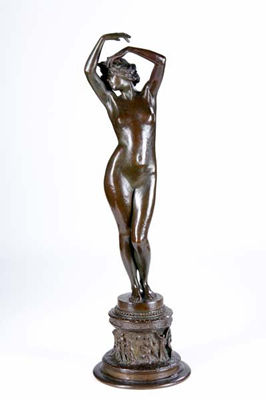
The bronze statue La pensierosa (New York, Met.) is a good example of his contemplative style, and the marble Mother-love (exh. London, RA, 1898; untraced, see autobiography, opp. p. 28) of his liking for melodramatic allegory; his memorials include The Sisters (marble; Liverpool, Walker A.G.).
His paintings are mostly portraits, in a flashy style that owes much to his friend John Singer Sargent (e.g. Sir Joseph Duveen, 1903; London, Tate). Both his painted and sculpted portraits were immensely fashionable in Britain at the turn of the century, and he was taken up by the royal family, modelling a number of medals that were struck for Queen Victoria, portraying Princess Alexandra as the Princess of Pity (silver, 1900; London, BM) and executing a coronation medal for Edward VII (silver and bronze, 1902).
He brought to the British medal the soft-edged decorative style then popular in Austria, to which he always remained faithful. He designed the postage stamps of Edward VII, but after World War I he moved to New York, where he continued working until his suicide.
Source:
R-I-T Libraries: Art on Campus (Rochester Institute of Technology)Biography from Tate Modern
An Austrian sculptor, medallist and painter, Emil Fuchs was born in Vienna. He studied under the sculptor Edmund Hellmer at the Vienna Academy, and under Fritz Schaper and Anton von Werner at the Academy in Berlin.
He won the Rome Prize in 1891 and spent 1891-97 in Rome. Then lived in London 1897-1915, receiving many commissions from society and aristocratic patrons, including Queen Victoria and King Edward VII; he designed, among other things, the King Edward VII postage stamps and the Coronation medal.
He made portrait busts, medals, statuettes, memorials, etc. Fuchs first began to work in oil in 1897, under the guidance of John Singer Sargent, and subsequently painted many portraits of English and American sitters.
He had his first one-man exhibition at the Grafton Galleries, London, 1902. He settled in New York in 1915.
His autobiography With Pencil Brush and Chisel was published 1925. He died in New York.