Page loaded successfully. Showing biography for Emile Lahner.
Emile Lahner BIOGRAPHY
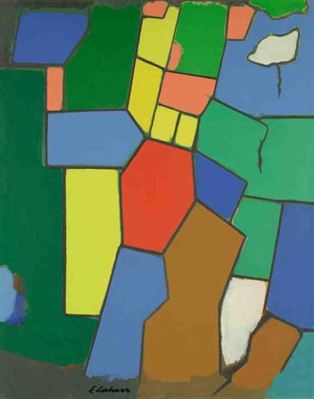
1893 - 1980. Known for: Landscape painting.
Emile Lahner was born in Hungary in 1893. In the 1920's, he trained at Montparnasse. In the 1930's, his artistic tendency was toward abstraction, without ever detaching himself from figuration. His... Read full biography
Emile Lahner was born in Hungary in 1893. In the 1920's, he trained at Montparnasse. In the 1930's, his artistic tendency was toward abstraction, without ever detaching himself from figuration. His friend, the poet Léopold Sédar Senghor, evoked his abstraction as a "less rational geometry than... Read full biography
Emile Lahner was born in Hungary in 1893. In the 1920's, he trained at Montparnasse. In the 1930's, his artistic tendency was toward abstraction, without ever detaching himself from figuration. His friend, the poet Léopold Sédar Senghor, evoked his abstraction as a "less rational geometry than rhythmic and living".
Emile Lahner was born in Hungary in 1893. In the 1920's, he trained at Montparnasse. In the 1930's, his artistic tendency was toward abstraction, without ever detaching himself from figuration. His friend, the poet Léopold Sédar Senghor, evoked his abstraction as a "less rational geometry than rhythmic and living".
Emile Lahner was born in Hungary in 1893. In the 1920's, he trained at Montparnasse. In the 1930's, his artistic tendency was toward abstraction, without ever detaching himself from figuration. His friend, the poet Léopold Sédar Senghor, evoked his abstraction as a "less rational geometry than rhythmic and living".
Artist Biography
Biography page for Emile Lahner ((1893 - 1980)), known for Landscape painting. Showing 1 biographical entries and 0 sample artworks.
Emile Lahner - Artist Info
About Emile Lahner
Name variants
Emile Lanher
Biography
Emile Lahner was born in Hungary in 1893. In the 1920's, he trained at Montparnasse.
In the 1930's, his artistic tendency was toward abstraction, without ever detaching himself from figuration. His friend, the poet Léopold Sédar Senghor, evoked his abstraction as a "less rational geometry than rhythmic and living".