Page loaded successfully. Showing biography for Emilio Greco.
Emilio Greco BIOGRAPHY
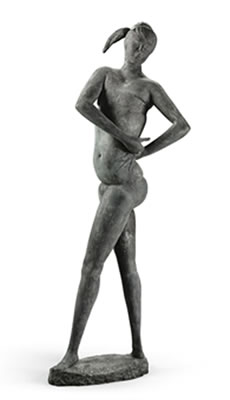
1913 Catania, Sicily - 1995 Rome. Known for: Sculpture, Studies for Sculpture.
Emilio Greco, (born Oct. 11, 1913, Catania, Italy—died April 5, 1995, Rome), Italian sculptor of bronze and marble figurative works, primarily female nudes and portraits. At the age of 13, Greco was... Read full biography
Emilio Greco, (born Oct. 11, 1913, Catania, Italy—died April 5, 1995, Rome), Italian sculptor of bronze and marble figurative works, primarily female nudes and portraits. At the age of 13, Greco was apprenticed to a stonemason, and he later studied at the Academy of Art in Palermo. Though he began... Read full biography
Emilio Greco, (born Oct. 11, 1913, Catania, Italy—died April 5, 1995, Rome), Italian sculptor of bronze and marble figurative works, primarily female nudes and portraits. At the age of 13, Greco was apprenticed to a stonemason, and he later studied at the Academy of Art in Palermo. Though he began exhibiting in Rome in 1943, he was not well-established until after World War II. His first solo exhibition was held in 1946, and in 1948 he became a teaching assistant at the Artistic Secondary... Read full biography
Emilio Greco, (born Oct. 11, 1913, Catania, Italy—died April 5, 1995, Rome), Italian sculptor of bronze and marble figurative works, primarily female nudes and portraits. At the age of 13, Greco was apprenticed to a stonemason, and he later studied at the Academy of Art in Palermo. Though he began exhibiting in Rome in 1943, he was not well-established until after World War II. His first solo exhibition was held in 1946, and in 1948 he became a teaching assistant at the Artistic Secondary School in Rome. His subject matter varied little throughout his career. In their refined, elongated forms and assertive balance, his sculpted figures reflect the Mannerist tradition in Italian art (e.g., Bather No. 2, 1956–57). The expressive, luminous... Read full biography
Emilio Greco, (born Oct. 11, 1913, Catania, Italy—died April 5, 1995, Rome), Italian sculptor of bronze and marble figurative works, primarily female nudes and portraits. At the age of 13, Greco was apprenticed to a stonemason, and he later studied at the Academy of Art in Palermo. Though he began exhibiting in Rome in 1943, he was not well-established until after World War II. His first solo exhibition was held in 1946, and in 1948 he became a teaching assistant at the Artistic Secondary School in Rome. His subject matter varied little throughout his career. In their refined, elongated forms and assertive balance, his sculpted figures reflect the Mannerist tradition in Italian art (e.g., Bather No. 2, 1956–57). The expressive, luminous surface treatment in some pieces, however, strikes a clear parallel with the work of Giacomo Manzù and Marino Marini. He des... Read full biography
Artist Biography
Biography page for Emilio Greco ((1913 - 1995)), known for Sculpture, Studies for Sculpture. Showing 2 biographical entries and 0 sample artworks.
Emilio Greco - Artist Info
About Emilio Greco
Biography from the Archives of askART
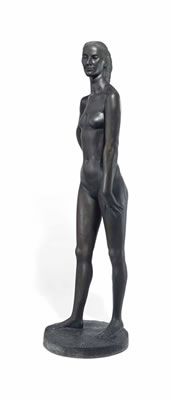 Emilio Greco, (born Oct. 11, 1913, Catania, Italy—died April 5, 1995, Rome), Italian sculptor of bronze and marble figurative works, primarily female nudes and portraits.
At the age of 13, Greco was apprenticed to a stonemason, and he later studied at the Academy of Art in Palermo. Though he began exhibiting in Rome in 1943, he was not well-established until after World War II. His first solo exhibition was held in 1946, and in 1948 he became a teaching assistant at the Artistic Secondary School in Rome.
His subject matter varied little throughout his career. In their refined, elongated forms and assertive balance, his sculpted figures reflect the Mannerist tradition in Italian art (e.g., Bather No. 2, 1956–57). The expressive, luminous surface treatment in some pieces, however, strikes a clear parallel with the work of Giacomo Manzù and Marino Marini.
He designed one of the bronze doors of the Cathedral at Orvieto (1961–64) and the monument to Pope John XXIII in Saint Peter’s (1965–67). In 1974 a Greco Garden, dedicated to his works, was opened at the Open Air Museum, Hakone, Japan. In 1991 a group of Greco’s works, donated by the artist to the city of Orvieto, was placed on permanent exposition at the Palazzo Soliano.
Source:
"Emilio Greco," Encyclopedia Britannica, 2017Biography from Sotheby's New York
Emilio Greco was born in Sicily in 1913. Greco, was employed in a marble cutters shop by the age of 10. He was highly influenced at a young age by Etruscan and Roman sculpture and carried this with him throughout his illustrious career.
"Greco is predominantly the sculptor of the female face and shape. To represent womanhood, that is his calling and his task. The grace, the delight, the beauty, even the power of womanhood. Neither Marini nor Manzù can compete with him this respect....Greco is...completely absorbed in the womanhood as if the myth of the Great Mother, the Lady of Elche, the White Goddess, had come alive in him again. He represents youth, virtue and sensuality.... The representation of women and girls do not appear in Greco's work in the same style as the male portraits and figures. The Greek and Gothic impact is felt immediately....According to Henry Moore "Greco is not only sensual and elegant. He has a feeling for beauty, and also a natural sens, a gift for form and volume—a rare combination" (J.P. Holdin, Emilio Greco Sculpture & Drawings, Bath, 1971, pp. 21-23).