Page loaded successfully. Showing biography for Emmanuel Levy.
Emmanuel Levy BIOGRAPHY
1900 Manchester - 1986. Known for: Portrait painting, botanics.
Emmanuel Levy was born to Russian-Jewish immigrant parents in Hightown, Manchester, England. Levy's father was the beadle at the Great Synagogue, Cheetham Hill and he attended the local Jews’ Free... Read full biography
Emmanuel Levy was born to Russian-Jewish immigrant parents in Hightown, Manchester, England. Levy's father was the beadle at the Great Synagogue, Cheetham Hill and he attended the local Jews’ Free School, before studying at Manchester School of Art under Adolphe Valette (c. 1918) together with L.... Read full biography
Emmanuel Levy was born to Russian-Jewish immigrant parents in Hightown, Manchester, England. Levy's father was the beadle at the Great Synagogue, Cheetham Hill and he attended the local Jews’ Free School, before studying at Manchester School of Art under Adolphe Valette (c. 1918) together with L. S. Lowry (whose portrait he drew), as well as at St Martin’s School of Art in London, and in Paris. He returned to Manchester for his first solo show in 1925. Levy's early work included Jewish subject... Read full biography
Emmanuel Levy was born to Russian-Jewish immigrant parents in Hightown, Manchester, England. Levy's father was the beadle at the Great Synagogue, Cheetham Hill and he attended the local Jews’ Free School, before studying at Manchester School of Art under Adolphe Valette (c. 1918) together with L. S. Lowry (whose portrait he drew), as well as at St Martin’s School of Art in London, and in Paris. He returned to Manchester for his first solo show in 1925. Levy's early work included Jewish subject matter, such as The Mourners (Sitting Shiva) (1928, Ben Uri Collection), executed in a semi-Cubist manner. In 1928, Levy was appointed a special instructor in life drawing at Manchester University School of Architecture upon the recommendation of... Read full biography
Emmanuel Levy was born to Russian-Jewish immigrant parents in Hightown, Manchester, England. Levy's father was the beadle at the Great Synagogue, Cheetham Hill and he attended the local Jews’ Free School, before studying at Manchester School of Art under Adolphe Valette (c. 1918) together with L. S. Lowry (whose portrait he drew), as well as at St Martin’s School of Art in London, and in Paris. He returned to Manchester for his first solo show in 1925. Levy's early work included Jewish subject matter, such as The Mourners (Sitting Shiva) (1928, Ben Uri Collection), executed in a semi-Cubist manner. In 1928, Levy was appointed a special instructor in life drawing at Manchester University School of Architecture upon the recommendation of Valette, whom he succeeded. He also gave popular public demonstrations in portrait painting. From 1929, for several years, he was Art... Read full biography
Artist Biography
Biography page for Emmanuel Levy ((1900 - 1986)), known for Portrait painting, botanics. Showing 2 biographical entries and 0 sample artworks.
Emmanuel Levy - Artist Info
About Emmanuel Levy
Biography from Wilson55 (form. Peter Wilson)
Emmanuel Levy was born in Manchester and studied at the Manchester School of Art, where he trained under Adolphe Valette (1876-1942), alongside L.S. Lowry (1887-1976) with whom he remained friends. Levy was a skilled portraitist: his portrait of Lowry is now owned by Salford Art Gallery, and his portrait of physicist Patrick Blackett is held in the National Portrait Gallery. Levy taught art at Manchester University School of Architecture and was a Lecturer at Manchester and Stockport College of Art during the 1950's and 1960's. He was art critic of the Manchester Evening News. Levy was a member of the Manchester Society of Modern Painters and the Manchester Academy of Fine Arts.Biography from Dreweatts & Bloomsbury Auctions
 Emmanuel Levy was born to Russian-Jewish immigrant parents in Hightown, Manchester, England. Levy's father was the beadle at the Great Synagogue, Cheetham Hill and he attended the local Jews’ Free School, before studying at Manchester School of Art under Adolphe Valette (c. 1918) together with L. S. Lowry (whose portrait he drew), as well as at St Martin’s School of Art in London, and in Paris. He returned to Manchester for his first solo show in 1925.
Levy's early work included Jewish subject matter, such as The Mourners (Sitting Shiva) (1928, Ben Uri Collection), executed in a semi-Cubist manner. In 1928, Levy was appointed a special instructor in life drawing at Manchester University School of Architecture upon the recommendation of Valette, whom he succeeded. He also gave popular public demonstrations in portrait painting.
From 1929, for several years, he was Art Critic for Manchester City News and the Evening News and his 60-year career was so closely associated with his native city that Lord Ardwick described him as ‘a Manchester man through and through. But’, he continued, ‘there is nothing provincial or even distinctly English in his work. He is a citizen of the world’.
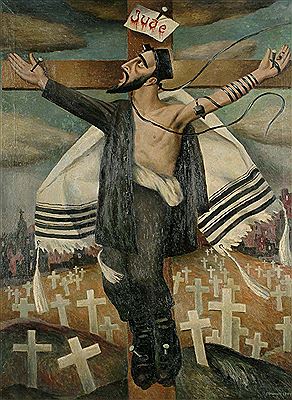
Although he experimented with Cubism and Surrealism, Levy abandoned these styles in favour of naturalism, specializing in figurative work exploring the human condition. His wife, Ursula Leo (1915–1984), one of his pupils and a painter in her own right, was a German-Jewish refugee from Nazism and during the Second World, he painted ‘Crucifixion’ (1942), a cri-de-coeur against Jewish persecution under the Nazis in mainland Europe. He held six solo exhibitions in Manchester between 1925 and 1963, with further solo shows in London, including at Ben Uri (1953, 1978 and 1989), where his work was also shown from 1935 onwards in numerous group shows. Retrospectives were held at Salford City Art Gallery (1948), Fieldborne Galleries, London (1976) and Stockport Art Gallery (1982).
Emmanuel Levy's work is represented in UK Collections including the National Portrait Gallery, Manchester Art Gallery, Salford Museum and Art Gallery and the Whitworth. In 2014 Ben Uri Gallery curated a posthumous retrospective, Made in Manchester: Emmanuel Levy, at Manchester Jewish Museum.
Source: benuri.org