Page loaded successfully. Showing biography for Eric Johansson.
Eric Johansson BIOGRAPHY
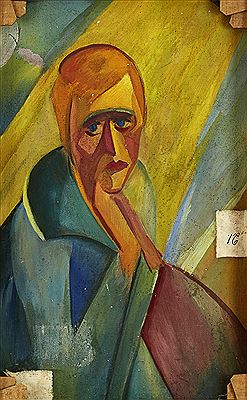
1896 Dresden, Germany - 1979 Sweden. Known for: Painting.
Unknown in Sweden but recognized as a foremost expressionist beyond the borders, Eric Johansson was born in the German town of Dresden in the year of 1896 and became the only Swedish artist whose... Read full biography
Unknown in Sweden but recognized as a foremost expressionist beyond the borders, Eric Johansson was born in the German town of Dresden in the year of 1896 and became the only Swedish artist whose works were classified as “degenerated art” by the Nazis. Even though his name sounds very Swedish, Eric... Read full biography
Unknown in Sweden but recognized as a foremost expressionist beyond the borders, Eric Johansson was born in the German town of Dresden in the year of 1896 and became the only Swedish artist whose works were classified as “degenerated art” by the Nazis. Even though his name sounds very Swedish, Eric Johansson grew up with German foster parents and his native language was therefore German. Dresden was an important and thriving cultural city in Europe at the beginning of the 20th century,... Read full biography
Unknown in Sweden but recognized as a foremost expressionist beyond the borders, Eric Johansson was born in the German town of Dresden in the year of 1896 and became the only Swedish artist whose works were classified as “degenerated art” by the Nazis. Even though his name sounds very Swedish, Eric Johansson grew up with German foster parents and his native language was therefore German. Dresden was an important and thriving cultural city in Europe at the beginning of the 20th century, frequently visited by some of the greatest modernist artists and it was also the city to host two of the most prominent art galleries in Germany at that time. The German expressionist movement was founded in Dresden through “Die Brücke”, by the first... Read full biography
Unknown in Sweden but recognized as a foremost expressionist beyond the borders, Eric Johansson was born in the German town of Dresden in the year of 1896 and became the only Swedish artist whose works were classified as “degenerated art” by the Nazis. Even though his name sounds very Swedish, Eric Johansson grew up with German foster parents and his native language was therefore German. Dresden was an important and thriving cultural city in Europe at the beginning of the 20th century, frequently visited by some of the greatest modernist artists and it was also the city to host two of the most prominent art galleries in Germany at that time. The German expressionist movement was founded in Dresden through “Die Brücke”, by the first generation of expressionists Erich Heckel, Emil Nolde, Karl Schmidt-Rottluff and Ernst Ludwig Kirchner. After the Nazis came to power... Read full biography
Artist Biography
Biography page for Eric Johansson ((1896 - 1979)), known for Painting. Showing 1 biographical entries and 0 sample artworks.
Eric Johansson - Artist Info
About Eric Johansson
Biography from Uppsala (also see Stockholms Auktionsverk)
Unknown in Sweden but recognized as a foremost expressionist beyond the borders, Eric Johansson was born in the German town of Dresden in the year of 1896 and became the only Swedish artist whose works were classified as “degenerated art” by the Nazis.
Even though his name sounds very Swedish, Eric Johansson grew up with German foster parents and his native language was therefore German. Dresden was an important and thriving cultural city in Europe at the beginning of the 20th century, frequently visited by some of the greatest modernist artists and it was also the city to host two of the most prominent art galleries in Germany at that time. The German expressionist movement was founded in Dresden through “Die Brücke”, by the first generation of expressionists Erich Heckel, Emil Nolde, Karl Schmidt-Rottluff and Ernst Ludwig Kirchner. After the Nazis came to power in 1933, the city developed into one of the most important German cities for the growing Nazi movement, ideas that Eric Johansson strongly disagreed with through his membership in the Communist party. Due to his marriage with a Jewish woman and his own revolutionary interests, he soon caught the Nazi party’s attention. Through his Swedish citizenship he managed to receive a certain protection but a misplaced comment about Herman Göring during a restaurant visit led to Eric Johansson being kept in prison for four months – and when he finally got released he managed to flee the war-torn Germany through Czechoslovakia and Poland to Sweden, where he spent the rest of his life.
One of the artists that often visited Dresden before the war was Oskar Kokoschka, whose paintings would hang next to Eric Johansson’s at the famous art exhibition arranged by the Nazis “Entartete Kunst” in the mid 1930’s. In the same room, the public could also view art works by masters such as Schwitters, Dix, Grosz, Kandinsky and Mondrian and Eric Johansson was therefore the only Swedish artist categorized by the Nazis as a degenerated artist. A large part of his production and art works were never found – probably burned at the Berlin Fire Department’s Farm in March 1939 together with 1003 oil paintings and 3825 watercolors, drawings and prints by artists whose operation was shut down by the Nazis.