Page loaded successfully. Showing biography for Ernie Crichlow.
Ernie Crichlow BIOGRAPHY
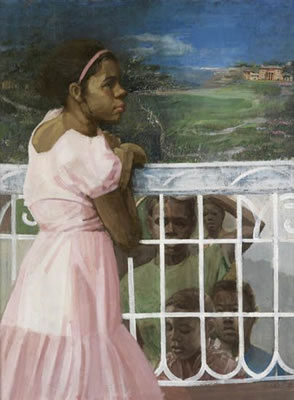
1914 New York City - 2005 Brooklyn, New York. Known for: African-American figure, political genre.
A Harlem-Renaissance painter focused on social injustices before the successes of the civil rights movement, Ernest Crichlow had his studio and home in Brooklyn, New York, his birthplace. Many of his... Read full biography
A Harlem-Renaissance painter focused on social injustices before the successes of the civil rights movement, Ernest Crichlow had his studio and home in Brooklyn, New York, his birthplace. Many of his paintings became highly controversial such as Lovers (1938), which depicted a Ku Klux Klan member... Read full biography
A Harlem-Renaissance painter focused on social injustices before the successes of the civil rights movement, Ernest Crichlow had his studio and home in Brooklyn, New York, his birthplace. Many of his paintings became highly controversial such as Lovers (1938), which depicted a Ku Klux Klan member raping a black woman, and The Flag, a scene with an American flag behind a black woman on a cross. He was criticized for focusing too much attention on serious African-American issues, but believed it... Read full biography
A Harlem-Renaissance painter focused on social injustices before the successes of the civil rights movement, Ernest Crichlow had his studio and home in Brooklyn, New York, his birthplace. Many of his paintings became highly controversial such as Lovers (1938), which depicted a Ku Klux Klan member raping a black woman, and The Flag, a scene with an American flag behind a black woman on a cross. He was criticized for focusing too much attention on serious African-American issues, but believed it was the expression that best represented him. He said: "This is the thing that I feel most at home with". Crichlow's parents were from Barbados, and he had eight brothers and sisters. As a high-school student, he was influenced by Black-American... Read full biography
A Harlem-Renaissance painter focused on social injustices before the successes of the civil rights movement, Ernest Crichlow had his studio and home in Brooklyn, New York, his birthplace. Many of his paintings became highly controversial such as Lovers (1938), which depicted a Ku Klux Klan member raping a black woman, and The Flag, a scene with an American flag behind a black woman on a cross. He was criticized for focusing too much attention on serious African-American issues, but believed it was the expression that best represented him. He said: "This is the thing that I feel most at home with". Crichlow's parents were from Barbados, and he had eight brothers and sisters. As a high-school student, he was influenced by Black-American sculptor Augusta Savage, who had a studio in Harlem, which was a gathering place for artists.&n... Read full biography
Artist Biography
Biography page for Ernie Crichlow ((1914 - 2005)), known for African-American figure, political genre. Showing 1 biographical entries and 0 sample artworks.
Ernie Crichlow - Artist Info
About Ernie Crichlow
Biography from the Archives of askART
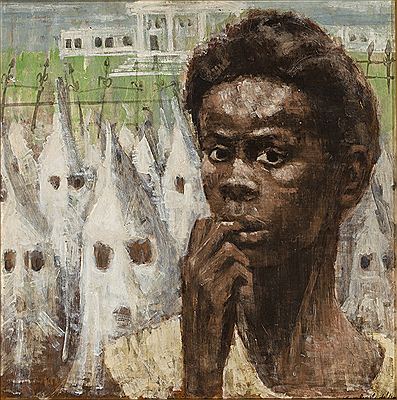 A Harlem-Renaissance painter focused on social injustices before the successes of the civil rights movement, Ernest Crichlow had his studio and home in Brooklyn, New York, his birthplace. Many of his paintings became highly controversial such as Lovers (1938), which depicted a Ku Klux Klan member raping a black woman, and The Flag, a scene with an American flag behind a black woman on a cross. He was criticized for focusing too much attention on serious African-American issues, but believed it was the expression that best represented him. He said: "This is the thing that I feel most at home with".
Crichlow's parents were from Barbados, and he had eight brothers and sisters. As a high-school student, he was influenced by Black-American sculptor Augusta Savage, who had a studio in Harlem, which was a gathering place for artists. There Crichlow came to know leading black artists such as Norman Lewis, Charles Alston and Robert Pious. After high school, he studied commercial art in Manhattan, and unable to find work in that field, became a mural painter and art teacher for the WPA, Works Progress Administration. He focused increasingly on fine art and exhibited his paintings widely in the 1940s and 1950s. In 1958 in Brooklyn, he founded the Fulton Art Fair, which showcased local artists, and in 1969, he and Romare Bearden founded the Cinque Gallery in Manhattan, a venue for Black-American artists.
In 1980, Ernest Crichlow was one of ten Black artists singled out for an award for distinction by President Jimmy Carter.
Crichlow died in Brooklyn at age 91 on November 10, 2005.
Source:
Margalit Fox, "Ernest Crichlow, 91, Lyrical Painter", The New York Times, November 14, 2005, Obituary of the artist, p. A17