Page loaded successfully. Showing biography for Ernst Josephson.
Ernst Josephson BIOGRAPHY
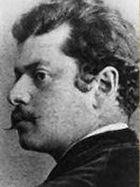
1851 Stockholm, Sweden - 1906 Stockholm, Sweden. Known for: Abstractive figurative, portrait and genre folk life drawing and painting.
Ernst Abraham Josephson (1851-1906) was a Swedish painter and poet. He specialized in portraits, genre scenes of folklife and folklore. He was born to a middle-class family of merchants of Jewish... Read full biography
Ernst Abraham Josephson (1851-1906) was a Swedish painter and poet. He specialized in portraits, genre scenes of folklife and folklore. He was born to a middle-class family of merchants of Jewish ancestry. His uncle, Ludvig Josephson (1832-1899) was a dramatist and his uncle Jacob Axel Josephson... Read full biography
Ernst Abraham Josephson (1851-1906) was a Swedish painter and poet. He specialized in portraits, genre scenes of folklife and folklore. He was born to a middle-class family of merchants of Jewish ancestry. His uncle, Ludvig Josephson (1832-1899) was a dramatist and his uncle Jacob Axel Josephson (1818-1880) was a composer. When he was ten, his father Ferdinand Semy Ferdinand Josephson (1814-1861) left home and he was raised by his mother, . At the age of sixteen, he decided to become an artist... Read full biography
Ernst Abraham Josephson (1851-1906) was a Swedish painter and poet. He specialized in portraits, genre scenes of folklife and folklore. He was born to a middle-class family of merchants of Jewish ancestry. His uncle, Ludvig Josephson (1832-1899) was a dramatist and his uncle Jacob Axel Josephson (1818-1880) was a composer. When he was ten, his father Ferdinand Semy Ferdinand Josephson (1814-1861) left home and he was raised by his mother, . At the age of sixteen, he decided to become an artist and, with his family's support, enrolled at the Royal Swedish Academy of Fine Arts. His primary instructors there were Johan Christoffer Boklund and August Malmström. He was there until 1876, when he received a Royal Medal for painting. After leaving... Read full biography
Ernst Abraham Josephson (1851-1906) was a Swedish painter and poet. He specialized in portraits, genre scenes of folklife and folklore. He was born to a middle-class family of merchants of Jewish ancestry. His uncle, Ludvig Josephson (1832-1899) was a dramatist and his uncle Jacob Axel Josephson (1818-1880) was a composer. When he was ten, his father Ferdinand Semy Ferdinand Josephson (1814-1861) left home and he was raised by his mother, . At the age of sixteen, he decided to become an artist and, with his family's support, enrolled at the Royal Swedish Academy of Fine Arts. His primary instructors there were Johan Christoffer Boklund and August Malmström. He was there until 1876, when he received a Royal Medal for painting. After leaving the Academy, he and his friend and fellow artist Severin Nilsson (1846-1918) visited Italy, Germany and the Netherlands, where they copied th... Read full biography
Artist Biography
Biography page for Ernst Josephson ((1851 - 1906)), known for Abstractive figurative, portrait and genre folk life drawing and painting. Showing 2 biographical entries and 0 sample artworks.
Ernst Josephson - Artist Info
About Ernst Josephson
Biography from the Archives of askART
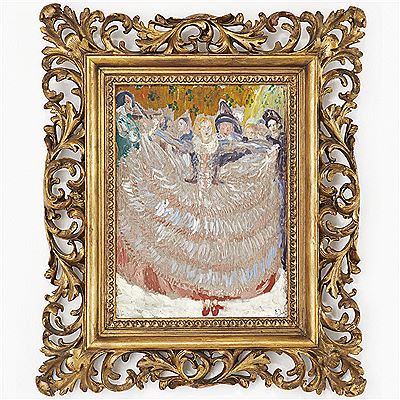 Ernst Abraham Josephson (1851-1906) was a Swedish painter and poet. He specialized in portraits, genre scenes of folklife and folklore. He was born to a middle-class family of merchants of Jewish ancestry. His uncle, Ludvig Josephson (1832-1899) was a dramatist and his uncle Jacob Axel Josephson (1818-1880) was a composer. When he was ten, his father Ferdinand Semy Ferdinand Josephson (1814-1861) left home and he was raised by his mother,
At the age of sixteen, he decided to become an artist and, with his family's support, enrolled at the Royal Swedish Academy of Fine Arts. His primary instructors there were Johan Christoffer Boklund and August Malmström. He was there until 1876, when he received a Royal Medal for painting.
After leaving the Academy, he and his friend and fellow artist Severin Nilsson (1846-1918) visited Italy, Germany and the Netherlands, where they copied the Old Masters. His breakthrough came in Paris, where he was able to study with Jean-Léon Gérôme at the École des Beaux-Arts. He soon began concentrating on portraits, including many of his friends and fellow Swedes in France. For a time, he shared a studio with Hugo Birger (1854–1887). His personal style developed further during a trip to Seville with his friend, Anders Zorn, from 1881 to 1882.
His private life did not go well, however. By his late twenties, he was afflicted with syphilis. His romantic life suffered as a consequence, as he was forced to break off a promising relationship with a young model named Ketty Rindskopf.
In the 1880s, a painting that is now considered one of his masterpieces, Strömkarlen (1882-1884) was rejected by the Nationalmuseum. It was eventually purchased by Prince Eugen (1865-1947), himself a skilled amateur artist and art patron, who hung it at his home, Waldemarsudde, now a museum on Djurgården in Stockholm. In total Ernst Josephson is also represented at the museum with ten other oil paintings and a large number of drawings.
In 1881, his mother died. They had been very close and it affected him deeply. There was one bright spot; in 1883 he obtained the patronage of Pontus Furstenberg (1827-1902), a wealthy merchant and art collector. In 1885, he became a supporter of the "Opponenterna [sv]", a group that was protesting the outmoded teaching methods at the Swedish Academy. But his interest in the group diminished when he failed to win election to their governing board.
By the summer of 1888, he was beginning to have delusions and hallucinations, brought on by the progression of his illness. He installed himself on the Île-de-Bréhat in Brittany, where he had spent the previous summer with painter and engraver Allan Österlind (1855-1938) and his family. There, he became involved in spiritism, possibly inspired by Österlind's interest in occult phenomena. While in his visionary states, he wrote poems and created paintings that he signed with the names of dead artists. Some of his best known and most influential works were created during this period.
Shortly after, Österlind took him back to Sweden and he was admitted to Ulleråkers sjukhus [sv], a mental institution in Uppsala. He remained there for several months. The diagnosis was paranoia, but his condition would now most likely be called schizophrenia. After being released, he continued to associate with his old friends, who did what they could to help him. His paintings had become rather distorted, but his earlier works were shown at exhibitions in Paris and Berlin, thanks to arrangements made by Richard Bergh and Georg Pauli, and he received several medals for them. As the years progressed, his physical health declined. First he suffered from rheumatic problems, which prevented him from painting. Then he was diagnosed with diabetes, which was the cause of his death in 1906.
Source:
Wikipedia, 2021Biography from Stockholm Auktionsverk
Ernst Josephson's contemporaries often saw in him only the painter who after the illness began to draw, then he only became the draftsman. But the relationship between painting and drawing was in fact not so different before and after the disease.
That Ernst Josephson's greatness as an artist was noticed late in his artistic life is in itself true, but this also applied to many of his fellow artists. As a draftsman, Ernst Josephson moved in a simmering cauldron of motifs; religion, mythology, theater, poetry, genre, portraits, figures and history.
For his generation, history was almost always linked to the country's rulers where war and other dramatic events were viewed in the light of the king or queen. Ernst Josephson was a pioneer, a pioneer of a new path, but strictly speaking only for his own art. No one really had the courage to follow him on the narrow, thorny and lonely path that was his.
Ernst Josephson's art, the one that begins with Strömkarlen and ends first with the artist's death, allows us to imagine an embryo of the expressive modern 20th century.
In the current watercolor, the artist possibly depicts Eva by the tree of knowledge or is it perhaps Embla standing on a coastal strip next to an elm. The pose of the female body has great similarities with one of Josephson's most important works, Gåslisa, from 1888-1890 - especially in the position of the woman's head.
After 1893, the line changed drastically in Josephson's drawings, from having previously been fine-tuned to now having a more powerful, more irregular and coarser expression. The movement in the watercolor is rounded, soft and undulating.