Page loaded successfully. Showing biography for Ernst Fuchs.
Ernst Fuchs BIOGRAPHY
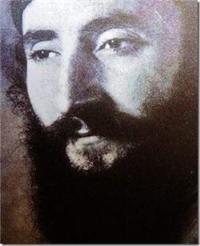
1930 Vienna, Austria - 2015. Known for: Fantastic realist painting.
Ernst Fuchs was born an only child in Vienna in 1930. His carefree childhood ended with the Nazi's entrance into Austria in 1938. While his father emigrated, Ernst was interned in a transit camp for... Read full biography
Ernst Fuchs was born an only child in Vienna in 1930. His carefree childhood ended with the Nazi's entrance into Austria in 1938. While his father emigrated, Ernst was interned in a transit camp for half-Jews; only the formal divorce from his mother prevented his deportation. Fuchs was baptized in... Read full biography
Ernst Fuchs was born an only child in Vienna in 1930. His carefree childhood ended with the Nazi's entrance into Austria in 1938. While his father emigrated, Ernst was interned in a transit camp for half-Jews; only the formal divorce from his mother prevented his deportation. Fuchs was baptized in 1942. At the age of fifteen in 1945, he was accepted into the Academy of Visual Arts at Schillerplatz. Until 1950, Fuchs studied under Professor Albert Paris von Gütersloh. Von Gütersloh's painting... Read full biography
Ernst Fuchs was born an only child in Vienna in 1930. His carefree childhood ended with the Nazi's entrance into Austria in 1938. While his father emigrated, Ernst was interned in a transit camp for half-Jews; only the formal divorce from his mother prevented his deportation. Fuchs was baptized in 1942. At the age of fifteen in 1945, he was accepted into the Academy of Visual Arts at Schillerplatz. Until 1950, Fuchs studied under Professor Albert Paris von Gütersloh. Von Gütersloh's painting class became the center of the so-called Viennese School of Phantastical Realism, of which Fuchs was the main practitioner. The artist lived and worked in Paris from 1950 until 1962. His travels sent him to America, Italy, Spain, and England. Fuchs... Read full biography
Ernst Fuchs was born an only child in Vienna in 1930. His carefree childhood ended with the Nazi's entrance into Austria in 1938. While his father emigrated, Ernst was interned in a transit camp for half-Jews; only the formal divorce from his mother prevented his deportation. Fuchs was baptized in 1942. At the age of fifteen in 1945, he was accepted into the Academy of Visual Arts at Schillerplatz. Until 1950, Fuchs studied under Professor Albert Paris von Gütersloh. Von Gütersloh's painting class became the center of the so-called Viennese School of Phantastical Realism, of which Fuchs was the main practitioner. The artist lived and worked in Paris from 1950 until 1962. His travels sent him to America, Italy, Spain, and England. Fuchs gave himself over to the seclusion of a monastery in Jerusalem for several months during 1957 and... Read full biography
Artist Biography
Biography page for Ernst Fuchs ((1930 - 2015)), known for Fantastic realist painting. Showing 2 biographical entries and 0 sample artworks.
Ernst Fuchs - Artist Info
About Ernst Fuchs
Biography from Ketterer Kunst, Munich
Ernst Fuchs was born an only child in Vienna in 1930. His carefree childhood ended with the Nazi's entrance into Austria in 1938. While his father emigrated, Ernst was interned in a transit camp for half-Jews; only the formal divorce from his mother prevented his deportation. Fuchs was baptized in 1942. At the age of fifteen in 1945, he was accepted into the Academy of Visual Arts at Schillerplatz. Until 1950, Fuchs studied under Professor Albert Paris von Gütersloh. Von Gütersloh's painting class became the center of the so-called Viennese School of Phantastical Realism, of which Fuchs was the main practitioner.
The artist lived and worked in Paris from 1950 until 1962. His travels sent him to America, Italy, Spain, and England. Fuchs gave himself over to the seclusion of a monastery in Jerusalem for several months during 1957 and painted his Last Supper for the refectory there. He was promoted to professor in 1966.
In the early 1970's, Fuchs bought the Villa Wagner in Wien-Hütteldorf, which he converted into his living and working space. Following that, he designed stage sets and costumes for opera and ballet and wrote philosophical essays and poetry.
Fuchs' works have been honored in many international solo exhibitions. His first big retrospective was put on in the Palazzo Piagini in Venice. Further retrospectives followed at the Russian Museum in St. Petersburg and in Gruyère Castle in Switzerland as well as in the Harrach Palace in Vienna. Fuchs lives and works in Monte Carlo.
Villa Otto Wagner was converted into a private museum in 1988 and houses the Fuchs' collection.Biography from Auctionata
Already as a pupil Ernst Fuchs obtained instruction in painting and sculpting from his parents’ friends and began his studies at the age of 15 at the Viennese "Akademie der Bildenden Künste" as pupil of Albert Paris von Güterloh. Between 1950 and 1962 Fuchs traveled a lot and exhibited in various countries, until he returned to Vienna in 1962 as a professor.
There he grew to be one of the main representatives of the Vienna School of Fantastic Realism*, whose founder was his teacher, von Gütersloh. Even though it was inspired by Surrealism*, Phantastical Realism orientated itself more and more towards the technical perfection of the Old Masters and is less abstract than Surrealism. Fuchs mainly completed works with mystical-religious themes.
Apart from his graphic works, Fuchs worked as a stage designer, costume designer, singer and architect. His buildings are characterized by ornaments and colors, and can still be admired today. The Otto-Wagner-Villa built by Fuchs himself is today the Ernst-Fuchs-Museum. Fuchs’ works are shown internationally in different retrospectives. In 2004 he received the First Class Austrian Cross of Honor for Science and Art. (fea)
* For more in-depth information about these terms and others, see AskART.com Glossary http://www.askart.com/AskART/lists/Art_Definition.aspx.