Page loaded successfully. Showing biography for Eugene Joseph Constant Pierre Petit.
Eugene Joseph Constant Pierre Petit BIOGRAPHY
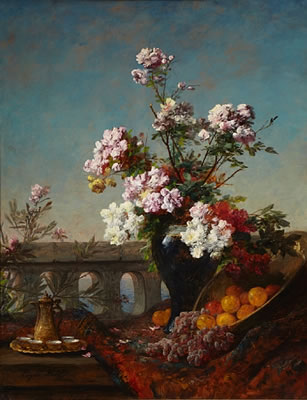
1839 Paris - 1933. Known for: Genre, hunting scene, still life and animal painting.
A 19th Century French artist, Eugene Petit was a painter of Genre scenes, hunting scenes, still lifes (flowers) animals, and dogs. He was a pupil of Muller and Dieerle. He first exhibited at the... Read full biography
A 19th Century French artist, Eugene Petit was a painter of Genre scenes, hunting scenes, still lifes (flowers) animals, and dogs. He was a pupil of Muller and Dieerle. He first exhibited at the Paris Salon in 1863 and was awarded a bronze medal in 1873.... Read full biography
A 19th Century French artist, Eugene Petit was a painter of Genre scenes, hunting scenes, still lifes (flowers) animals, and dogs. He was a pupil of Muller and Dieerle. He first exhibited at the Paris Salon in 1863 and was awarded a bronze medal in 1873.
A 19th Century French artist, Eugene Petit was a painter of Genre scenes, hunting scenes, still lifes (flowers) animals, and dogs. He was a pupil of Muller and Dieerle. He first exhibited at the Paris Salon in 1863 and was awarded a bronze medal in 1873.
A 19th Century French artist, Eugene Petit was a painter of Genre scenes, hunting scenes, still lifes (flowers) animals, and dogs. He was a pupil of Muller and Dieerle. He first exhibited at the Paris Salon in 1863 and was awarded a bronze medal in 1873.
Artist Biography
Biography page for Eugene Joseph Constant Pierre Petit ((1839 - 1933)), known for Genre, hunting scene, still life and animal painting. Showing 1 biographical entries and 0 sample artworks.
Eugene Joseph Constant Pierre Petit - Artist Info
About Eugene Joseph Constant Pierre Petit
Name variants
Eugène Petit, Eugene Joseph Pierre Constant Petit
Biography
A 19th Century French artist, Eugene Petit was a painter of Genre scenes, hunting scenes, still lifes (flowers) animals, and dogs. He was a pupil of Muller and Dieerle. He first exhibited at the Paris Salon in 1863 and was awarded a bronze medal in 1873.