Page loaded successfully. Showing biography for Ferdinand Bach.
Ferdinand Bach BIOGRAPHY
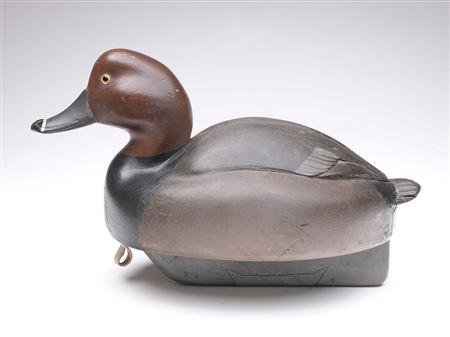
1888 Switzerland - 1967 near Detroit, Michigan. Known for: Oversized waterfowl decoy carving.
Ferdinand Bach. Bach was born in Switzerland and is reported to have been trained as an architect and draftsman although he listed his education as ending after three years in high school. This is a... Read full biography
Ferdinand Bach. Bach was born in Switzerland and is reported to have been trained as an architect and draftsman although he listed his education as ending after three years in high school. This is a relatively insignificant detail, since art and creativity, as was to become apparent, can often be... Read full biography
Ferdinand Bach. Bach was born in Switzerland and is reported to have been trained as an architect and draftsman although he listed his education as ending after three years in high school. This is a relatively insignificant detail, since art and creativity, as was to become apparent, can often be innate. After serving 6 years in the Swiss Infantry, he left his homeland and traveled to Denmark where he boarded the Hellig Olav and set sail for the United States. He was fluent in several... Read full biography
Ferdinand Bach. Bach was born in Switzerland and is reported to have been trained as an architect and draftsman although he listed his education as ending after three years in high school. This is a relatively insignificant detail, since art and creativity, as was to become apparent, can often be innate. After serving 6 years in the Swiss Infantry, he left his homeland and traveled to Denmark where he boarded the Hellig Olav and set sail for the United States. He was fluent in several languages, but not English and, upon his arrival to the States, he settled briefly in a German speaking community in Pennsylvania. Here, he polished his English and bought his first book in this country – one on the American Indian. This formed a fascination... Read full biography
Ferdinand Bach. Bach was born in Switzerland and is reported to have been trained as an architect and draftsman although he listed his education as ending after three years in high school. This is a relatively insignificant detail, since art and creativity, as was to become apparent, can often be innate. After serving 6 years in the Swiss Infantry, he left his homeland and traveled to Denmark where he boarded the Hellig Olav and set sail for the United States. He was fluent in several languages, but not English and, upon his arrival to the States, he settled briefly in a German speaking community in Pennsylvania. Here, he polished his English and bought his first book in this country – one on the American Indian. This formed a fascination with the Native Americans that would remain with him for his entire life. By 1917/18, he had migrated to Michigan where he... Read full biography
Artist Biography
Biography page for Ferdinand Bach ((1888 - 1967)), known for Oversized waterfowl decoy carving. Showing 2 biographical entries and 0 sample artworks.
Ferdinand Bach - Artist Info
About Ferdinand Bach
Biography from Guyette & Deeter, Inc.
Ferdinand Bach
Bach was born in Switzerland and is reported to have been trained as an architect and draftsman although he listed his education as ending after three years in high school. This is a relatively insignificant detail, since art and creativity, as was to become apparent, can often be innate. After serving 6 years in the Swiss Infantry, he left his homeland and traveled to Denmark where he boarded the Hellig Olav and set sail for the United States.
He was fluent in several languages, but not English and, upon his arrival to the States, he settled briefly in a German speaking community in Pennsylvania. Here, he polished his English and bought his first book in this country – one on the American Indian. This formed a fascination with the Native Americans that would remain with him for his entire life.
By 1917/18, he had migrated to Michigan where he is listed as a "draftsman". Here he began to live in two separate and distinct worlds. He yearned for, and dreamt of, a life in the rugged north woods. However, even though he wielded a pen and not a wrench, for the remainder of his working life, he would be embroiled in the smoke and grit of Detroit's renowned "motor city". He found employment, first as a draftsman, and ultimately, head designer for a number of that city's largest automobile manufacturers in their heyday including Studebaker, Rickenbacker, Chrysler and Dodge.
In 1929, he married Margaret K Watson and lived in a very blue-collar neighborhood with her parents. They had a son, also named Ferdinand, but the union was dissolved in 1936 with Margaret being granted an (uncontested) divorce on the grounds of "nonsupport and extreme cruelty". Ferdinand had to briefly pay alimony until Margaret remarried later that same year. Strangely, they must have remained somewhat friendly since she is listed as the person to notify in his 1942 WWII draft registration.
Until this time, Bach had been living as a "lodger" or "boarder". By the late 1940's, however, he had purchased his own suburban home on Kramer St in St Claire Shores, a suburb of Detroit, and only a stone's throw from Lake St Clair. Here he transformed his surroundings into a miniature interpretation of a north woods cabin, complete with its own tiny birch and evergreen forest. He had always enjoyed the outdoors, including hunting and fishing.
Early in his life he traveled to the West to study the Native Americans and later, would annually make an extended pilgrimage to Golden Lake, Ontario to live among the Pikwakanagan members of the First People. He mastered a number of rural skills such as snowshoe making and basketry, but he particularly excelled at the construction of Birch Bark Canoes. He died unexpectedly when his body was found floating in the waters near his home.
His decoy carving was limited but, as one would expect from someone with his design background, always of the highest standard, both in terms of form and finish. As early as the 1920's, he carved a small rig of detailed black ducks for a local policeman whose territory included the Detroit riverfront where the men may have met. He would later carve at least one other rig for an automotive associate. Other than these two known rigs, Bach carved only for his own use.
His first rig was finished by the 1930's but these were all lost in a tragic boat house fire. Undeterred, he set out to carve a second rig for himself and these have since been crowned his "classics". These are muscular with and without detailed wing tips and designed to be visible to high flying flocks. He achieved a great deal of realism in this rig by utilizing 44 different head patterns in their construction. His work is usually identified with his name either signed or carved with a flourish on the bottoms, often with a conjoined "c" and "h" in "Bach". History had taught him a painful lesson and he lavished great care on his new creations.
Bach exhibited his talents in a number of ways. Not only did he carve majestic decoys, but he also produced some miniatures, classic birch bark canoes (both in museum displays and today, recognized as some of the finest of their kind), duck boats, sailboats, skiffs and at least one miniature boat model complete with decoys. In addition, at least one piece of attractive, impressionistic, flat art is signed by him.
His decoys are now included in a select few private collections and have been described as "powerfully stylized" and "possessing both freshness and spontaneity".
Bach did live in two worlds, the industrial complex of downtown Detroit and the wild, open freedom of the northern woods. We must assume that he far preferred the latter.Biography from The Ward Foundation
Ferdinand Bach carved in the classic Michigan style. His oversized decoys are solid and serviceable; they exemplify the finest of the twentieth century Detroit area decoys. Carvers from Bach's era made oversized decoys with broad backs, short tails, wide flat bottoms and rounded contours throughout the construction of the decoy. Bach converted old telephone poles of cedar into oval-shaped lures and topped them with sugar pine heads.
His decoys were wide to offer greater visibility to flying birds and rode low on the water to prevent tipping. Using a drawknife, spoke shave, pocket knife and rasps, Bach carved his decoys by hand. Contrary to Michigan tradition, he relief-carved the wings and covered them with carved feathers. Before painting the surface, Bach coated the entire decoy with a sealer of half marine varnish and half linseed oil. From there, he painted the decoy in blended colors that truly represent the plumage patterns of the actual bird.
Misfortune befell Bach's first full rig of seventy-two decoys when fire destroyed it and his houseboat in 1925 (Engers 211). Within a year however, Bach rebuilt the houseboat and created a new rig of bluebills, canvasbacks, redheads and at least one merganser. Bach took care of these decoys and cleaned and stored them in bags at the end of every season until he died in a drowning accident in his own canal.