Page loaded successfully. Showing biography for Frank Buchser.
Frank Buchser BIOGRAPHY
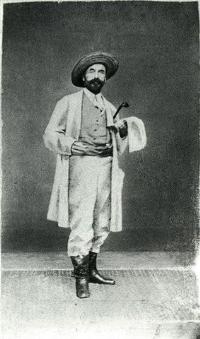
1828 Feldbrunnen, Switzerland - 1890 Feldbrunnen, Switzerland. Known for: Portrait and western landscape painting, sketches.
With an interest in the after-effects of the Civil War, Frank Buchser spent much time in Virigina in the area of Charlottesville and painted landscapes and portraits of black Americans. In 1869, he... Read full biography
With an interest in the after-effects of the Civil War, Frank Buchser spent much time in Virigina in the area of Charlottesville and painted landscapes and portraits of black Americans. In 1869, he also did a portrait of Robert E. Lee, Confederate Civil War General. According to researcher Sam... Read full biography
With an interest in the after-effects of the Civil War, Frank Buchser spent much time in Virigina in the area of Charlottesville and painted landscapes and portraits of black Americans. In 1869, he also did a portrait of Robert E. Lee, Confederate Civil War General. According to researcher Sam Towler, the name of Frank Buscher (Buchser) was listed in the 1870 census of Charlottesville, Virginia, Fredericksville Parish. His residence was written as the hotel run by Rice Bailey, which at that... Read full biography
With an interest in the after-effects of the Civil War, Frank Buchser spent much time in Virigina in the area of Charlottesville and painted landscapes and portraits of black Americans. In 1869, he also did a portrait of Robert E. Lee, Confederate Civil War General. According to researcher Sam Towler, the name of Frank Buscher (Buchser) was listed in the 1870 census of Charlottesville, Virginia, Fredericksville Parish. His residence was written as the hotel run by Rice Bailey, which at that time was outside the city limits near what is now the University of Virginia. Buchser was also active as a portraitist in Washington DC and New York City, where he exhibited at the National Academy of Design. His art studies were in Rome and Paris.... Read full biography
With an interest in the after-effects of the Civil War, Frank Buchser spent much time in Virigina in the area of Charlottesville and painted landscapes and portraits of black Americans. In 1869, he also did a portrait of Robert E. Lee, Confederate Civil War General. According to researcher Sam Towler, the name of Frank Buscher (Buchser) was listed in the 1870 census of Charlottesville, Virginia, Fredericksville Parish. His residence was written as the hotel run by Rice Bailey, which at that time was outside the city limits near what is now the University of Virginia. Buchser was also active as a portraitist in Washington DC and New York City, where he exhibited at the National Academy of Design. His art studies were in Rome and Paris. Sources include:. Peter Falk, Who Was Who in American Art. Sam Towler, inf... Read full biography
Artist Biography
Biography page for Frank Buchser ((1828 - 1890)), known for Portrait and western landscape painting, sketches. Showing 2 biographical entries and 0 sample artworks.
Frank Buchser - Artist Info
About Frank Buchser
Name variants
Franz Buscher
Biography from the Archives of askART
 With an interest in the after-effects of the Civil War, Frank Buchser spent much time in Virigina in the area of Charlottesville and painted landscapes and portraits of black Americans. In 1869, he also did a portrait of Robert E. Lee, Confederate Civil War General.
According to researcher Sam Towler, the name of Frank Buscher (Buchser) was listed in the 1870 census of Charlottesville, Virginia, Fredericksville Parish. His residence was written as the hotel run by Rice Bailey, which at that time was outside the city limits near what is now the University of Virginia.
Buchser was also active as a portraitist in Washington DC and New York City, where he exhibited at the National Academy of Design. His art studies were in Rome and Paris.
Sources include:
Peter Falk, Who Was Who in American Art
Sam Towler, information sent to AskART November 2005Biography from Charleston Renaissance Gallery
FRANK BUCHSER (1828-1890)
A self-styled and romantic adventurer-artist, Frank Buchser was born in Feldbrunnen, Switzerland, north of Bern. He studied at the Academy of St. Luke in Rome in 1847, served with the Papal Swiss Guard, and fought for Italian independence with Garibaldi in 1849. Later that year, he trained under Jean Victor Schnetz, a family relative, before enrolling at the Antwerp Academy in 1850. Buchser was significantly influenced by Gustav Courbet's 1855 exhibition in Paris, which led him to seek a greater realism in his own work.
His formal education complete, Buchser embarked on a life of travel, painting, and writing. He gained broad experience and success as an artist in Spain, Portugal, Morocco, Holland, France, England, and Germany, before embarking on a five-year sojourn in America (1866 - 1871). Buchser arrived in Washington, D.C. with Swiss letters of introduction to federal government officials. These documents outlined the artist's ambitious proposal: to make portraits of Abraham Lincoln; his successor, then-President Andrew Johnson; Johnson's cabinet members; and the Civil War generals, Lee, Sherman, and Grant. Buchser's plan was to have this grand portrait series displayed in the Swiss Federal Parliament as a diplomatic tribute to the United States, the newest republic, from Switzerland, the oldest.
Early in his trip, Buchser executed Four Black Marble Players (1867), a unique and original genre painting of the early, post-Civil War period rendered in exquisite, realistic form and detail. The canvas depicts a Washington street scene of African American shoeshine boys shooting marbles. The figures are shown in the shade against a wall inscribed with a childish stick-figure drawing and the words, "Jhon Brown"—alluding to the famous abolitionist who led the failed slave insurrection at Harper's Ferry and was hanged and martyred. In addition to the rectangular case to the left which identifies the figures as shoeshine workers or bootblacks, Buchser has included allegorical and patriotic elements in the red and white stripes of a flag over the shoulder of the seated boy on the left and in the tattered military jacket, complete with brass cuff buttons, of the foreground player.
During the five years he spent in the United States, Buchser traveled and worked widely, recording the likenesses of key national leaders, including Generals Robert E. Lee and William T. Sherman, as well as President Andrew Johnson. Buchser set sail for England in 1871, having produced an important and comprehensive body of work that included landscape views, portraits, and vibrant genre scenes of American life.
This essay is copyrighted by the Charleston Renaissance Gallery and may not be reproduced or transmitted without written permission from Hicklin Galleries, LLC.