Page loaded successfully. Showing biography for Fred Mitchell.
Fred Mitchell BIOGRAPHY

1923 Meridian, Mississippi - 2013 New York City. Known for: Abstract expressionist imagery, landscape painting, teaching.
Fred Mitchell b. 1923, Meridian, MS. Studied: Carnegie Institute, Pittsburgh, PA, 1942-1943. Cranbrook Academy, Bloomfield Hills, MI, 1946-1956. University of Alabama, Tuscaloosa, Alabama, 1947.... Read full biography
Fred Mitchell b. 1923, Meridian, MS. Studied: Carnegie Institute, Pittsburgh, PA, 1942-1943. Cranbrook Academy, Bloomfield Hills, MI, 1946-1956. University of Alabama, Tuscaloosa, Alabama, 1947. Columbia University, NYC, c. 1947. Atelier 17, NYC, c. 1947. Academie de Belles Arti, Rome, 1948-1949 .... Read full biography
Fred Mitchell b. 1923, Meridian, MS. Studied: Carnegie Institute, Pittsburgh, PA, 1942-1943. Cranbrook Academy, Bloomfield Hills, MI, 1946-1956. University of Alabama, Tuscaloosa, Alabama, 1947. Columbia University, NYC, c. 1947. Atelier 17, NYC, c. 1947. Academie de Belles Arti, Rome, 1948-1949 . Known as a gifted Abstract Expressionist painter since 1951, Fred Mitchell was a draftsman & painter going back to an early age. Mitchell often painted & drew his local environment around Meridian, MS... Read full biography
Fred Mitchell b. 1923, Meridian, MS. Studied: Carnegie Institute, Pittsburgh, PA, 1942-1943. Cranbrook Academy, Bloomfield Hills, MI, 1946-1956. University of Alabama, Tuscaloosa, Alabama, 1947. Columbia University, NYC, c. 1947. Atelier 17, NYC, c. 1947. Academie de Belles Arti, Rome, 1948-1949 . Known as a gifted Abstract Expressionist painter since 1951, Fred Mitchell was a draftsman & painter going back to an early age. Mitchell often painted & drew his local environment around Meridian, MS where he grew up. From an early age his interest lay in modern art. He was well informed of the latest art trends having seen and read about them in art books and magazines. In 1942 Mitchell attended the Carnegie Institute in Pittsburgh on a... Read full biography
Fred Mitchell b. 1923, Meridian, MS. Studied: Carnegie Institute, Pittsburgh, PA, 1942-1943. Cranbrook Academy, Bloomfield Hills, MI, 1946-1956. University of Alabama, Tuscaloosa, Alabama, 1947. Columbia University, NYC, c. 1947. Atelier 17, NYC, c. 1947. Academie de Belles Arti, Rome, 1948-1949 . Known as a gifted Abstract Expressionist painter since 1951, Fred Mitchell was a draftsman & painter going back to an early age. Mitchell often painted & drew his local environment around Meridian, MS where he grew up. From an early age his interest lay in modern art. He was well informed of the latest art trends having seen and read about them in art books and magazines. In 1942 Mitchell attended the Carnegie Institute in Pittsburgh on a Scholastic Magazine Art Scholarship. There he met and became friends with painter Phi... Read full biography
Artist Biography
Biography page for Fred Mitchell ((1923 - 2013)), known for Abstract expressionist imagery, landscape painting, teaching. Showing 2 biographical entries and 0 sample artworks.
Fred Mitchell - Artist Info
About Fred Mitchell
Name variants
Madison Fred Mitchell
Biography from Philip Douglas Fine Art
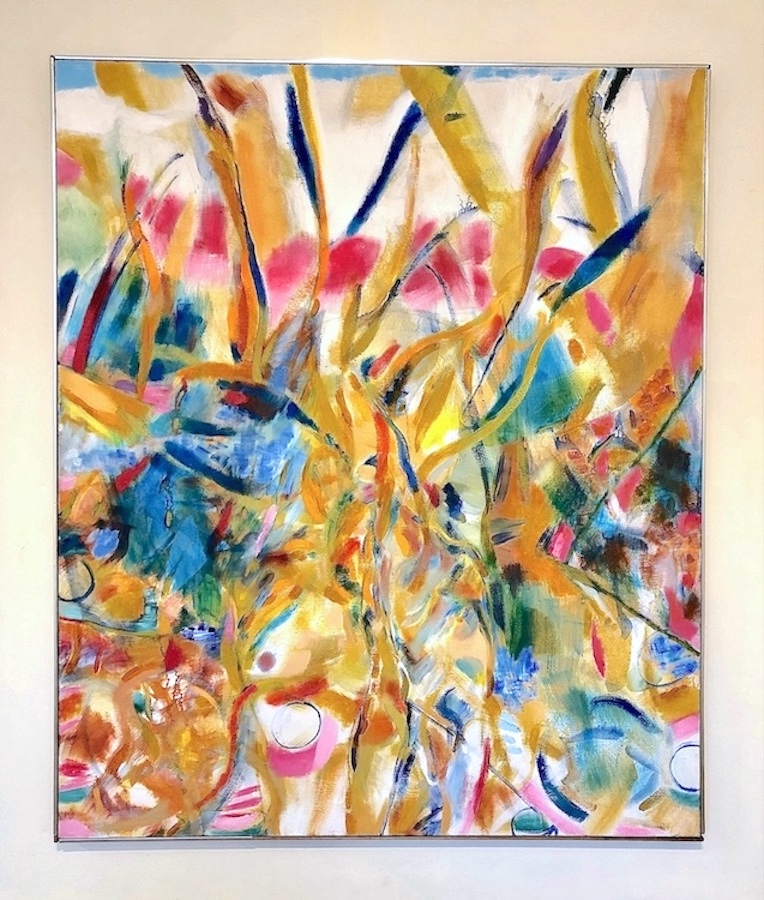 Fred Mitchell b. 1923, Meridian, MS
Studied: Carnegie Institute, Pittsburgh, PA, 1942-1943
Cranbrook Academy, Bloomfield Hills, MI, 1946-1956
University of Alabama, Tuscaloosa, Alabama, 1947
Columbia University, NYC, c. 1947
Atelier 17, NYC, c. 1947
Academie de Belles Arti, Rome, 1948-1949
Known as a gifted Abstract Expressionist painter since 1951, Fred Mitchell was a draftsman & painter going back to an early age. Mitchell often painted & drew his local environment around Meridian, MS where he grew up. From an early age his interest lay in modern art. He was well informed of the latest art trends having seen and read about them in art books and magazines. In 1942 Mitchell attended the Carnegie Institute in Pittsburgh on a Scholastic Magazine Art Scholarship. There he met and became friends with painter Philip Pearlstein.
In 1943 Mitchell was drafted into the US army where he served by teaching mechanical drawing for the army in Maryland and Chicago. After the war Mitchell attended Cranbrook Academy for two years where he further studied and practiced an advanced modernist/regionalist style of painting. In 1947 he won a national Pepsi Cola cash award of $1,500 for his oil painting Sawmill, a highly advanced work of semi cubist figures and forms depicting men working in a southern sawmill. An exhibition for the award winners was organized by The National Academy in New York City and traveled to The Rochester Memorial Art Museum. Mitchell used the award money to travel to Italy and paint. After some travel around Europe, Mitchell settled in Rome for three years. There he met several American painters including Angelo Ippolito and John Heliker who were older and working in a more advanced expressionist painting style. This made a large influence on Mitchell's work. In Rome he also met Afro (Basadella) an important Italian expressionist painter and American painter Philip Guston; both painters also had a enormous influence on Mitchell.
In 1951 Mitchell moved to New York City and became one of the first painters to open a painting studio in downtown Manhattan in the seaport area along the East River known as Coenties Slip. Coenties Slip consisted of old, large, and cheap cold water lofts. Mitchell started an art school nearby in the old Seaman's Church Institute. During the ensuing years other artists moved into Coenties Slip lofts including Ellsworth Kelly (introduced to the area by Mitchell in 1954) Robert Indiana, Agnes Martin, Jack Youngerman, James Rosenquist.
1952, Fred Mitchell, Angelo Ippolito and fellow artists Lois Dodd, Charles Cajori and William King organized Tanager Gallery on East 4th Street as a non profit group organized for continuous exhibition of work by contemporary artists (according to the original May 1952 Tanager Gallery exhibition announcement) Tanager Gallery quickly became known as the most influential and respected co-op gallery in New York just as the Abstract Expressionist movement swept the art world.
Mitchell's first solo exhibition in New York was at Tanager Gallery in 1953. He was included in a number of subsequent curated group exhibitions at Tanager Gallery including the very first exhibition held in May 1952 as well as the annual Tanager Gallery Christmas group exhibition held each year from 1952-1962. Philip Guston introduced Mitchell to other artists at the Cedar Tavern. Philip Pavia brought him to 'The Club' in New York. The world of talented painters and sculptors in New York City was small, and Mitchell became friends with many of them during this period including Franz Kline, Jasper Johns, and Robert Rauschenberg who both lived above Mitchell loft on Front Street in New York. Over its ten year history Tanager Gallery showed most of the best painters & sculptors including older masters Philip Guston, Ad Reinhardt, Willem De Kooning, Franz Kline, Barnet Newman, Philip Pavia, and became a important platform for showing & introducing many new artists including early showings by Johns, Rauschenberg, Tom Wesselman, Alex Katz, Philip Pearlstein, Bill King, Helen Frankenthaler, Norman Bluhm, and many others.
In 1954 Mitchell's oil painting Black White and Red was included in the landmark Guggenheim Museum show 'Younger American Painters'. Curated by James Johnson Sweeney the exhibition traveled to The Dallas Museum of Art and The Detroit Museum. In 1953 and 1954, Mitchell was included in the prestigious 'Stable Gallery Annual Exhibition'. In 1955 Mitchell returned to Cranbrook Academy to teach for several years while also exhibiting in New York and Cleveland as well as traveling back to Positano, Italy. During the mid to late 1950's, Mitchell exhibited at Howard Wise Gallery in Cleveland. Wise opened a second gallery in 1960 in New York City, and Mitchell had two solo shows there.
Throughout the 1960's to the 1990's, Fred Mitchell exhibited in numerous museums and galleries including: The Walker Arts Center, Minneapolis MN, 'Vanguard '55'; Roko Gallery, NYC; Landmark Gallery, NYC; The Whitney Museum of American Art, NYC; Museum of Modern Art, New York; SUNY Binghamton, NY; Munson Williams Proctor Institute; The South Street Seaport, NYC; U. of Oregon Art Museum; Jackson MS Memorial Art Museum; The Bronx MoA; The Wooster Art Center, Danbury,CT; Katharina Rich Perlow Gallery,NYC; Tabakman Gallery, NYC; Susan Teller Gallery, NYC; Pace Gallery, NYC; ULAE Workshop Gallery, NYC; Thomas McCormick Gallery, Chicago. Mitchell's most recent solo exhibitions were held at David Findlay Jr Fine Art, NYC in 2003 and Noel Fine Art in Bronxville, NY in 2005.
In addition to a busy exhibition schedule since the 1950's, Fred Mitchell taught art painting and drawing at Cranbrook Academy; New York University; The Fred Mitchell Workshop downtown New York; Kingborough College, Brooklyn,NY; Louisiana State University, The Arts Students League (for 20 years) New York, NY. Michell's painting are in the permanent collections of The Columbus MoA and The Weatherspoon Museum of Art as well as many private collections.Biography from The Johnson Collection
MADISON FRED MITCHELL (1923–2013)
Highly regarded by his fellow Abstract Expressionists, Madison Fred Mitchell Jr.—known to his friends as Fred—was at the center of the action in New York during the 1950s. Typically, his paintings are dynamic creations composed of soft-edged swatches of color.
Mitchell was born in Meridian, Mississippi, about ninety miles east of the state capital, Jackson. Attending the local high school, he was a radio announcer and captain of the band. His yearbook photograph shows him holding a brush and palette, and is accompanied by the statement, “Artist Fred Mitchell promises great things for the future, and has already proved that he is touched by genius.” Following graduation and with a Scholastic Magazine art scholarship, during 1942/1943 Mitchell studied at the Carnegie Institute of Technology in Pittsburgh, Pennsylvania, until he was drafted by the United States Army in 1943. He spent his time in Maryland and Chicago, Illinois, where he taught mechanical drawing.
After completing his military duty, Mitchell was a student 1946–1948 at the Cranbrook Academy of Art in Bloomfield Hills, Michigan, where its first director “[Eero] Saarinen wanted students to be able to envision, create and understand all aspects of design, from architecture to furniture to metalworking, and to engage in experimentation.” Mitchell spent the summer of 1947 at Columbia University in New York, where he worked with renowned printmaker Stanley Hayter at Atelier 17, before returning to Cranbrook Academy to complete his Bachelor of Fine Arts degree. He won an award of fifteen hundred dollars from the Pepsi-Cola Company which he used to travel to Rome and study at the Accademia di Belle Arti, 1948, 1950, and 1951.
In 1951 Mitchell settled in New York and the following year was one of the founders of the Tanager Gallery, one of the first cooperative galleries in the city; it functioned for a decade and offered an alternative to the upscale galleries on Madison Avenue. He was the first to live and have a studio at Coenties Slip in lower Manhattan, an area that emerged as a low-rent haven for contemporary artists who often frequented John Cage and Merce Cunningham performances. Among others, Jack Youngerman, Jasper Johns, and Robert Rauschenberg lived in a loft building a few blocks away. Actively involved with his peers, Mitchell became an authority on one of the central figures of Abstract Expressionism; in 1977 Mitchell organized a traveling exhibition Franz Kline: The Early Works as Signals in collaboration with the State University of New York at Binghamton.
In 1952, Mitchell founded the Coenties Slip School of Art, teaching in his studio until 1957, when he gave his lease to Robert Indiana. This initiated a robust and varied teaching career that included adult classes at the Riverdale Neighborhood House, 1952–1954, Finch College (a liberal arts college for women), 1952 and 1954, and a workshop in Positano, Italy, summer 1956. He returned to his alma mater, Cranbrook Academy and taught painting and drawing there 1955 to 1959, while earning his master’s degree. Back in New York, he conducted classes at the Downtown Art Center, Seamen’s Church Institute, 1961–1968, as well as at New York University, 1961–1971; Cornell University in Ithaca, New York, 1968/1969; Queens College and the City University of New York, 1973/1974; the Southern Tip School of Art, 1975–1975; Parsons School of Design master’s program, 1979–1983; Kingsborough Community College, part of the City University of New York system, 1986–2000; and the Art Students League, 1985–2003.
The Johnson Collection, Spartanburg, South Carolina
thejohnsoncollection.org