Page loaded successfully. Showing biography for Frederick Stuart Richardson.
Frederick Stuart Richardson BIOGRAPHY
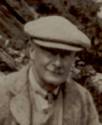
1855 Clifton, Bristol, England - 1934 England. Known for: Portrait, land-and seascape painting.
Richardson, Frederick Stuart R.S.W. R.I. R.O.I. British (1855-1934). Frederick Stuart Richardson was born in Clifton, Bristol, England on the 9th of December, 1855. He was the second son of the... Read full biography
Richardson, Frederick Stuart R.S.W. R.I. R.O.I. British (1855-1934). Frederick Stuart Richardson was born in Clifton, Bristol, England on the 9th of December, 1855. He was the second son of the Reverend John Richardson who was Rector of Sandy in Bedfordshire from 1858 to 1913. He was educated at... Read full biography
Richardson, Frederick Stuart R.S.W. R.I. R.O.I. British (1855-1934). Frederick Stuart Richardson was born in Clifton, Bristol, England on the 9th of December, 1855. He was the second son of the Reverend John Richardson who was Rector of Sandy in Bedfordshire from 1858 to 1913. He was educated at Repton School and subsequently trained as a civil engineer at Crystal Palace in London. In 1877, he inherited a legacy that provided him with an annual income, which allowed him to consider leaving his... Read full biography
Richardson, Frederick Stuart R.S.W. R.I. R.O.I. British (1855-1934). Frederick Stuart Richardson was born in Clifton, Bristol, England on the 9th of December, 1855. He was the second son of the Reverend John Richardson who was Rector of Sandy in Bedfordshire from 1858 to 1913. He was educated at Repton School and subsequently trained as a civil engineer at Crystal Palace in London. In 1877, he inherited a legacy that provided him with an annual income, which allowed him to consider leaving his embryonic career as an engineer and to study art. His family, being very concerned about this step, asked a family friend, the painter, Sir Samuel Luke Fildes R.A., to give an opinion of his talents and prospects. Following a positive response,... Read full biography
Richardson, Frederick Stuart R.S.W. R.I. R.O.I. British (1855-1934). Frederick Stuart Richardson was born in Clifton, Bristol, England on the 9th of December, 1855. He was the second son of the Reverend John Richardson who was Rector of Sandy in Bedfordshire from 1858 to 1913. He was educated at Repton School and subsequently trained as a civil engineer at Crystal Palace in London. In 1877, he inherited a legacy that provided him with an annual income, which allowed him to consider leaving his embryonic career as an engineer and to study art. His family, being very concerned about this step, asked a family friend, the painter, Sir Samuel Luke Fildes R.A., to give an opinion of his talents and prospects. Following a positive response, Richardson traveled to Paris to study painting under Carolus Duran. He was however more interested in landscapes than portraits.... Read full biography
Artist Biography
Biography page for Frederick Stuart Richardson ((1855 - 1934)), known for Portrait, land-and seascape painting. Showing 2 biographical entries and 0 sample artworks.
Frederick Stuart Richardson - Artist Info
About Frederick Stuart Richardson
Name variants
FS Richardson
Biography from the Archives of askART
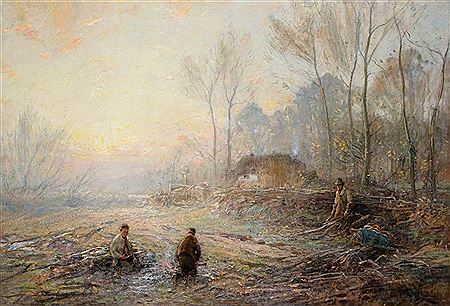 Richardson, Frederick Stuart R.S.W. R.I. R.O.I. British (1855-1934)
Frederick Stuart Richardson was born in Clifton, Bristol, England on the 9th of December, 1855. He was the second son of the Reverend John Richardson who was Rector of Sandy in Bedfordshire from 1858 to 1913. He was educated at Repton School and subsequently trained as a civil engineer at Crystal Palace in London.
In 1877, he inherited a legacy that provided him with an annual income, which allowed him to consider leaving his embryonic career as an engineer and to study art. His family, being very concerned about this step, asked a family friend, the painter, Sir Samuel Luke Fildes R.A., to give an opinion of his talents and prospects. Following a positive response, Richardson traveled to Paris to study painting under Carolus Duran. He was however more interested in landscapes than portraits.
On his return to England, he set up a base at his father's rectory at Sandy in Bedfordshire. He used an outbuilding as a studio, and remained there until his father's death in 1913. He traveled extensively, painting landscapes and coastal scenes in Scotland in Kintyre, at Carradale until the early 1890's. There he had shared a studio with his great friends Hamilton Macallum (R.I., 1841-1896) and Kenneth Mackenzie (died 1899). They painted Scottish landscapes and seascapes.
He also painted in Ireland, Italy, Holland and France until the outbreak of the First World War. He visited the USA on one occasion in the summer of 188, in the company of a young cousin, who was the son of Charles Nash. They met Longfellow and traveled from New York to Niagara falls visiting the White, Adirondack and Catskill mountains. Frederick did a number of watercolors during his visit.
He also made annual visits to Yorkshire, where his great-grandfather lived. There he became an active member of the Staithes Group, an important artist colony in the north, participating in the exhibitions of the Staithes Art Club, and annual exhibitions of the Yorkshire Union of Artists.
At the turn of the century, his elder brother inherited Park Hall, a property at Aislaby and, as local vicar, was able to provide Frederick with accommodation in a cottage at the rear of the Hall. He visited there annually for many years, even after he married and had moved to Long Ashton near Bristol, Somerset with his family.
He especially liked Yorkshire and Scotland as he was a keen fisherman like the rest of the family. He was also an excellent cricketer, the family still has his bat (now on display at Repton School) and he played the violin and clarinet. He was a colleague of Yorkshire artists such as Dame Laura Knight. When she moved to Cornwall with her husband Harold Knight, Frederick began painting in Cornwall and associated with the Newlyn group of painters.
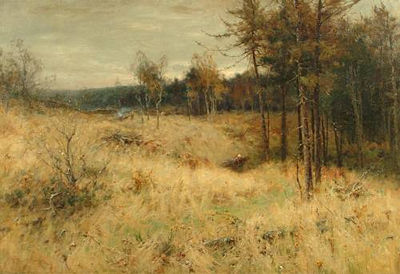
Frederick Stuart Richardson did oils and watercolors en plein air and was best known for his landscapes and seascapes.
Frederick met his wife Elsie Reynolds whilst on a painting trip in Cornwall. He passed the window of the Coverack Headland Hotel, which is close to the sea. He saw a pretty girl sitting by the window. He was so struck by her that he decided to engage her in conversation there and later on the beach where he was painting. They married in 1912 and spent a honeymoon in Holland (he was 57 and she 26).
In 1913, Frederick moved with his family to Saint Martins at Long Ashton, Bristol. They had two children, John Stuart Richardson who was a country doctor and amateur portrait artist, and Patrick Horsfall Richardson who was tragically drowned when on a sailing expedition to the Azores along with several other Oxford Undergraduates in 1935.
In 1919, Frederick was elected as an Artist Member of the Bristol Savages Club. He became President in 1923. He exhibited prolifically at all the major venues including Glasgow, Liverpool, Manchester, Birmingham, the Royal Society of Bristol Artists, the Royal Institute of Painters in Watercolors, the Royal Institute of Oil Painters, the Royal Scottish Society of Painters in Watercolors, the Royal Hibernian Academy, the Royal West of England Academy, and the Royal Academy London. One of his watercolors is in the permanent collections of the Harris Museum and Art Gallery, Preston.
He was elected a member of the Royal Scottish Society of Painters in Watercolors in 1893, a member of the Institute of Painters in Watercolor in 1897, a member of the Royal Institute of Oil Painters in 1901, and the Royal West of England Academy in 1920. He normally signed his paintings F. S. Richardson or with the initials FSR, but left many unsigned. He painted to within a few days of his death, which occurred on the 22nd April, 1934, at the age of seventy-eight.
Submitted and written by David H.S. Richardson; The biography based on family records and that of the archives of the Bristol Savages.Biography from the Archives of askART
 FREDERIC STUART RICHARDSON:
PORTRAIT or A LANDSCAPE ARTIST
Although Frederic Stuart Richardson also used oils, during his North American trip he painted watercolor landscapes, a medium and genre strongly associated with his countrymen. In particular, J. M. W. Turner, who died four years before Richardson's birth. was, and still is. one of the most celebrated British landscape painters. Turner was a Romantic, whose loose brushwork, with close attention to natural color and quality of light, prefigured British Impressionism.
At the time of Richardson's Adirondack visit, British Impressionism had yet to appear, although it is possible his studies with Carolus-Duran in France exposed him to emerging
French Impressionism. Like the Impressionists, he preferred to paint en plein air. He was later part of the Staithes Group, sometimes referred to as the Northern Impressionists.
Scott Wilcox, chief curator of art collections and senior curator of prints and drawings at the Yale Center for British Art, isn't familiar with Richardson. But based on images of his early watercolor sketches, Wilcox says the artist doesn't appear to have fit into either of the prevailing styles of his contemporaries in the early 1880s. "He's clearly not in the Pre-Raphaelite camp," Wilcox says, "nor does he fall in the more conventional Victorian Picturesque landscape."
Artists painting in the Picturesque style in the 19th and 19th centuries tended to favor sentimental pastoral landscapes, Wilcox explains, often unpopulated but sometimes including buildings, especially ruins. The PreRaphaelites, on the other hand, emerged in the mid-19th century in response to what they deemed a formulaic and imprecise tendency in British art. They strove for fidelity to nature, with meticulous details.
It was de rigeur for all kinds of landscape artists to travel in search of beautiful scenery, although it was less common for an English artist to venture to North America than to countries in Europe and the Middle East. However, as Erin Budis Coe, chief curator of the Hyde Collection, in Glens Falls, explains in the catalog for the museum's 2005 exhibition Painting Lake George, the Adirondacks was a popular destination for American artists. "Scenic touring was an integral part of nineteenth-century genteel culture," Coe writes. "Lake George was on the itinerary of the American grand tour.... Beginning with Thomas Cole, every Hudson River School artist painted Lake George."
Richardson never returned to the United States. But he did become a member and one-time president of the Bristol Savages, an artists' club founded in 1903 that uses Native American imagery: its logo is a profile of an Indian man in a feathered headdress, its meeting place is called the Wigwam, and members wear colored feathers to indicate their status as an artist, entertainer or lay member.
Geoff Cutter, honorary secretary of the still-active club. explains the source of the Native American theme: "An early associate member of the group was the American Consul in Bristol.... We had a visit from the Chief of the Sioux in 1928, and the occasion is well documented.
"Following that, we acquired much memorabilia of Native Americans, and now we have memorabilia from all over the world."
Wilcox says one source of a 19thcentury European vogue for things Native American was the artist George Catlin, whose portraits of indigenous people toured Europe in 1839. Also, in 1887 Buffalo Bill brought his Wild West show. complete with Indians, to London.
—Lisa Bramen
Source: July/August 2009 ADIRONDACK LIFE 57
Submitted by: David Richardson