Page loaded successfully. Showing biography for Fritz Kronenberg.
Fritz Kronenberg BIOGRAPHY
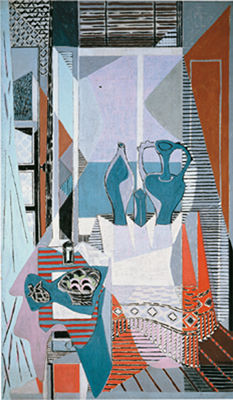
1901 Koln - 1960 Hamburg. Known for: Painting and graphic art.
Fritz Kronenberg was born on 13 February 1901 in Köln and became a German painter and graphic artist associated with the Hamburg Secession. He first attended the Kunstgewerbeschule in Köln beginning... Read full biography
Fritz Kronenberg was born on 13 February 1901 in Köln and became a German painter and graphic artist associated with the Hamburg Secession. He first attended the Kunstgewerbeschule in Köln beginning in 1919, where he studied woodcut techniques. From 1920 to 1923 he continued his training at the... Read full biography
Fritz Kronenberg was born on 13 February 1901 in Köln and became a German painter and graphic artist associated with the Hamburg Secession. He first attended the Kunstgewerbeschule in Köln beginning in 1919, where he studied woodcut techniques. From 1920 to 1923 he continued his training at the Kunstakademie Düsseldorf and later at the Kunstakademie Karlsruhe, studying sculpture, woodcarving, and drawing. After completing his studies he undertook extensive travel, visiting the United States,... Read full biography
Fritz Kronenberg was born on 13 February 1901 in Köln and became a German painter and graphic artist associated with the Hamburg Secession. He first attended the Kunstgewerbeschule in Köln beginning in 1919, where he studied woodcut techniques. From 1920 to 1923 he continued his training at the Kunstakademie Düsseldorf and later at the Kunstakademie Karlsruhe, studying sculpture, woodcarving, and drawing. After completing his studies he undertook extensive travel, visiting the United States, Spain, North Africa, and Norway, experiences that broadened his artistic outlook. In 1925 Kronenberg spent an extended period in Paris, where he maintained a studio and encountered Wilhelm Uhde as well as the work of Pablo Picasso, Juan Gris, Georges... Read full biography
Fritz Kronenberg was born on 13 February 1901 in Köln and became a German painter and graphic artist associated with the Hamburg Secession. He first attended the Kunstgewerbeschule in Köln beginning in 1919, where he studied woodcut techniques. From 1920 to 1923 he continued his training at the Kunstakademie Düsseldorf and later at the Kunstakademie Karlsruhe, studying sculpture, woodcarving, and drawing. After completing his studies he undertook extensive travel, visiting the United States, Spain, North Africa, and Norway, experiences that broadened his artistic outlook. In 1925 Kronenberg spent an extended period in Paris, where he maintained a studio and encountered Wilhelm Uhde as well as the work of Pablo Picasso, Juan Gris, Georges Braque, and Helmuth Kolle. His engagement with French Cubism, particularly the work of Braque, became a defining influence and earned him the... Read full biography
Artist Biography
Biography page for Fritz Kronenberg ((1901 - 1960)), known for Painting and graphic art. Showing 2 biographical entries and 0 sample artworks.
Fritz Kronenberg - Artist Info
About Fritz Kronenberg
Biography from the Archives of askART
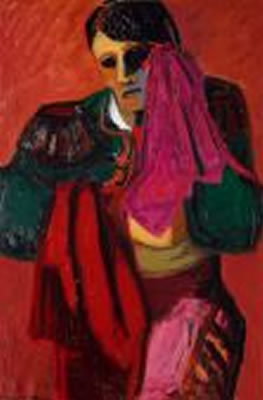 Fritz Kronenberg was born on 13 February 1901 in Köln and became a German painter and graphic artist associated with the Hamburg Secession. He first attended the Kunstgewerbeschule in Köln beginning in 1919, where he studied woodcut techniques. From 1920 to 1923 he continued his training at the Kunstakademie Düsseldorf and later at the Kunstakademie Karlsruhe, studying sculpture, woodcarving, and drawing. After completing his studies he undertook extensive travel, visiting the United States, Spain, North Africa, and Norway, experiences that broadened his artistic outlook.
In 1925 Kronenberg spent an extended period in Paris, where he maintained a studio and encountered Wilhelm Uhde as well as the work of Pablo Picasso, Juan Gris, Georges Braque, and Helmuth Kolle. His engagement with French Cubism, particularly the work of Braque, became a defining influence and earned him the nickname “Kronenbraque” among friends. He returned to Köln later that year, married Erika Strauss, and taught at the Kunstgewerbeschule until 1927.
Kronenberg moved to Hamburg in 1927 to work as a freelance painter. He received early commissions, including a wall painting for the Volkshochschule Osterbrook, and continued to travel widely, visiting India, Bali, Java, and Egypt. He joined the Hamburg Secession, first as a guest exhibitor and later as a full member until the group’s dissolution in 1933. His style adapted Cubist structure without abandoning recognizable subject matter, resulting in large, tectonically organized still lifes and landscapes shaped by spatial and atmospheric perspective.
Following the National Socialist rise to power, Kronenberg withdrew from public artistic life. Ten of his works were confiscated from public collections in 1937 as “degenerate art.” He continued to teach privately and collaborated with the Griffelkunst-Vereinigung in Hamburg, which published parts of his graphic work. After his first marriage ended in 1938, he married Sigrid Vogler in 1940. His home and studio were destroyed during bombing raids in 1943, after which he relocated temporarily to Keelbek near Tarp in Schleswig-Holstein.
Kronenberg rejoined the re-founded Hamburg Secession after the Second World War in 1946 and became a member of the Freie Akademie der Künste in Hamburg in 1953. He resumed travel, visiting Denmark, South America, and Brittany, and in the mid-1950s hosted a television series for NDR titled Malen mit Fritz Kronenberg, in which he demonstrated artistic techniques. His works entered museum collections in Hamburg, Schleswig, and Flensburg, reflecting his continued regional significance. Kronenberg died on 4 April 1960 in Hamburg.Biography from Auctionata
Fritz Kronenberg was a painter of the Hamburg Secession. He attended a wooden sculpture class at the Cologne Art School. From 1920 to 1923, he studied drawing at the Karlsruhe Academy. He made numerous study trips.
Established in 1925 in Paris, he was influenced by French Cubism and Georges Braque. From 1925 to 1927, he pursued a teaching position at the School of Applied Arts in Cologne. From 1927 on, he worked as a freelance artist in Hamburg and exhibited for the first time at the Hamburg Secession, which he joined in 1932. In 1933, Kronenberg was a member of the association of modern artists. During World War II, he took refuge in the Schleswig-Holstein Keelbeck and returned to Hamburg only in 1949.