Page loaded successfully. Showing biography for Fritz Lang.
Fritz Lang BIOGRAPHY
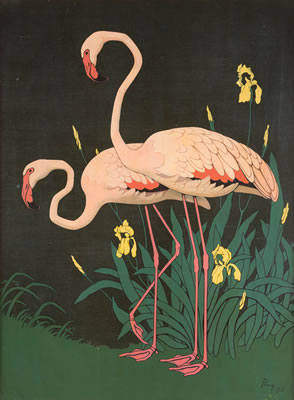
1877 Stuttgart, Germany - 1961 Stuttgart, Germany. Known for: Woodcuts, linocuts, lithographs, book illustration, decorative painting.
Fritz Lang was a German painter, noted for his woodcuts, linocuts, lithographs and book illustrations. Between 1892 and 1894 he was an apprentice decorative painter, after which he attended the... Read full biography
Fritz Lang was a German painter, noted for his woodcuts, linocuts, lithographs and book illustrations. Between 1892 and 1894 he was an apprentice decorative painter, after which he attended the Königlich Württembergische Kunstschule in Stuttgart, and the Karlsruher Akademie. In 1899 he returned to... Read full biography
Fritz Lang was a German painter, noted for his woodcuts, linocuts, lithographs and book illustrations. Between 1892 and 1894 he was an apprentice decorative painter, after which he attended the Königlich Württembergische Kunstschule in Stuttgart, and the Karlsruher Akademie. In 1899 he returned to Stuttgart, finding freelance work to generate an income. During this period he produced numerous woodcuts, some of which were purchased by the British Museum, the Königliche Kupferstichkabinett of... Read full biography
Fritz Lang was a German painter, noted for his woodcuts, linocuts, lithographs and book illustrations. Between 1892 and 1894 he was an apprentice decorative painter, after which he attended the Königlich Württembergische Kunstschule in Stuttgart, and the Karlsruher Akademie. In 1899 he returned to Stuttgart, finding freelance work to generate an income. During this period he produced numerous woodcuts, some of which were purchased by the British Museum, the Königliche Kupferstichkabinett of Stuttgart, and the Hofbibliothek in Vienna. Between 1915 and 1918 during World War I he was conscripted and served with the armed forces. The post-war conditions in Germany were not conducive to artistic expression, and Lang's output was minimal during... Read full biography
Fritz Lang was a German painter, noted for his woodcuts, linocuts, lithographs and book illustrations. Between 1892 and 1894 he was an apprentice decorative painter, after which he attended the Königlich Württembergische Kunstschule in Stuttgart, and the Karlsruher Akademie. In 1899 he returned to Stuttgart, finding freelance work to generate an income. During this period he produced numerous woodcuts, some of which were purchased by the British Museum, the Königliche Kupferstichkabinett of Stuttgart, and the Hofbibliothek in Vienna. Between 1915 and 1918 during World War I he was conscripted and served with the armed forces. The post-war conditions in Germany were not conducive to artistic expression, and Lang's output was minimal during this period. By 1924 some of his work had been bought by the Victoria and Albert Museum and the Whitworth Art Gallery of Manchester.... Read full biography
Artist Biography
Biography page for Fritz Lang ((1877 - 1961)), known for Woodcuts, linocuts, lithographs, book illustration, decorative painting. Showing 1 biographical entries and 0 sample artworks.
Fritz Lang - Artist Info
About Fritz Lang
Biography from the Archives of askART
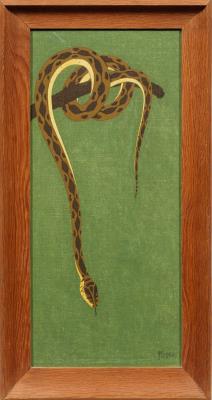 Fritz Lang was a German painter, noted for his woodcuts, linocuts, lithographs and book illustrations. Between 1892 and 1894 he was an apprentice decorative painter, after which he attended the Königlich Württembergische Kunstschule in Stuttgart, and the Karlsruher Akademie.
In 1899 he returned to Stuttgart, finding freelance work to generate an income. During this period he produced numerous woodcuts, some of which were purchased by the British Museum, the Königliche Kupferstichkabinett of Stuttgart, and the Hofbibliothek in Vienna.
Between 1915 and 1918 during World War I he was conscripted and served with the armed forces. The post-war conditions in Germany were not conducive to artistic expression, and Lang's output was minimal during this period. By 1924 some of his work had been bought by the Victoria and Albert Museum and the Whitworth Art Gallery of Manchester.
A trip to the former colony of German East Africa in 1928 inspired Lang, and he produced a large number of woodcuts and paintings with an African theme.
During World War II the Allied bombing of Stuttgart destroyed Lang's studio. As a result his works became rare and valuable. Some 330 of his woodblocks survived the war. His animal and bird studies were outstanding, and clearly inspired other German and Austrian artists in their technique and composition. The influence of Japanese woodcut masters on Lang's work is evident.
Source:
"Fritz Lang", Wikipedia, http://en.wikipedia.org/wiki/Fritz_Lang_%28artist%29 (Accessed 1/1/2015)