Page loaded successfully. Showing biography for Georg Janny.
Georg Janny BIOGRAPHY
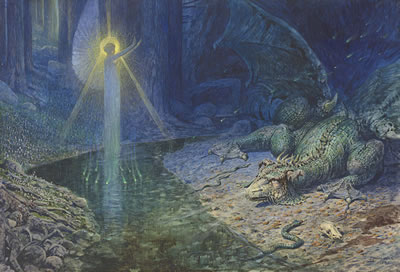
1864 Vienna, Austria - 1935 Vienna. Known for: Interior scenes, mythical figures and landscapes, set design.
Georg Janny (20 May 1864, Vienna - 21 February 1935, Vienna) was an Austrian landscape painter and set designer. He worked as a scene painter in the studios of Carlo Brioschi and Johann Kautsky,... Read full biography
Georg Janny (20 May 1864, Vienna - 21 February 1935, Vienna) was an Austrian landscape painter and set designer. He worked as a scene painter in the studios of Carlo Brioschi and Johann Kautsky, alongside Alfons Mucha, and was a member of the Dürerbund. In 1898, he participated in painting the... Read full biography
Georg Janny (20 May 1864, Vienna - 21 February 1935, Vienna) was an Austrian landscape painter and set designer. He worked as a scene painter in the studios of Carlo Brioschi and Johann Kautsky, alongside Alfons Mucha, and was a member of the Dürerbund. In 1898, he participated in painting the "Eisernen Vorhang" (Iron Curtain) at the Vienna Volksoper for the 50th jubilee of Emperor Franz Joseph I. In 1904, he exhibited in the Austrian Pavilion at the St.Louis World's Fair with scenes from the... Read full biography
Georg Janny (20 May 1864, Vienna - 21 February 1935, Vienna) was an Austrian landscape painter and set designer. He worked as a scene painter in the studios of Carlo Brioschi and Johann Kautsky, alongside Alfons Mucha, and was a member of the Dürerbund. In 1898, he participated in painting the "Eisernen Vorhang" (Iron Curtain) at the Vienna Volksoper for the 50th jubilee of Emperor Franz Joseph I. In 1904, he exhibited in the Austrian Pavilion at the St.Louis World's Fair with scenes from the Imperial Royal Austrian State Railways (now at the Technisches Museum Wien). Two years later, he designed the stage for The Queen of Sheba by Karl Goldmark, one of the most popular operas of the late 19th century. Pictures from the second and third... Read full biography
Georg Janny (20 May 1864, Vienna - 21 February 1935, Vienna) was an Austrian landscape painter and set designer. He worked as a scene painter in the studios of Carlo Brioschi and Johann Kautsky, alongside Alfons Mucha, and was a member of the Dürerbund. In 1898, he participated in painting the "Eisernen Vorhang" (Iron Curtain) at the Vienna Volksoper for the 50th jubilee of Emperor Franz Joseph I. In 1904, he exhibited in the Austrian Pavilion at the St.Louis World's Fair with scenes from the Imperial Royal Austrian State Railways (now at the Technisches Museum Wien). Two years later, he designed the stage for The Queen of Sheba by Karl Goldmark, one of the most popular operas of the late 19th century. Pictures from the second and third acts have been preserved. He also painted landscapes and figu... Read full biography
Artist Biography
Biography page for Georg Janny ((1864 - 1935)), known for Interior scenes, mythical figures and landscapes, set design. Showing 2 biographical entries and 0 sample artworks.
Georg Janny - Artist Info
About Georg Janny
Biography from the Archives of askART
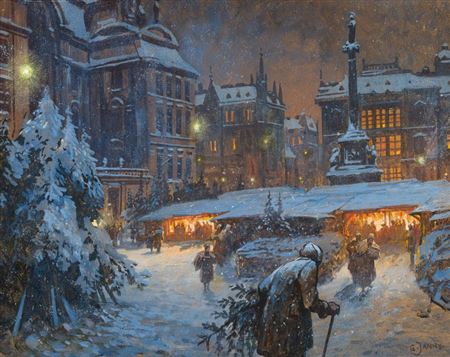 Georg Janny (20 May 1864, Vienna - 21 February 1935, Vienna) was an Austrian landscape painter and set designer.He worked as a scene painter in the studios of Carlo Brioschi and Johann Kautsky, alongside Alfons Mucha, and was a member of the Dürerbund.In 1898, he participated in painting the "Eisernen Vorhang" (Iron Curtain) at the Vienna Volksoper for the 50th jubilee of Emperor Franz Joseph I. In 1904, he exhibited in the Austrian Pavilion at the St.Louis World's Fair with scenes from the Imperial Royal Austrian State Railways (now at the Technisches Museum Wien).Two years later, he designed the stage for The Queen of Sheba by Karl Goldmark, one of the most popular operas of the late 19th century. Pictures from the second and third acts have been preserved.He also painted landscapes and figures, including scenes from fairy-tales or imaginary worlds that are reminiscent of the works of Arnold Böcklin or Gustave Doré.The contents of his estate are now in the possession of the Bezirksmuseum Hernals (Hernals District Museum) in Vienna.Source:Wikipedia, 2023
Biography from Mehlis
Austrian painter (1864 Vienna to 1935 ibid), active as a theater decoration painter, here among others contact with Alfons Mucha and Ferdinand Brunner, archivist of the Dürerbund, in 1898 he made the main curtain for the Vienna Volksoper with Karl Schüller.
The artist's estate is in the District Museum Hernals in Vienna, source: Wikipedia.
Janny worked as a theater decoration painter in the then well-known studio of the painters Carlo Brioschi, Hermann Burghart and Johann Kautsky in Vienna.